Greek Parliament Approves €650 Million For Purchase of Israeli 36 PULS Rocket Systems
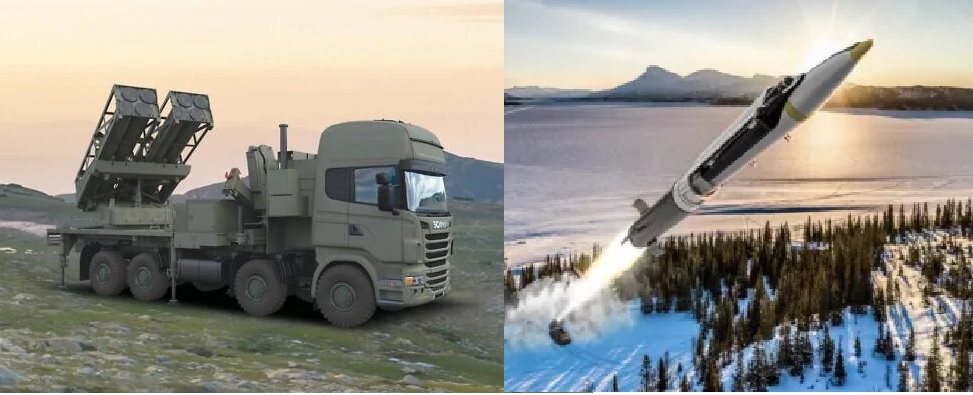
Greece has taken another significant step in its long-term defence overhaul, approving the acquisition of 36 Israeli-made PULS rocket artillery systems in a deal valued between €650–700 million, according to officials who spoke to Reuters. The move is part of Athens’ broader €28-billion military modernisation programme running until 2036, designed to strengthen deterrence amid ongoing tensions with Turkey.
Quiet Parliamentary Approval in Closed Session
A senior Greek defence official confirmed that parliament’s defence committee approved the purchase late Thursday in a closed session, underscoring the strategic sensitivity surrounding the procurement. A second official validated the decision and the projected cost range.
The deal follows months of negotiations with Israel’s Elbit Systems, the manufacturer of the PULS (Precise & Universal Launching System), a highly modular rocket artillery platform capable of firing multiple munition types with ranges up to 300 km. Under the agreement, part of the system’s components will be built in Greece, supporting the domestic defence industry.
Strategic Purpose: Boosting Deterrence Across the Aegean
Greek officials say the new long-range rocket systems will be deployed to bolster the country’s defences along the northeastern land border with Turkey and across key Aegean islands—areas at the centre of long-standing disputes over airspace, maritime zones, and territorial rights.
The acquisition significantly extends Greece’s precision-strike reach. With ranges exceeding the capacity of its existing conventional artillery, PULS enables:
-
Rapid-response fire missions
-
Deep-strike capability into hostile staging areas
-
Flexible deployment on both mainland and island territories
Greece’s Current Rocket Artillery and Long-Range Fire Capabilities
The induction of the PULS system will modernise and significantly expand Greece’s long-range strike network, adding capabilities that surpass the range of its existing artillery assets.
Greece’s current rocket and artillery fleet includes:
-
RM-70 Multiple Launch Rocket System (MLRS) – Legacy Czech-designed 122mm rockets with ranges of 20–40 km, depending on the rocket variant.
-
M270 MLRS – U.S.-built launchers capable of firing GMLRS rockets with ranges of 70–85 km and, after upgrades, potentially ER-GMLRS reaching up to 150 km. Greece operates around 36 units, several undergoing modernisation.
-
155mm towed and self-propelled artillery, including Germany’s PzH 2000, able to fire standard rounds to 30 km and assisted projectiles to 40+ km with high accuracy.
-
Spike NLOS missiles – Recently ordered precision-strike missiles with a range of up to 32 km, offering high-value target engagement for both the Army and special units.
With its modular loadout and long-range missile options, the PULS system—capable of firing rockets with ranges up to 300 km—instantly becomes Greece’s longest-range artillery asset, elevating its strike capabilities to a level comparable with the most advanced Western rocket artillery systems.
Expanding Greece–Israel Defence Cooperation
Athens and Tel Aviv have deepened defence and security ties over the past decade. Key cooperation points include:
-
Joint military exercises
-
A €1.5-billion air training centre in Kalamata operated by Israel’s Elbit Systems
-
Ongoing discussions about a €3-billion “aerial and missile defence dome”, inspired by Israel’s multilayered Iron Dome-style protection
-
Technology transfers and co-production arrangements
The PULS procurement further embeds this partnership.
Regional Context: Greece–Turkey Tensions Persist
Greece and Turkey, despite both being NATO members, continue to face deep and long-standing disputes that shape Athens’ defence posture. The two countries remain divided over maritime boundaries, Exclusive Economic Zones (EEZs), and the rights to explore natural gas reserves in the Eastern Mediterranean. Tensions are further aggravated by frequent Aegean airspace violations and competing claims regarding the sovereignty of small islands and islets. The unresolved Cyprus question adds another layer of complexity to an already sensitive regional landscape.
Against this backdrop, Athens’ long-term military modernisation plan—which includes new fighter jets, upgraded frigates, enhanced air defence systems, and now long-range rocket artillery—aims to ensure that Greece maintains strong readiness and deterrence in an increasingly contested security environment.
Part of a Broader Decade-Long Modernisation
The PULS acquisition aligns with Greece’s sweeping defence upgrades since 2020, including:
-
24 Rafale fighter jets from France
-
Upgraded F-16 Viper fleet (84 aircraft)
-
New Belharra-class (FDI HN) frigates and potential corvette purchases
-
Expansion of UAV capabilities and counter-UAV systems
-
Upgraded air defence networks
With the PULS approval, Greece reinforces its shift toward precision-strike, high-mobility warfare, improving its posture across the Aegean and Eastern Mediterranean.
A New Phase in Greek Defence Strategy
The acquisition marks one of the most important artillery procurements in Greek military history. By combining new long-range capabilities with domestic manufacturing involvement and strengthened strategic alliances, Athens aims to project confidence while mitigating risks in a volatile neighbourhood.
The systems are expected to be delivered and integrated over the coming years, forming a cornerstone of Greece’s evolving deterrence architecture as it advances toward 2036.
About the Author
Aditya Kumar:
Defense & Geopolitics Analyst
Aditya Kumar tracks military developments in South Asia, specializing in Indian missile technology and naval strategy.