Greece Takes Delivery of First Belharra-Class Frigate HS Kimon
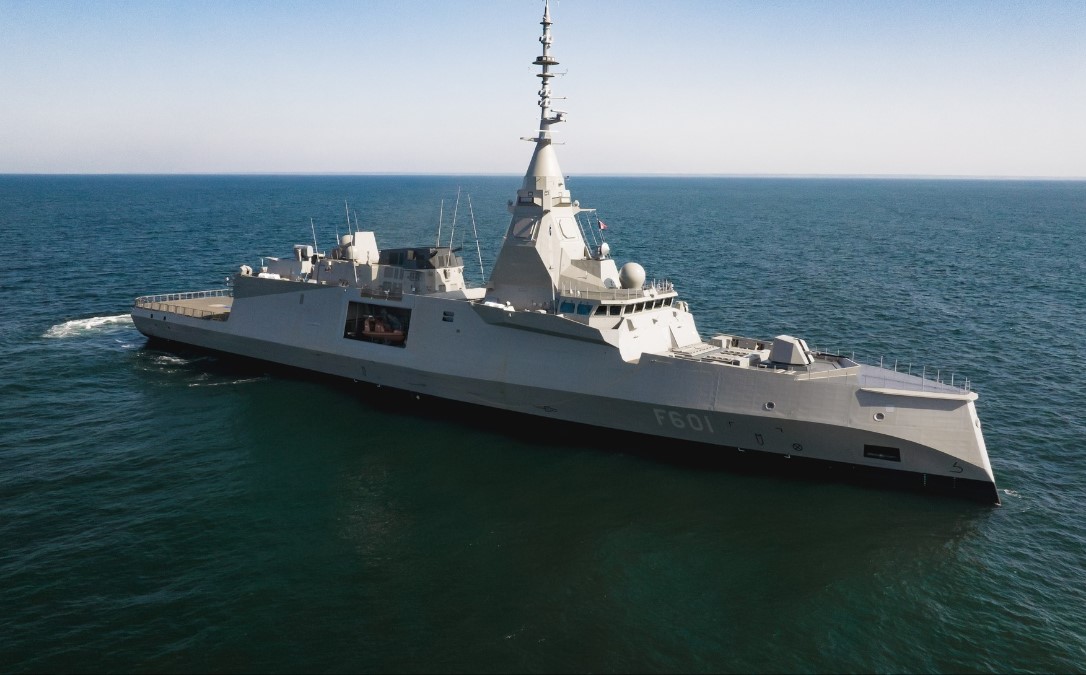
On 18 December 2025, Greece has formally taken delivery of its first Belharra-class frigate, HS Kimon (F601), marking a major milestone in the ongoing modernization of the Hellenic Navy. The handover ceremony was held at the Naval Group shipyard in Lorient, where the vessel was built, underscoring the depth of the Franco-Greek strategic defence partnership.
The ceremony was presided over by Greek Minister of National Defence Nikos Dendias and French Minister of the Armed Forces and Veterans Affairs Catherine Vautrin. Also in attendance were the Deputy Minister of National Defence, Members of Parliament, senior leadership of the Hellenic Armed Forces, former defence ministers, retired generals and admirals, and key donors to the armed forces, including the ship’s sponsor, Rear Admiral (h.c.) Panos Laskaridis.
Diplomatic and industrial representation included the Greek Ambassador to France, the Ambassador of the French Republic to Greece, and Naval Group Chairman and CEO Pierre Éric Pommellet, alongside officials from Greek defence industries and representatives of foreign diplomatic and military delegations.
Delivered as a Fully Combat-Ready Warship
HS Kimon is the first Frégate de Défense et d’Intervention (FDI HN) delivered to Greece and enters service as a fully combat-ready platform. Built to the advanced FDI Standard 2++, the frigate is delivered with its complete weapons, sensors, and combat management systems fully installed and operational, avoiding the traditional practice of commissioning vessels as “empty hulls” requiring later upgrades.
This configuration allows the ship to contribute immediately to operational readiness, particularly in air defence, anti-surface warfare, and anti-submarine warfare. Greek defence officials regard HS Kimon as one of the most capable surface combatants entering service in the Eastern Mediterranean.
Belharra-Class Capabilities and Specifications
The Belharra-class frigate displaces approximately 4,500 tonnes at full load and measures around 122 metres in length. The design is centred on a highly digital, network-centric architecture, enabling the ship to function as a command-and-control node within modern naval task groups.
At the core of its sensor suite is the Sea Fire AESA radar, providing 360-degree air and surface surveillance with long-range target tracking. For air defence, the ship is fitted with a vertical launch system capable of firing Aster 30 surface-to-air missiles, giving the Hellenic Navy a true area air-defence capability at sea for the first time.
The frigate also carries modern anti-ship missiles and a comprehensive anti-submarine warfare suite, including hull-mounted sonar, towed-array sonar, and an embarked naval helicopter. Features such as reduced radar and infrared signatures, high automation, and a smaller crew requirement enhance both survivability and operational efficiency.
Contract Timeline, Programme Value, and Defence Budgets
Greece placed its initial order for the Belharra-class frigates in 2021 as part of a broader strategic defence agreement with France. The original contract covered three FDI HN frigates, weapons integration, training, and long-term support, with an estimated value of around €3 billion.
In 2023, Athens exercised an option for a fourth frigate, raising the planned fleet to four vessels and increasing the overall programme cost by approximately €1 billion. Funding is drawn from Greece’s multi-year defence investment plan, which prioritises naval and air force modernisation amid heightened security challenges in the Aegean Sea and the Eastern Mediterranean.
Transformation of the Hellenic Navy Fleet
Prior to the delivery of HS Kimon, the Hellenic Navy operated a frigate force of 13 ships, comprising nine Elli-class frigates based on the Dutch Kortenaer design and four Hydra-class frigates derived from the MEKO 200 platform. While these ships have undergone upgrades, many were commissioned decades ago and face increasing limitations against modern missile and air threats.
The introduction of the Belharra-class marks the start of a gradual generational transition. As additional FDI HN frigates enter service, they are expected to assume high-end missions such as area air defence, task-group command, and joint operations, enabling older vessels to be retired or reassigned.
Strategic Implications
Greek defence officials describe the commissioning of HS Kimon (F601) as both a capability leap and a strategic signal. With advanced sensors, long-range air defence, and robust anti-submarine warfare capabilities, the frigate significantly enhances Greek naval deterrence and strengthens interoperability with NATO and European partners.
As HS Kimon prepares to sail for Greece and begin operational integration, attention is already turning to the delivery schedule of its sister ships. Together, the Belharra-class frigates are expected to form the backbone of the Hellenic Navy’s future surface combatant force, shaping Greece’s maritime posture for decades to come.
✍️ This article is written by the team of The Defense News.