Greece Eyes India’s Rudram Missiles for Rafale Jets, Positioning India as a Global SEAD/DEAD Tech Leader

In a major sign of India’s growing role in the global defence market, Greece is showing strong interest in acquiring India’s Rudram series of anti-radiation missiles for its fleet of Rafale fighter jets. This development not only highlights the increasing international appeal of India’s homegrown defence technology but also positions India as a serious supplier of specialized air warfare weapons in the global market.
What Are Rudram Missiles?
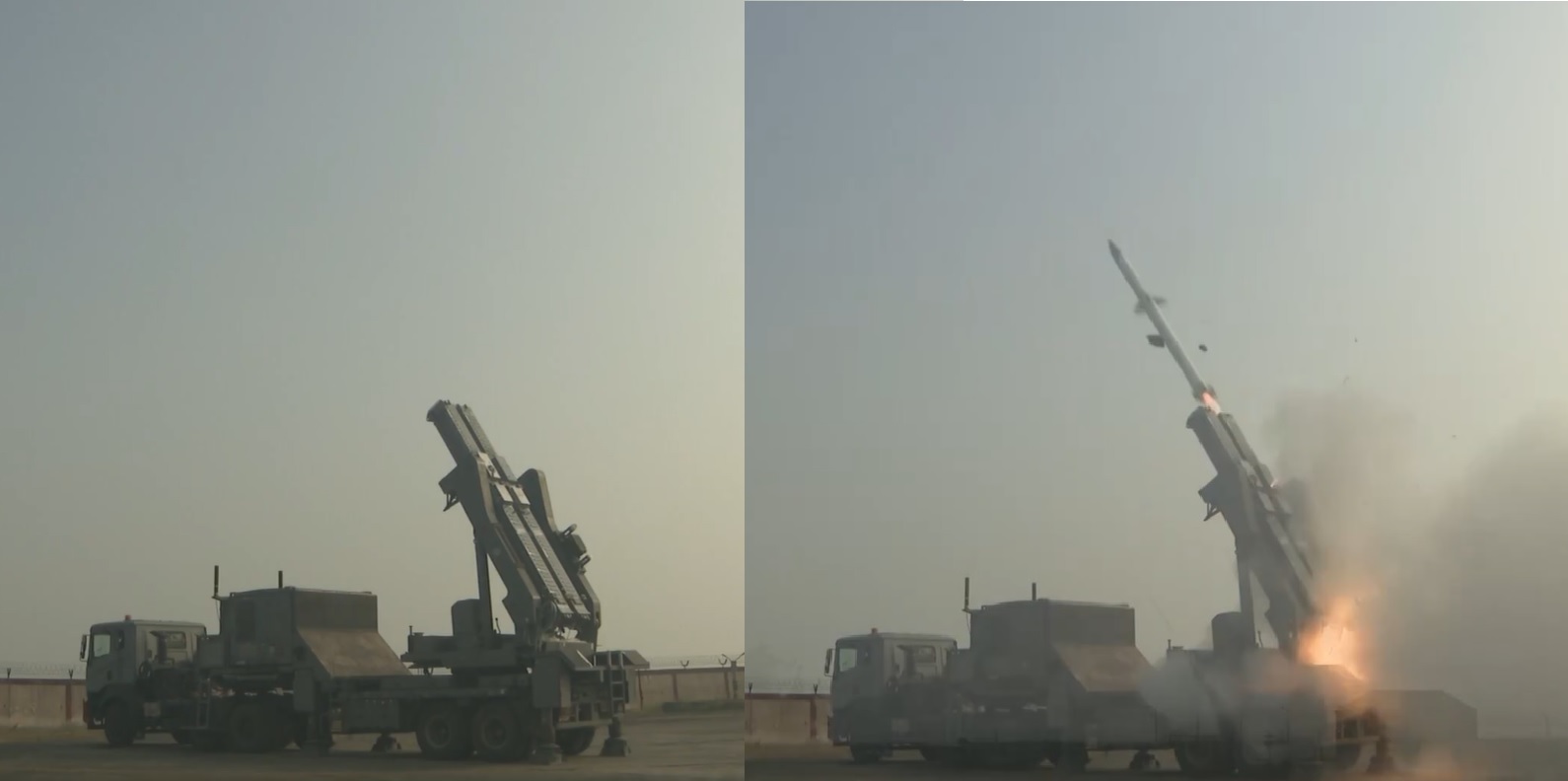
The Rudram family of missiles, developed by India’s Defence Research and Development Organisation (DRDO), are advanced anti-radiation weapons designed to detect and destroy enemy radar systems, communication hubs, and other air defence infrastructure. In modern warfare, such capabilities are essential for what militaries call Suppression of Enemy Air Defences (SEAD) and Destruction of Enemy Air Defences (DEAD) missions.
Currently, two versions — Rudram-1 and Rudram-2 — are operational. Rudram-1 has an operational range of 100 to 250 kilometres, while Rudram-2 can strike targets as far as 300 kilometres. Both are air-launched missiles and can be fired from various combat aircraft.
Why Is Greece Interested?
Greece, a key NATO member and one of the frontline states in the Eastern Mediterranean, has acquired 24 Rafale fighter jets as part of its efforts to modernise its air force. For SEAD operations, the Hellenic Air Force (HAF) currently relies on the American AGM-88 HARM missile, which, while capable, is costly and heavily dependent on U.S. suppliers.
Greece’s interest in the Indian Rudram missiles comes at a time when many European countries, including France and Germany, are experiencing a gap in their anti-radiation missile inventory. France, for example, retired its last dedicated anti-radar missile — the AS.37 Martel — in the late 1990s. A replacement, the MBDA RJ10 missile, is still under development and isn’t expected to be ready for Rafale F5 aircraft until 2035.
This leaves countries like Greece with limited options for nearly a decade. India’s Rudram missiles, already being integrated onto the Indian Air Force’s Rafale and Tejas Mk1A fighters, have emerged as a timely and cost-effective alternative.
A Big Boost for India’s Defence Exports
Adding to the momentum is a recently signed technology transfer agreement between India and Dassault Aviation, the French manufacturer of the Rafale jet. This agreement, finalized in April 2025, allows for the integration of Indian-designed weapons onto French-built fighter jets. It also clears a path for other Rafale-operating nations, like Greece, to consider Indian missiles without complicated technical hurdles.
India’s defence manufacturing sector — with companies like Bharat Dynamics Limited (BDL), Bharat Electronics Limited (BEL), and Adani Defence & Aerospace — is now positioned to offer a reliable and economically attractive supply chain for these advanced weapons. The estimated cost of a Rudram missile is around ₹10 to ₹15 crore (about $1.2 to $1.8 million), making it competitively priced against the American HARM missile, which costs between $1 to $2 million per unit.
A Growing Market for SEAD Weapons
Europe’s air forces have been increasingly vocal about the urgent need to bolster their SEAD capabilities. French Air Force officers have publicly emphasized that suppressing enemy air defences should be a top priority for NATO nations, especially given rising geopolitical tensions in Eastern Europe and the Mediterranean.
With many NATO members relying on the aging and expensive AGM-88 HARM, the availability of a modern, versatile, and competitively priced alternative like the Rudram series presents an attractive option.
What’s Next?
Greece’s defence officials have reportedly begun formal talks with Indian representatives to explore the feasibility of integrating Rudram missiles onto their Rafale fleet. If successful, this could lead to a procurement proposal by 2026.
Meanwhile, India is not stopping with Rudram-2. The DRDO is actively working on Rudram-3, expected to have a range of 550 kilometres, and a ground-launched variant of the missile. These developments are likely to further expand the missile’s appeal to other NATO countries, particularly those seeking affordable, advanced, and non-American SEAD solutions.
Conclusion
The Hellenic Air Force’s interest in India’s Rudram missile family signals a significant milestone in India’s journey as a global defence exporter. With growing regional demand for effective and affordable SEAD weapons, and India’s proven capability in integrating these systems with modern fighter jets, the Rudram series is poised to reshape the international SEAD/DEAD technology market in the coming years.
✍️ This article is written by the team of The Defense News.