Germany’s Rheinmetall Offers India Next-Gen Skynex Air Defence to Replace L-70, Zu-23 Guns
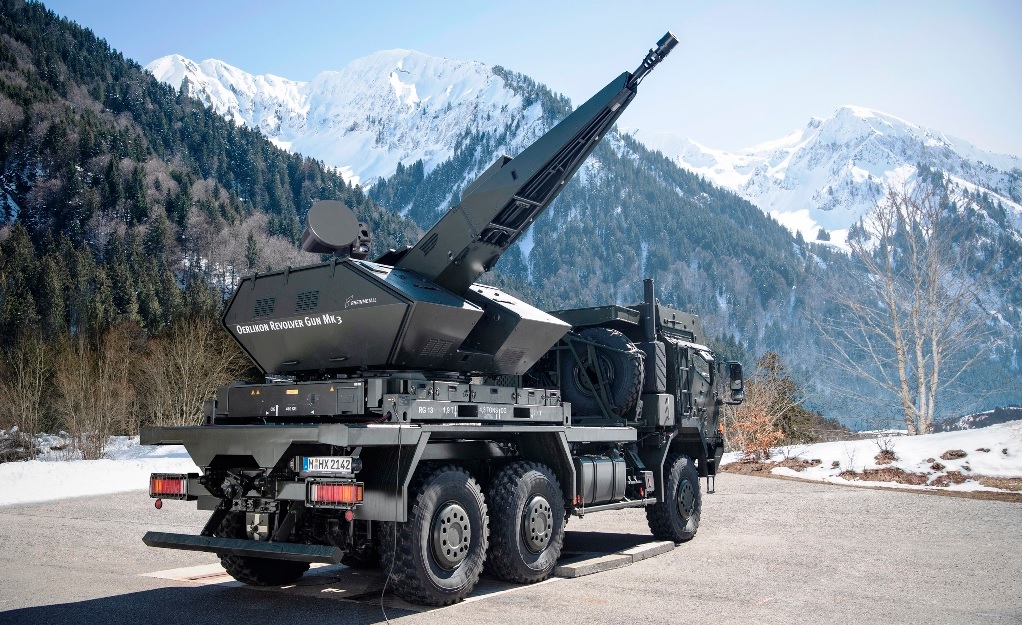
German defence giant Rheinmetall has offered its cutting-edge Skynex air defence system to the Indian Army. The move comes at a crucial time, as India seeks to replace its outdated L-70 and Zu-23mm anti-aircraft guns, which have been in service for decades.
India's push to modernize its Short-Range Air Defence (SHORAD) systems has taken on new urgency following the May 2025 border clashes with Pakistan. During these confrontations, swarm drones—multiple unmanned aerial vehicles flying in coordination—were reportedly deployed along the Line of Control (LoC), raising alarm about the country's preparedness against such threats. This threat is further amplified by Pakistan’s growing drone ties with China and Turkey.
What is Skynex and Why is It Important?
The Skynex system, developed by Rheinmetall, is based on the Oerlikon 35mm Revolver Gun Mk3, a powerful automatic cannon that fires up to 1,000 rounds per minute with high precision at targets up to 5 km away.
Its standout feature is the use of AHEAD (Advanced Hit Efficiency and Destruction) ammunition, which detonates in front of the target, releasing a cloud of tungsten sub-projectiles. This mechanism creates a deadly curtain that can destroy drones, low-flying aircraft, and cruise missiles—even in swarm formations.
Another key advantage is its modular, open architecture, which allows the system to be easily integrated with a range of sensors and radars. It typically works with the Oerlikon X-TAR3D radar, capable of detecting threats up to 50 km away.
Moreover, the Skynex system is already battle-proven. It has been used successfully in Ukraine to shoot down Iranian-made Shahed-136 drones launched by Russian forces—technology that resembles the threats India now faces.
Why Is India Considering Skynex?
India’s current systems—the L-70 (a 40mm Swedish-origin gun) and Zu-23mm (a Soviet-era twin-barrel gun)—have been upgraded with modern sights and targeting systems, but they remain mechanically outdated and struggle to counter modern drone tactics, especially swarms and precision-guided threats.
Given the changing nature of air warfare, especially the rise of UAVs and loitering munitions, there is an urgent need to induct automated, high-precision systems with advanced munitions like AHEAD.
Technical Comparison Chart
| Feature | Skynex (Rheinmetall) | L-70 (Swedish Origin) | Zu-23mm (Soviet Origin) |
|---|---|---|---|
| Caliber | 35mm | 40mm | 23mm |
| Rate of Fire | 1,000 rounds/min | 240 rounds/min | 2×400 rounds/min |
| Effective Range | 5 km (air targets) | 3–4 km | ~2.5 km |
| Ammunition | AHEAD programmable | Standard HE/Tracer | HEI/APIT |
| Target Types | Drones, Cruise Missiles, Aircraft | Aircraft, Helicopters | Aircraft, Light Vehicles |
| Automation | Fully automated + radar & C2 | Manual with upgraded EO sights | Manual with limited automation |
| Modularity/Network Capability | Highly modular + radar + C2 network | Low | Very limited |
| Battlefield Proven (Drones) | Yes (Ukraine conflict) | No | No |
Challenges Ahead
While the Skynex system offers exceptional capability, it doesn’t come cheap. It is one of the most expensive SHORAD solutions available globally. India’s defence budget is already stretched, with ongoing investments in major projects like the AMCA (Advanced Medium Combat Aircraft) and MRFA (Multi-Role Fighter Aircraft) programs.
Another challenge is India's “Aatmanirbhar Bharat” policy, which prioritizes local manufacturing and technology absorption. Any purchase would require technology transfer agreements, local assembly, or even joint production, which can make negotiations more complex.
The Skynex offer comes at a time when India’s aerial threat landscape is rapidly evolving. With swarm drones, low-cost UAVs, and precision-guided munitions becoming the new norm, legacy systems like the L-70 and Zu-23mm are no longer enough. Rheinmetall’s Skynex, though costly, provides a battle-tested, modular, and future-ready solution that could give Indian forces the edge they need on the modern battlefield—if New Delhi can navigate the budgetary and policy hurdles in the way.
✍️ This article is written by the team of The Defense News.