Germany Points to Possible Sabotage in Baltic Data Cable Incidents
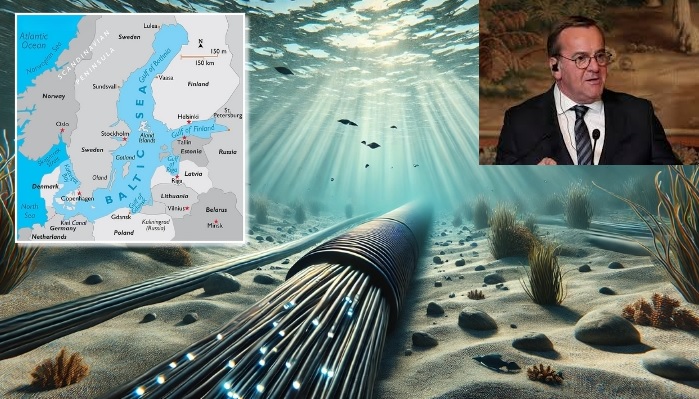
Germany’s Defense Minister, Boris Pistorius, has voiced suspicions about recent damage to undersea data cables in the Baltic Sea, underscoring rising concerns about hybrid warfare threats against critical infrastructure in Europe. On Tuesday, Pistorius emphasized that although no definitive proof of sabotage exists, the incidents bear all the hallmarks of deliberate tampering, especially given the strategic importance of these connections.
The first case of damage was identified on Monday on the C-Lion1 cable, a nearly 1,200-kilometer (750-mile) link stretching from Helsinki, Finland, to Rostock, Germany. Simultaneously, another key line running between Lithuania and Sweden also suffered damage. Such disruptions come at a precarious time for Europe, as the region navigates threats not only from Russia’s ongoing war in Ukraine but also from malicious hybrid activities targeting essential systems.
Pistorius, speaking at an EU defense ministers' gathering in Brussels, called the incidents "a very clear sign that something is afoot," referring to the broader strategic context. He pointed out the unlikelihood of accidental damage from anchors, a common risk in busy maritime zones, dismissing theories that this might be a coincidence. Instead, he drew attention to the evolving nature of threats, which extend beyond traditional military tactics to include covert actions aimed at destabilizing European infrastructure.
Germany and Finland’s foreign ministries released a joint statement noting that the timing of these disruptions raises suspicions. They stressed the need to defend vital networks that underpin not only communication but also the broader economy and security framework of Europe. The response from NATO allies has been swift, with renewed calls for robust protection measures.
This incident adds to mounting worries about Europe's vulnerabilities after previous attacks, including the 2022 Nord Stream pipeline explosions. That event served as a catalyst for heightened NATO focus on safeguarding underwater infrastructure. In recent efforts, Germany and Norway have advocated for a dedicated NATO Center for Security of Critical Undersea Infrastructure. This center achieved initial operational status in early 2024 and aims to oversee an intricate network of cables and pipelines stretching across vast maritime areas, from the Black Sea to the North Atlantic.
Plans are now in motion to establish regional hubs, leveraging local expertise to monitor and defend these critical lines. Germany and Norway, as leaders in these initiatives, are committed to bolstering NATO's defense strategies to counter hybrid threats that could cripple economic and communication lifelines.
The damage to these data cables acts as a stark reminder of the vulnerabilities facing Europe in an era of increasingly sophisticated sabotage operations. As investigations continue, the emphasis is firmly on ensuring that the infrastructure binding the continent remains resilient against emerging threats.
✍️ This article is written by the team of The Defense News.