Germany Orders 200 Additional Puma Infantry Fighting Vehicles in €4.2 Billion Expansion Programme
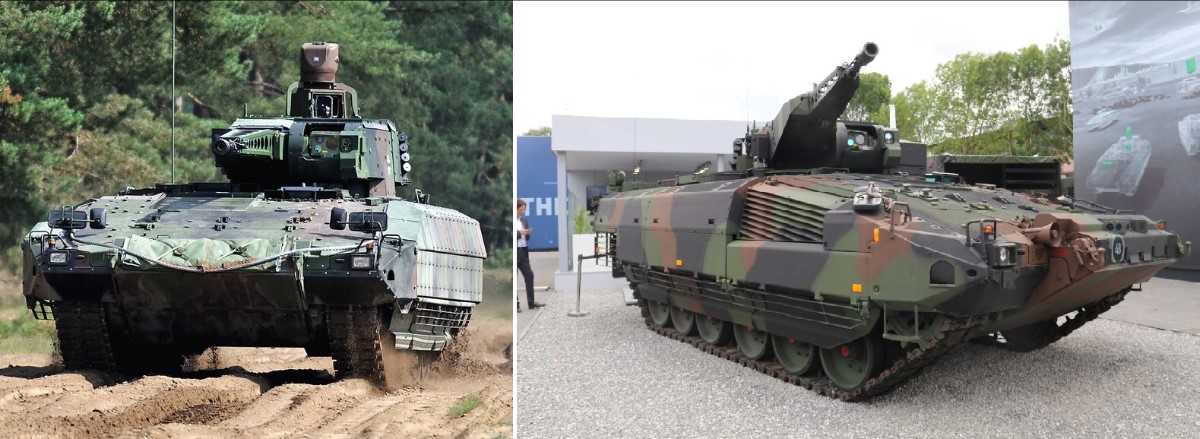
The German Bundeswehr has taken a major step toward strengthening its armoured infantry capabilities by expanding its Puma infantry fighting vehicle (IFV) fleet, approving the procurement of 200 additional vehicles under an amended framework contract valued at €4.2 billion. The agreement was signed at the Federal Office for Equipment, Information Technology and In-Service Support of the Bundeswehr (BAAINBw) in Koblenz and is scheduled to take legal effect in January 2026.
The contract has been awarded to Projekt System & Management GmbH (PSM), the joint venture responsible for the Puma programme. PSM is jointly owned by Rheinmetall and KNDS Deutschland, with both defence manufacturers acting as subcontractors for the new order. Under the financial structure of the deal, KNDS Deutschland and Rheinmetall Landsysteme GmbH will each receive €2.1 billion in gross contract value.
Delivery Timeline and Contract Scope
According to current planning, delivery of the first newly ordered Puma vehicles is expected to begin in mid-2028. The expanded framework contract builds directly on an agreement awarded in May 2023, which initially covered the procurement of 50 vehicles. The amended contract significantly broadens the scope, now also including additional protection modules and storage containers, reflecting lessons learned from operational use and readiness requirements.
The Puma expansion is structured as a multi-phase programme. A further amendment to the framework contract is planned for mid-2026, which will introduce the so-called S2 construction status. This next development step is designed to counter component obsolescence and to integrate new capabilities in response to evolving battlefield threats.
S2 Configuration and New Capabilities
One of the most notable enhancements under the planned S2 standard is the integration of advanced drone defence capabilities. These are expected to be based on technologies derived from the Jackal armoured vehicle turret, enabling the Puma to better detect and counter unmanned aerial systems (UAS). This reflects the Bundeswehr’s growing focus on tactical air defence, particularly in response to lessons from recent conflicts where drones have played a decisive role.
The S2 configuration is also intended to ensure long-term sustainability of the Puma fleet by replacing outdated electronics and subsystems, thereby extending the vehicle’s service life well into the next decade.
Role of the Puma in the Bundeswehr
The Puma IFV is the primary weapon system of the German armoured infantry and is widely regarded as one of the most modern infantry fighting vehicles in service worldwide. Designed to operate alongside main battle tanks, it combines high levels of protection, mobility and firepower with advanced digital networking capabilities.
The vehicle carries a crew of nine, including three crew members and six dismounted infantry soldiers. Its modular armour concept allows protection levels to be adapted to mission requirements, while its sensor suite and fire control systems provide high combat effectiveness in both conventional and network-centric operations.
Ongoing Modernisation of Existing Fleet
In parallel with the new procurement, the Bundeswehr is continuing a large-scale modernisation programme for its existing Puma fleet. Between 2023 and 2024, contracts were placed for the upgrade of 297 Puma vehicles that do not yet meet the S1 series standard. This retrofit programme is scheduled for completion by 2029.
The S1 modernisation includes the installation of new day and night vision systems, the integration of the MELLS anti-tank guided missile system, and the introduction of digital radio equipment to improve command, control and interoperability within NATO formations.
Strengthening Germany’s Armoured Infantry
With the addition of 200 new vehicles and the ongoing upgrade of existing ones, the Bundeswehr aims to significantly enhance the readiness, survivability and combat power of its armoured infantry forces. The Puma programme, combining new production, incremental upgrades and future capability growth through the S2 standard, represents a cornerstone of Germany’s land forces modernisation strategy and its commitments to collective defence within NATO.
About the Author
Aditya Kumar:
Defense & Geopolitics Analyst
Aditya Kumar tracks military developments in South Asia, specializing in Indian missile technology and naval strategy.