Germany Clears €1.52 Billion Deal for MQ-9B SeaGuardian Drones to Strengthen Naval Surveillance
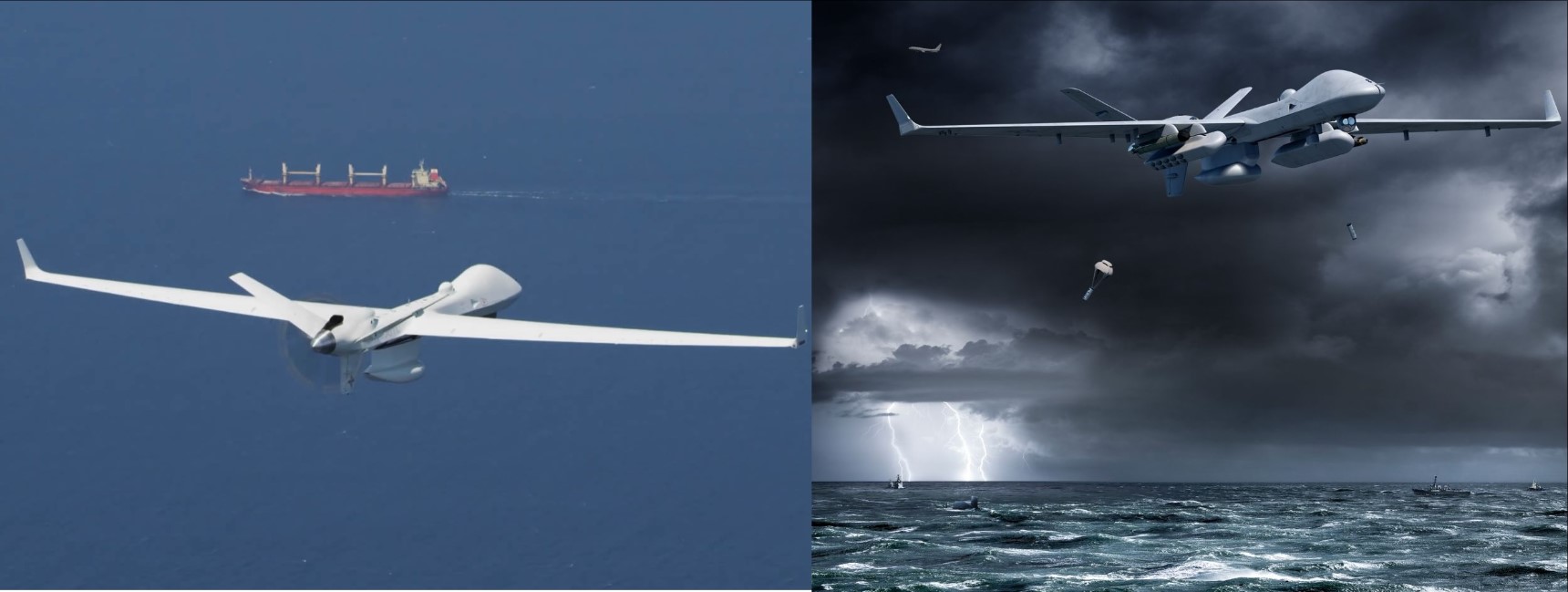
Germany has formally set the course for a major expansion of its unmanned maritime aviation capabilities, approving the procurement of advanced long-endurance drones for the German Navy. The decision is aimed at significantly strengthening maritime surveillance and, in a later phase, anti-submarine warfare (ASW) in close coordination with NATO allies.
The Budget Committee of the German Bundestag has approved funding for the “Unmanned Component of the Maritime Airborne Warfare System (uMAWS)”. Under the program, the Navy will procure four Medium Altitude Long Endurance (MALE) unmanned aerial systems from General Atomics Aeronautical Systems. Each system includes two MQ-9B SeaGuardian drones, mission sensors, ground control stations, and an integrated command-and-control system, bringing the total to eight MQ-9B aircraft.
According to well-informed sources, the overall contract value of approximately €1.52 billion will be financed through Germany’s special defense fund and the regular federal defense budget. The package covers not only the aircraft but also spare parts, logistics support, and flight crew and operator training for an initial two-year operational period.
The acquisition will be managed by the NATO Support and Procurement Agency, acting on behalf of the German government. Officials say the NATO-managed approach is intended to improve cost efficiency, reduce procurement risk, and ensure interoperability with allied forces that already operate the same platform.
Deployment Timeline and Capability Development
Delivery of the MQ-9B SeaGuardian systems is planned for 2028 to 2030. The drones will be stationed at Nordholz naval air base, the central hub of German naval aviation. In their initial configuration, the aircraft will focus on long-range maritime reconnaissance, including surveillance of sea lines of communication, exclusive economic zones, and critical maritime infrastructure.
A second development phase foresees a transition to full anti-submarine warfare capability. Between 2031 and 2032, the unmanned aircraft are expected to be upgraded to deploy sonobuoys and process underwater acoustic data, enabling them to support submarine detection and tracking in cooperation with manned platforms and surface vessels.
Allied Interoperability and Strategic Context
The German Navy has repeatedly emphasized the synergy effects of selecting the MQ-9B SeaGuardian, which is also operated by partner nations such as the United Kingdom and Canada. Shared use of the platform is expected to generate benefits in training, maintenance, and operational planning, while strengthening NATO’s maritime situational awareness in the North Atlantic and Baltic Sea regions.
The decision also reflects the evolution of Germany’s maritime aviation strategy. The Maritime Airborne Warfare System (MAWS) was originally conceived as a Franco-German initiative to develop a next-generation maritime patrol aircraft. After the partners failed to agree on a common approach, Germany opted to procure the manned P-8A Poseidon as an interim solution, while advancing unmanned capabilities in parallel.
Political Support and Implementation Challenges
Political backing for the uMAWS program has been strong, though lawmakers have highlighted the need for careful execution. Bastian Ernst, naval affairs spokesperson for the CDU/CSU parliamentary group on the Bundestag’s Defense Committee, described the project as a crucial capability enhancement for the Navy. While acknowledging the ambitious timeline, he said the systems would make a significant contribution to Germany’s anti-submarine warfare capabilities. Ernst also stressed that infrastructure development, including hangars, data links, and trained personnel, must progress alongside drone procurement.
Once fully operational, the MQ-9B SeaGuardian fleet is expected to become a key pillar of the Bundeswehr’s maritime domain awareness. Combining long endurance, advanced sensors, and close integration with allied forces, the unmanned systems are set to play a central role in Germany’s future naval aviation and maritime security strategy.
✍️ This article is written by the team of The Defense News.