General Atomics in Talks With Pentagon Over Railguns for Trump-Class Warships
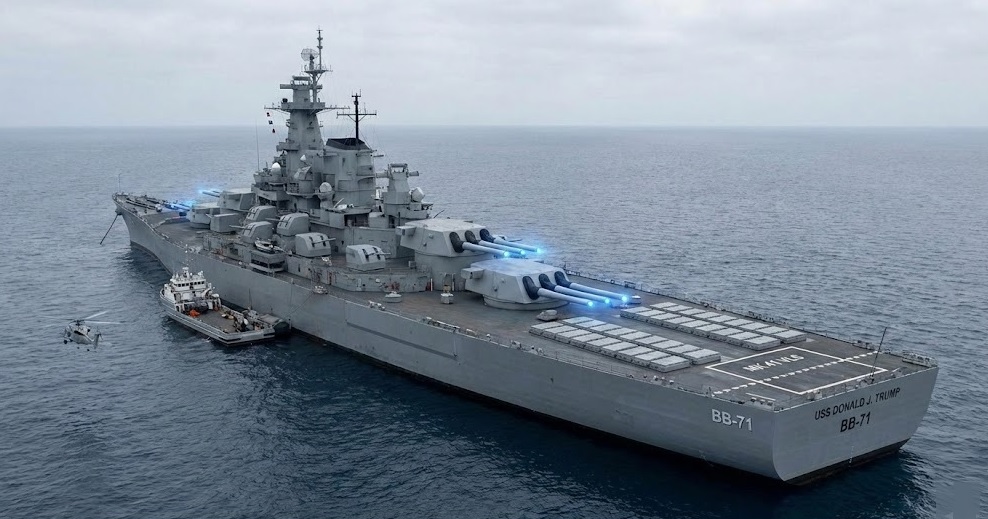
ARLINGTON, VIRGINIA : A weapon system once thought to be abandoned by the United States Navy is quietly re-entering strategic discussions, as General Atomics confirms it is engaged in talks with the U.S. government over the possible operational role of electromagnetic railguns aboard the newly unveiled Trump-class guided-missile battleships.
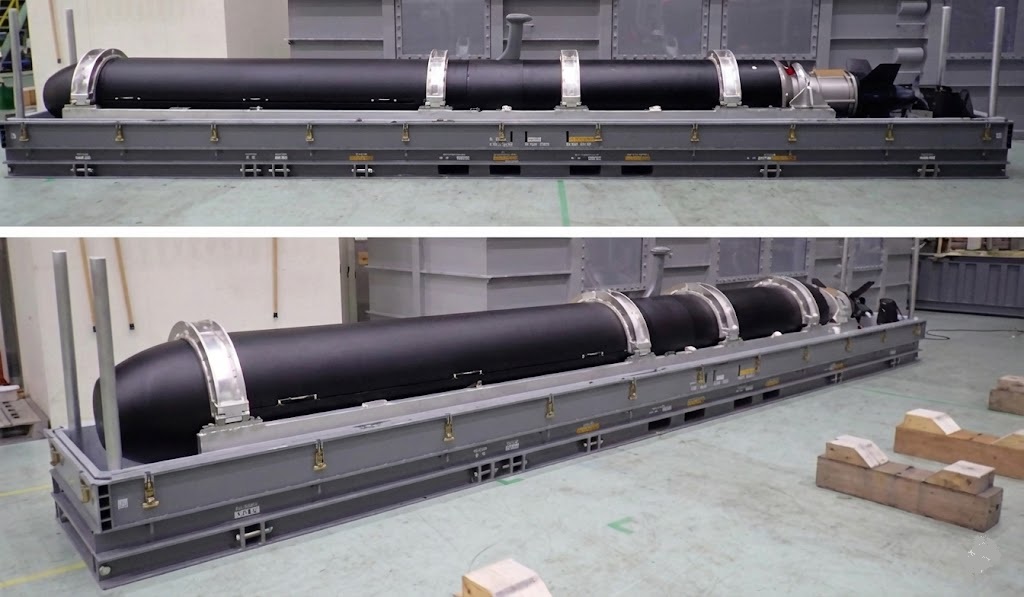
The renewed focus follows the public debut of the Trump-class last month, which revealed a heavily armed surface combatant featuring an advanced weapons suite. Among its most striking elements was a forward-mounted electromagnetic railgun rated at 32 megajoules, signaling that the Navy may be reconsidering a technology it officially stepped away from more than four years ago.
A Program That Never Truly Ended
Speaking on the sidelines of the 38th National Symposium of the Surface Navy Association, Nick Bucci, vice president for defense systems and technologies at General Atomics, said the company’s railgun work continued even after U.S. military programs were halted in 2021.
Bucci told Naval News that while visible testing and funding slowed, core technologies were preserved and refined through international collaboration and internal research. Some of that work, he noted, was temporarily redirected into other parts of the company’s defense portfolio, allowing railgun components and expertise to mature quietly rather than disappear.
According to Bucci, the Trump-class revelation represents the first clear indication that those efforts could soon transition back into an operational naval weapons program.
Overcoming Early Technical Barriers
Railguns have long promised extreme range and velocity by using electromagnetic force instead of chemical propellants, but early U.S. testing exposed serious technical challenges. These included rapid barrel wear, enormous power demands, and difficulties protecting sensitive electronics from intense electromagnetic forces.
Bucci argued that many of those issues have now been resolved. Advances made through other General Atomics programs — including electromagnetic launch and recovery systems for aircraft carriers and precision-guided projectile electronics — have directly addressed problems that once limited railgun feasibility.
In his assessment, skepticism surrounding railguns today often reflects outdated assumptions based on early prototypes rather than the current state of the technology.
Allied Momentum Abroad
While American programs slowed earlier in the decade, allied nations continued to pursue electromagnetic weapons research. Bucci acknowledged that General Atomics has worked with international partners, though he declined to identify them.
Several U.S. allies have openly advanced their own railgun efforts. Japan conducted its first at-sea firing of a ship-mounted railgun last summer, while Germany and France continue to explore electromagnetic weapons as part of broader naval modernization plans. These developments have helped keep global interest — and technical knowledge — alive.
Unclear Missions, Open Questions
Despite the Trump-class design suggesting a renewed embrace of railguns, key questions remain unresolved. Bucci said General Atomics is still waiting for clearer guidance from the Navy on how the railgun is expected to be used.
Earlier company briefings indicated that railguns could contribute to air and missile defense missions, including terminal defense roles linked to broader homeland and regional protection concepts, as well as the defense of strategic locations such as Guam. Past work also supported U.S. Army concepts focused on smaller railgun launchers for air defense, rather than large naval guns.
The Navy’s interest, however, appears centered on a much larger system — one that exploits the power generation, magazine depth, and endurance of a battleship-sized platform.
The Trump-Class and Future Naval Warfare
For the U.S. Navy, the Trump-class battleship is positioned as more than a symbolic return to heavy surface firepower. The class is expected to deliver extended loitering time, sustained presence, and long-range strike capability through a combination of missiles, advanced guns, and potentially hypersonic weapons.
At the symposium, U.S. Marine Corps Brigadier General Lee Meyers, director of expeditionary warfare, highlighted Marine Corps interest in how such a platform could support future ship-to-shore operations as threats evolve and become more complex.
A Technology Poised for Revival
The reappearance of railguns aboard a frontline U.S. warship underscores a broader shift in naval thinking. Once viewed as an experimental gamble, electromagnetic weapons are again being evaluated as a practical tool for future conflict — this time supported by years of quiet development, allied experimentation, and a new generation of heavily armed surface combatants.
Whether railguns ultimately become a defining feature of the Trump-class or remain a limited capability will depend on forthcoming Navy decisions. For now, their return to the discussion marks a notable turning point in the evolution of U.S. naval firepower.
About the Author
Aditya Kumar:
Defense & Geopolitics Analyst
Aditya Kumar tracks military developments in South Asia, specializing in Indian missile technology and naval strategy.