Gabler and FLANQ Partner to Develop First Submarine-Launched Uncrewed Surface Vehicles
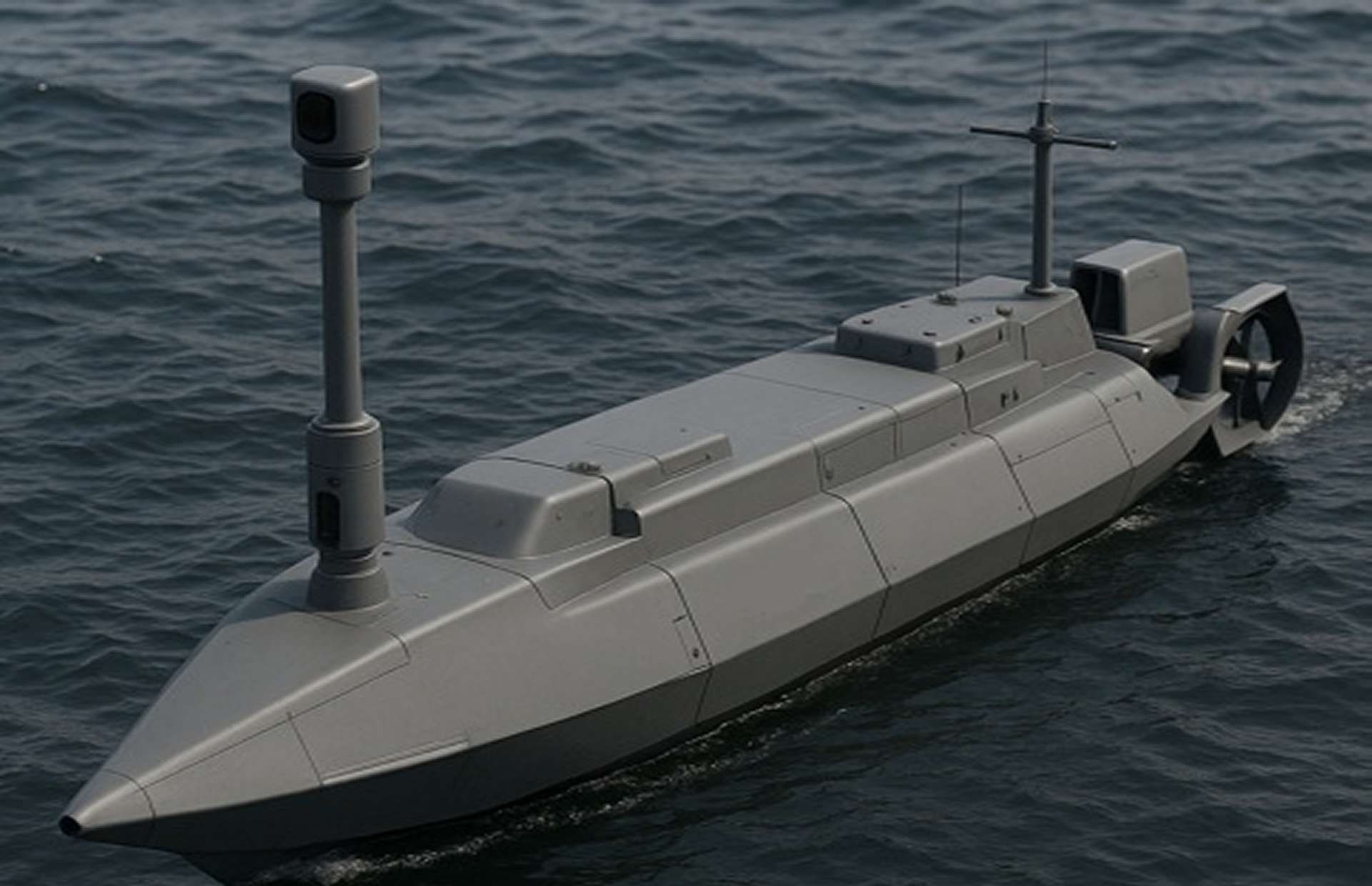
Ballerup, Denmark, August 20, 2025 – In a landmark announcement at DALO Industry Days 2025, the German naval technology firm Gabler confirmed a new partnership with maritime robotics specialist FLANQ to co-develop a next-generation class of submarine-launched uncrewed surface vehicles (USVs).
The joint project aims to transform standard submarine torpedo tubes into versatile launch platforms for autonomous surface systems, representing a major step forward in undersea and surface warfare integration.
Turning Torpedo Tubes into Multi-Mission Launchers
The concept under development uses the NATO-standard 533 mm torpedo tube as the baseline launcher, ensuring compatibility with both conventional and nuclear-powered submarines already in service with NATO and allied fleets.
The USV platform is designed with a modular architecture and compact features, including a folding control fin and mast structure for stowage and launch. Once on the surface, the vehicle expands into operational mode, ready for missions ranging from intelligence, surveillance, and reconnaissance (ISR) to electronic warfare, decoy deployment, and precision strikes.
Key Features and Capabilities
-
Size & Design: Hydrodynamic hull approximately 5–6 meters long with displacement under 800 kg.
-
Variants: Both recoverable and expendable options using the same core hull.
-
Endurance: Over 200 nautical miles range and up to 36 hours operational duration in ISR configurations.
-
Navigation: AI-enabled autonomy with GPS-denied inertial navigation and situational awareness algorithms.
-
Communications: Equipped with surface datalinks, satellite relays, and burst underwater acoustic channels for limited submarine communication.
-
Payload Capacity: Modular bays allowing integration of electro-optical/infrared sensors, EW suites, loitering munitions, or naval decoy systems.
Game-Changer for Modern Submarine Fleets
The Gabler–FLANQ system offers a cost-effective path for navies to enhance submarine capabilities without major hull modifications or new platforms. By using existing torpedo tubes, submarines can discreetly deploy USVs from underwater, which then surface to conduct missions in contested areas.
This approach maintains submarine stealth while expanding operational reach:
-
ISR Missions: Extend sensor range hundreds of nautical miles.
-
Strike Configurations: Launch loitering munitions or conduct stand-off jamming operations.
-
Deception Roles: Deploy expendable USVs to mimic naval signatures, confusing enemy tracking.
-
Hybrid Warfare: Conduct covert reconnaissance or influence operations with plausible deniability.
For contested littoral zones, the concept dramatically shifts the risk equation by allowing submarines to shape the battlespace without exposing manned platforms.
Potential Global Adopters
The German Navy is expected to be an early adopter, with its Type 212A and new Type 212CD submarines providing an ideal integration platform due to their advanced combat systems. Other NATO allies and partners are also showing strong interest, including:
-
Royal Netherlands Navy, currently pursuing future submarines with multi-mission capabilities.
-
Norway, Italy, and South Korea, all of which operate torpedo-tube-equipped submarines.
For smaller navies or those with constrained budgets, this system represents a scalable upgrade path without requiring specialized USV support ships.
Industrial Collaboration
Under the agreement:
-
Gabler will lead systems integration, interfacing, and delivery, leveraging decades of experience in submarine masts and launch mechanisms.
-
FLANQ will take responsibility for design engineering, AI-driven autonomy, and mission payload integration.
A full-scale prototype is already under assembly, with sea trials scheduled for mid-2026. The partners plan a live demonstration during NATO’s Joint Warrior 2026 exercise, which could mark the first-ever operational test of a torpedo tube-launched USV in allied service.
Strategic Significance
The development represents a paradigm shift in subsea warfare. By merging the stealth of submarines with the flexibility of uncrewed surface assets, NATO and allied navies can achieve:
-
Extended reach into denied areas without risking submarine exposure.
-
New deterrence options with unmanned strike and deception capabilities.
-
Force multiplication through modular, low-cost systems adaptable across fleets.
As underwater and surface domains become increasingly contested, the Gabler–FLANQ collaboration may redefine how submarines project power, gather intelligence, and safeguard maritime interests in the 21st century.
✍️ This article is written by the team of The Defense News.