GRSE Delivers " INS Androth " Second Next Gen Anti-Submarine Warfare Shallow Watercraft to Indian Navy For Coastal Underwater Defence
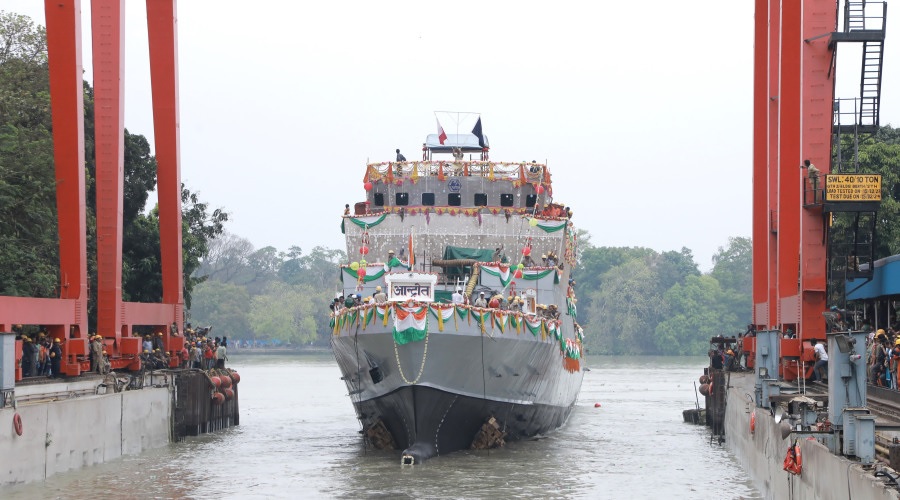
Kolkata / New Delhi, September 2025 Defence PSU Garden Reach Shipbuilders & Engineers (GRSE) has handed over to the Indian Navy the second vessel in its series of Anti-Submarine Warfare Shallow Water Craft (ASW-SWC), named Androth. It is the second of eight being built by GRSE under India’s drive for greater indigenisation in naval capabilities. The first of the series, INS Arnala, was delivered in May and commissioned in June.
Below are the vessel’s special capabilities, role in anti-submarine warfare, and what makes the ASW-SWC class significant for India’s maritime security.
What Androth / ASW-SWC Class Can Do
| Feature | Details |
|---|---|
| Size, Propulsion & Stealth | Approximately 77 metres in length, with a shallow draught (≈ 2.7 metres), allowing operations close to shore and in littoral / shallow water zones. Powered by marine diesel engines driving water-jets, enabling high manoeuvrability, reduced underwater noise, better agility, and sprint capability. Stealth features include low radar cross-section, low infrared (IR) signature, and low acoustic signature. |
| Sensors & Sonar Suite |
|
| Armament |
|
| Role & Operations | Designed primarily for anti-submarine warfare in shallow water / littoral / coastal zones, including suppression and neutralisation of enemy submarines, midget submarines, and possibly unmanned underwater vehicles (UUVs). Also capable of subsurface surveillance, search-and-attack missions, coordinated operations with maritime patrol aircraft. Secondary roles include mine-laying, low-intensity maritime operations, search & rescue, and general coastal security. |
What Makes This Special in Anti-Submarine Warfare
-
Shallow-Water Expertise: Submarines, especially smaller conventional or midget types, often exploit shallow waters to evade detection. ASW-SWCs like Androth are specially tailored for such environments.
-
Indigenous Content & Self-Reliance: Over 80% indigenous content in design, sensors, armaments, and manufacturing. The 30 mm NSG gun on Androth is indigenously produced.
-
Stealth & Low Signatures: Designed with reduced acoustic, IR, and radar signatures, plus water-jet propulsion for quieter operations.
-
Speed, Manoeuvrability & Draught: Shallow draught and water-jet propulsion allow rapid response and entry into areas inaccessible to larger warships.
-
Comprehensive Sensor-to-Weapon Integration: Integration of sonar, torpedoes, rockets, decoys, and mines via a combat management system ensures quick detection-to-attack capability.
-
Modern Replacement: The class replaces the ageing Abhay-class corvettes, bringing advanced technologies to face modern submarine threats.
Strategic Significance
-
Part of a 16-ship programme (8 by GRSE, 8 by Cochin Shipyard), these vessels will boost India’s coastal surveillance and defence.
-
Critical for protecting ports, offshore installations, and island territories against underwater threats.
-
Enhances maritime domain awareness in the Indian Ocean Region, countering rising submarine activity.
-
Strengthens India’s defence industrial base through higher indigenous content and advanced shipbuilding expertise.
In the Case of Androth
Androth, named after the Androth Island in the Lakshadweep archipelago, mirrors the capabilities of Arnala but holds added importance:
-
It is the second ship delivered in GRSE’s share of the project.
-
It is also the second warship of its class fitted with the indigenous 30 mm Naval Surface Gun.
-
With Androth joining, the Navy advances its plan of inducting the entire ASW-SWC fleet, strengthening shallow water anti-submarine warfare capabilities.
The delivery of INS Androth marks another milestone in India’s naval modernization. With indigenous design, modern ASW sensors, stealth, and agility, the ASW-SWC class is set to transform shallow water anti-submarine operations. As more ships are inducted, India’s coastal defences will be significantly more resilient against underwater threats.
✍️ This article is written by the team of The Defense News.