GE Aerospace and Kratos Team Up to Build Affordable, Scalable Turbofans for Drone 'Wingmen'
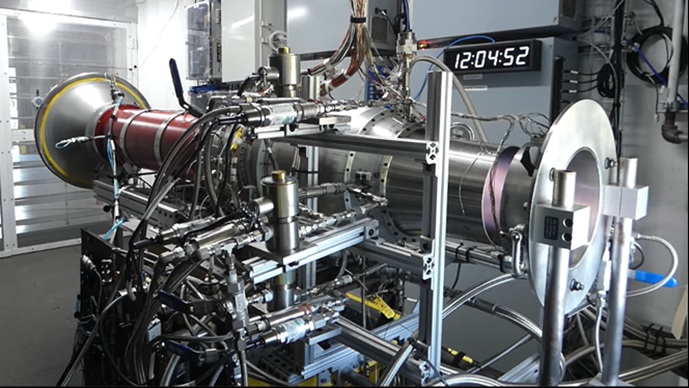
In early June 2025, GE Aerospace’s Defense & Systems division signed a formal teaming agreement with Kratos Defense & Security Solutions to co-develop a new generation of small, high-thrust turbofan engines designed for Collaborative Combat Aircraft (CCA).
The deal builds on their 2023 collaboration that produced the GEK800, an 800-pound-thrust class engine aimed at advanced cruise missiles. The next step is the GEK1500, delivering 1,500 pounds of thrust, suitable for reusable or expendable unmanned combat platforms.
Combining Strengths
The partnership leverages Kratos’s two decades of expertise in affordable unmanned propulsion with GE Aerospace’s 75-year pedigree in jet propulsion. GE brings large-scale production capabilities and experience in long-life turbine design, while Kratos offers agility, speed, and cost-focused development.
Mark Rettig, Vice President of Edison Works Advanced Programs, explained the mindset: “The approach is to meet cost targets first and add capabilities as necessary.” This has enabled the joint team to accelerate design cycles and streamline affordability.
Stacey Rock, President of Kratos Turbine Technologies, highlighted the technical challenge: “Scaling large engines down is difficult, and scaling small turbojets up is equally difficult. This team has hit a sweet spot.”
From GEK800 to GEK1500
The GEK800 has already entered its fifth build cycle this summer, with the first production unit scheduled for altitude and ground testing in early 2026. The architecture is intentionally scalable, forming the foundation for an entire family of strike engines.
The GEK1500 will follow, with a demonstration planned for 2026. Engineers describe it as a “turbofan in a turbojet-sized envelope,” meaning it achieves far better fuel efficiency and range than legacy turbojets, while staying low-cost for large-scale deployment.
Officials have also indicated that the unit price could be in the low hundreds of thousands of dollars, making it one of the most affordable turbine engines ever aimed at military applications.
Targeting the Lower-End CCA Market
The U.S. Air Force’s CCA initiative has largely focused on higher-thrust drones in the 3,000–8,000 lb thrust class. However, growing demand exists at the lower end of the spectrum—for smaller, semi-reusable or expendable platforms. The GEK1500 aims to fill that niche, offering commanders a survivable yet affordable engine for large-scale deployment of drone “wingmen.”
Industry analysts note that the collaboration between GE and Kratos reflects a shift in defense procurement—prioritizing speed, affordability, and scalability over exquisite, long-cycle systems. With both the GEK800 and GEK1500 under development, the companies are positioning themselves as leaders in powering the next era of affordable autonomous combat aviation.
✍️ This article is written by the team of The Defense News.