GA-ASI Selected to Develop Carrier-Based Collaborative Combat Aircraft for U.S. Navy
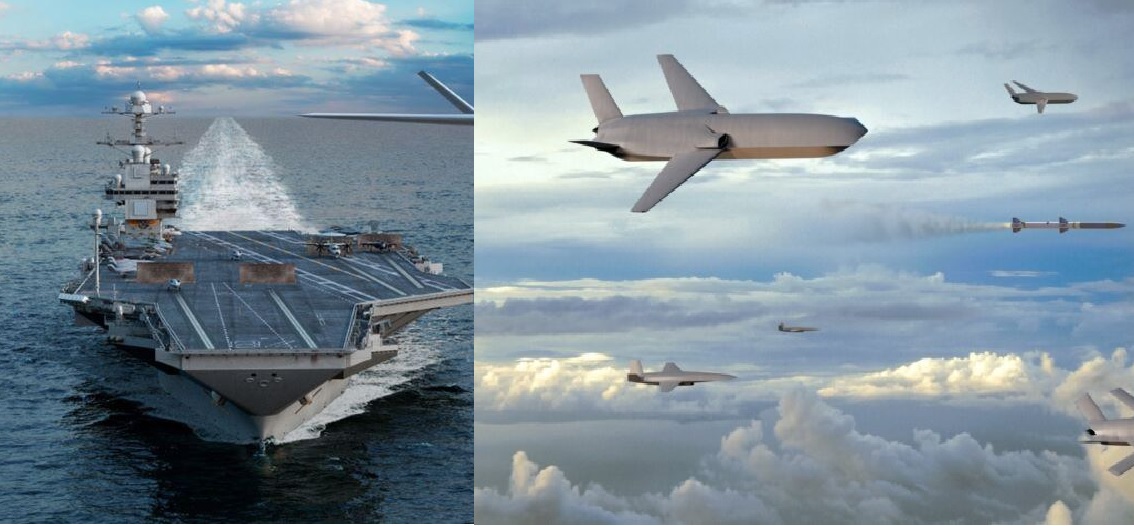
General Atomics Aeronautical Systems, Inc. (GA-ASI) has been chosen by the U.S. Navy to develop conceptual designs for a new Collaborative Combat Aircraft (CCA) that will operate alongside manned aircraft in the carrier air wing of the future. The company’s design will emphasize a modular approach, allowing rapid upgrades, reconfiguration, and mission adaptation — an essential feature for naval aviation, where mission requirements can change quickly depending on deployment and threat environment.
The Navy’s CCA program is part of a larger push to bring uncrewed, semi-autonomous aircraft into carrier operations, working alongside fighters like the F/A-18E/F Super Hornet, EA-18G Growler, and F-35C Lightning II. These new CCAs will serve as loyal wingmen, extending the reach, sensor capability, and strike power of the carrier air wing while reducing risk to human pilots. GA-ASI’s concept will need to operate seamlessly from aircraft carriers, meaning it must feature folding wings, reinforced landing gear, and corrosion-resistant materials suitable for maritime environments.
The Navy’s acquisition strategy for this project marks a major shift away from traditional long-cycle programs. Instead of large, decades-long procurement deals, the service plans to pursue smaller, more frequent purchases that allow faster technology insertion and lower overall cost. GA-ASI’s approach aligns perfectly with this model — focusing on affordability, modularity, and the ability to incorporate emerging technologies without a full redesign.
This contract follows GA-ASI’s ongoing work with the U.S. Air Force, for which it developed and recently began flight testing the YFQ-42A, the Air Force’s first Collaborative Combat Aircraft. Lessons from the YFQ-42A and GA-ASI’s previous unmanned programs such as the MQ-20 Avenger and XQ-67A Off-Board Sensing Station will likely feed into the Navy’s CCA design. The company’s “Gambit” series, revealed earlier, could also serve as a technological foundation for the Navy’s variant, with carrier-capable modifications such as catapult launch and arrested recovery capability.
According to industry reports, the U.S. Navy has set a target unit cost of around $15 million for each CCA, significantly less than a manned fighter. This relatively low cost suggests that the Navy envisions these aircraft as affordable and expendable assets capable of operating in high-threat environments. They are expected to perform both air-to-air and strike missions, complementing the Air Force’s CCA program, which initially focuses more on air-to-air roles.
Budget documents indicate that the Navy’s CCA program remains in its early development stages. For fiscal year 2026, the Navy has requested roughly $58 million in research, development, testing, and evaluation (RDT&E) funding for the program. While this is a modest amount compared to the Air Force’s CCA budget of over $800 million, it highlights that the Navy’s focus is currently on conceptual and design work before committing to full-scale production. Officials have also expressed concern that ongoing budget constraints and continuing resolutions in Congress could delay the program’s progress.
The Navy’s CCA will need to meet stringent performance and operational requirements, including autonomous coordination with manned aircraft, integration with carrier command and control systems, and rapid mission adaptability. It must be capable of conducting long-endurance missions while maintaining stealth and survivability against advanced adversary defenses. While detailed specifications remain classified, the emphasis on modularity means payloads such as sensors, electronic warfare suites, or precision weapons could be swapped based on mission needs.
GA-ASI’s experience and success with autonomous systems give it a strong foundation to deliver a viable carrier-based CCA concept. If the program succeeds, it could reshape naval aviation by introducing a new generation of unmanned aircraft that combine flexibility, affordability, and combat capability. This development also aligns with the U.S. Navy’s broader vision of building a more distributed and resilient carrier air wing capable of confronting advanced threats from near-peer adversaries in contested environments such as the Indo-Pacific.
The U.S. Navy’s Collaborative Combat Aircraft initiative, now joined by GA-ASI, represents one of the most transformative steps in modern carrier aviation. By integrating uncrewed systems that can fight alongside manned aircraft, the Navy aims to ensure its carrier strike groups remain dominant in the increasingly complex and high-risk battlespace of the future.
About the Author
Aditya Kumar:
Defense & Geopolitics Analyst
Aditya Kumar tracks military developments in South Asia, specializing in Indian missile technology and naval strategy.