French Navy Showcases 1,000-kg AASM Hammer Strike by Rafale F4.1 in Carrier Battle Group Operation

France has signaled a major leap in its carrier-based strike capabilities after a Rafale Marine in the latest F4.1 configuration executed a live firing of the 1,000-kg AASM Hammer during a complex operational work-up in the Mediterranean on 6 December 2025. The event, first reported by the French defense outlet Opex360, is being widely interpreted as a demonstration of France’s readiness to conduct long-range, high-precision naval strikes at a time of rising geopolitical friction across the eastern Mediterranean.
A 1,000-Nautical-Mile Strike Planned and Executed in Under 24 Hours
Operating from the aircraft carrier Charles de Gaulle, the Rafale Marine released its heavy AASM 1000 after a low-altitude penetration mission that took the aircraft across Italy and into Greek airspace. The target—a naval objective on the Karavia test range in Greece—was engaged from a distance of more than 1,000 nautical miles from the carrier, a feat illustrating the extended-range strike envelope enabled by the rocket-powered AASM variant.
The mission was supported by the fleet replenishment ship Jacques Chevallier, which provided fuel, munitions transfer, and logistical backup, allowing the carrier to maintain flight operations, including deployment of an alert air-defence patrol throughout the drill.
The sortie involved two Rafale Marines departing from a position west of Corsica. A “buddy-buddy” tanker aircraft, fitted with a Narang in-flight refuelling pod, accompanied the strike jet as far as southern Italy. After topping up fuel over Apulia, the strike aircraft continued alone, skimming low over the Mediterranean to delay radar detection before releasing the AASM 1000 at the end of the penetration phase.
Charles de Gaulle’s Intensive Work-Up Cycle
The firing occurred during one of the most demanding training cycles the French carrier has undertaken since its last major deployment. Between late November and early December, the Charles de Gaulle completed:
-
15 SECUREX safety drills
-
11 ADEX air-defence scenarios
-
Multiple MACOPEX operational capability exercises
-
An integrated anti-ship exercise featuring Exocet missile employment
The carrier air wing fielded 18 Rafale Marine fighters, two E-2C Hawkeye AEW&C aircraft, and three helicopters—a force package that enabled France to practice combined strike, air-defence, and maritime surveillance operations, all tied together through advanced data-link networks.
AASM 1000: France’s Heavy Precision Hammer
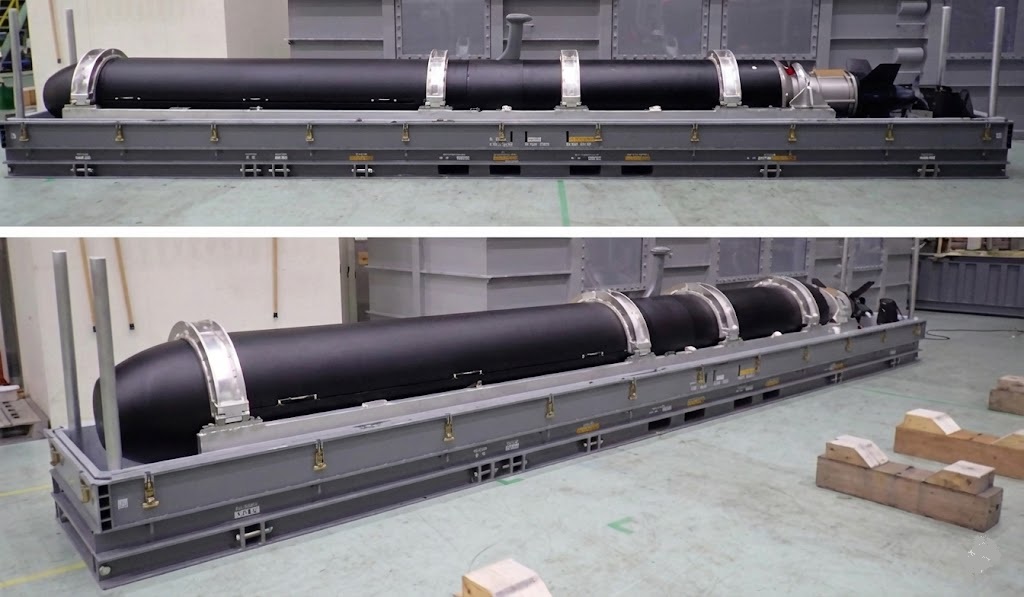
The AASM Hammer, developed by Safran Electronics & Defense, is a modular guided bomb family with variants ranging from 125 to 1,000 kg. Each uses:
-
GPS + inertial guidance
-
Optional infrared or laser seekers
-
A propulsion kit for extended-range strikes
The AASM 1000 GS—qualified in 2022 by the French defence procurement agency (DGA)—is the most powerful of the family. Its rocket-boosted configuration allows long-range engagement even from low altitude, expanding survivability against dense air-defence networks and surface sensors.
This heavy weapon, paired with the Rafale F4.1’s enhanced connectivity and EW suite, forms a new centrepiece of France’s deep-strike and maritime interdiction capabilities.
Rafale F4.1: A Networked, Multi-Mission Carrier Fighter
The Rafale Marine F4.1 brings improved sensors, cyber-resilience and EW protection, as well as enhanced tactical networking via Link 16 and advanced national data links.
Key features include:
-
RBE2 AESA radar
-
Front Sector Optronics (FSO)
-
Spectra electronic warfare suite
-
Ability to carry up to three AASM 1000s while retaining MICA/Meteor missiles and external tanks
-
Compatibility with the Talios targeting pod
Together, these systems give the aircraft a refined synthetic battlespace picture and the ability to defend itself even while carrying heavy strike ordnance.
Strategic Message to the Mediterranean
The French Navy is one of the only European services operating a catapult-equipped carrier able to deploy a fourth-generation-plus fighter with heavy precision munitions. The AASM 1000 firing is being interpreted by analysts as a deliberate message:
-
To NATO partners: France remains a high-end contributor capable of independent long-range strike.
-
To regional navies: The Charles de Gaulle battle group can threaten surface combatants, logistics vessels, and fortified coastal infrastructure even behind sophisticated air-defence networks.
-
To geopolitical rivals: Paris retains the capability to respond rapidly to crises in contested maritime spaces such as the eastern Mediterranean, where energy rights, EEZ disputes, and Russian naval activity heighten tensions.
The demonstration also aligns with a broader European shift toward increased use of stand-off weapons—including glide bombs, cruise missiles, and extended-range guided munitions—driven by the need to counter modern integrated air-defence systems.
A Carrier Group Ready for Modern Naval Conflict
With a reaction time of less than 24 hours from mission planning to weapon release, the Charles de Gaulle and its air wing showcased the capability to conduct responsive, long-range precision strikes while sustaining a full combat air-defence posture.
For France, the exercise marks not only the validation of the Rafale F4.1 + AASM 1000 pairing, but also a reaffirmation of its ambition to remain a decisive maritime actor from the western Mediterranean to the Levant.
About the Author
Aditya Kumar:
Defense & Geopolitics Analyst
Aditya Kumar tracks military developments in South Asia, specializing in Indian missile technology and naval strategy.