France Launches SYDERAL Laser Weapon Demonstrator for Anti-Drone Defense by 2030
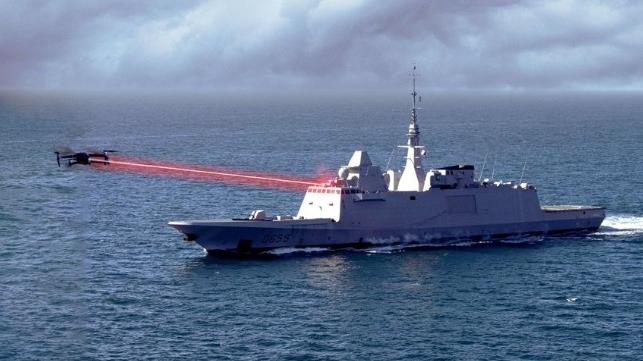
The French Defence Procurement Agency (DGA) has placed an order on 22 August 2025 with a consortium composed of MBDA, Safran Electronics & Defence, Thales and CILAS for the development of a new laser weapon demonstrator named SYDERAL (Système Laser de Défense de Nouvelle Génération). This initiative is part of France’s 2024-2030 Military Planning Law, aiming to strengthen short-range air defense and counter-drone warfare.
Next-Generation Defence Technology
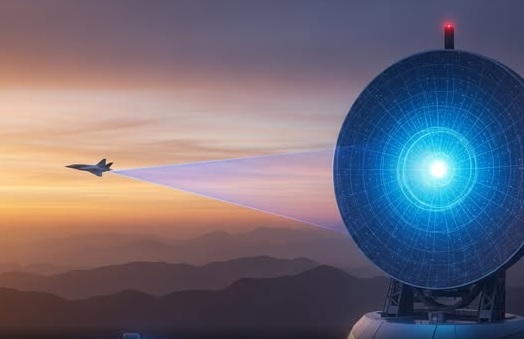
The SYDERAL demonstrator will test the effectiveness of high-power laser weapons in neutralizing tactical drones, rockets, mortar shells, and remotely operated munitions. The program is expected to pave the way for operational deployment by 2030.
Unlike traditional systems, SYDERAL will use a scalable and modular architecture, compact in size relative to its power, and designed for day and night operations.
Cutting-Edge French Expertise
The consortium brings together leading expertise in advanced defense technologies:
-
Laser beam combining to achieve very high power.
-
High-precision automatic video tracking to follow fast-moving aerial targets.
-
Adaptive optics to compensate for atmospheric disturbances.
This combination should give SYDERAL greater efficiency and precision compared to many systems currently under development worldwide.
Building on Earlier Investments
In 2024, the DGA had already awarded an initial €10 million contract to Lumibird and CILAS to develop new laser sources. These technologies now serve as the foundation for SYDERAL, allowing multiple beams to be combined into a powerful, coherent weapon system.
Strategic Impact and Global Context
SYDERAL is not France’s first step into directed-energy weapons. The HELMA-P system, a 2 kW laser developed by CILAS, was successfully tested between 2020 and 2021, including during the Paris 2024 Olympic Games and at sea aboard the French Navy frigate Forbin. SYDERAL will take this progress to the next level by targeting tougher threats, including missiles.
Globally, France now joins the United States and Israel, who are already advancing high-power laser defenses like the Iron Beam system. Such weapons are seen as crucial for economical, fast, and precise neutralization of aerial threats, compared to traditional missiles that are far more costly and complex to deploy.
Challenges Ahead
To achieve full operational capability, French engineers will need to solve key challenges:
-
Maintaining beam coherence while combining multiple lasers.
-
Handling heat dissipation in a compact design.
-
Ensuring accuracy and reliability against fast and unpredictable drones.
-
Guaranteeing performance in difficult weather and combat environments.
Towards 2030 – A New Era of Defence
By 2030, France aims to field a sovereign, high-power directed-energy weapon capable of protecting critical assets on land and sea. Beyond drones, SYDERAL could eventually counter more complex aerial threats, opening the door to a future where light itself becomes a weapon.
✍️ This article is written by the team of The Defense News.