France Fast-Tracks Hornet Air Guard Upgrade as NATO Scrambles for Mobile Counter-Drone Protection
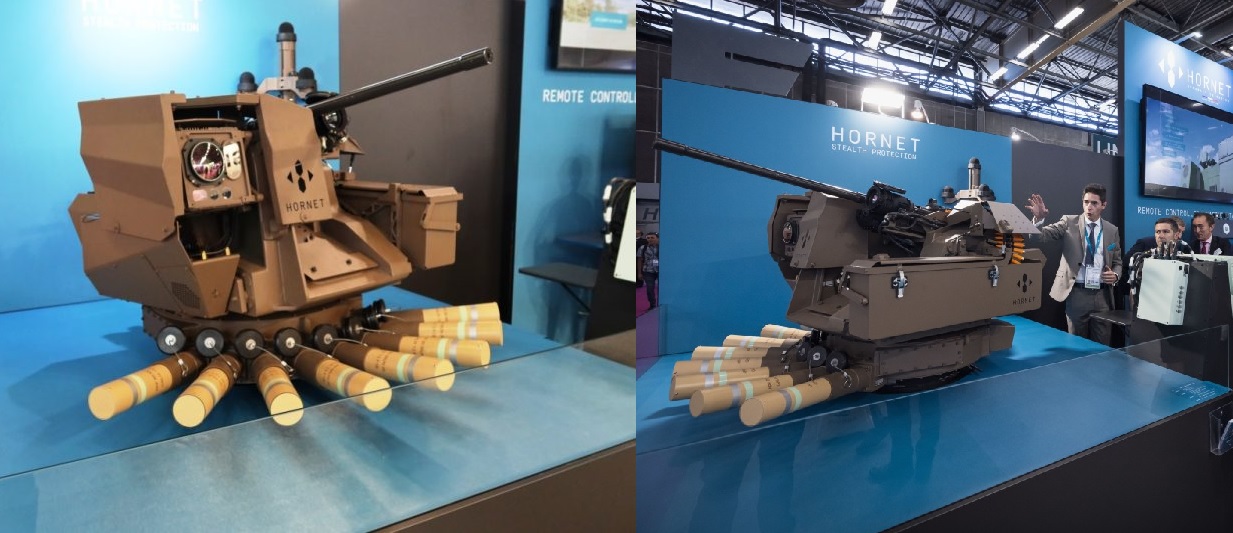
France has moved to accelerate one of Europe’s most urgent battlefield modernization efforts: providing frontline armored vehicles with organic protection against cheap, fast, and lethal drones. The French defense procurement agency DGA and armored vehicle manufacturer Arquus are jointly fast-tracking the Hornet Air Guard upgrade, a compact counter-UAS (C-UAS) layer designed for Griffon and Serval vehicles of the SCORPION program.
The move comes as NATO militaries confront the reality demonstrated in Ukraine—FPV drones and loitering munitions now penetrate front lines faster than traditional air-defense systems can respond, forcing armies to equip every maneuver unit with its own last-mile protection.
A Rapid National Effort to Counter the Drone Saturation Threat
Arquus announced on October 9, 2025, that it is partnering with the DGA and the French Army to develop the Hornet Air Guard, a drone-defense variant of the Hornet remote weapon station (RWS). The goal is straightforward but transformative:
Equip Griffon and Serval armored vehicles with an integrated counter-drone “bubble,” providing immediate, vehicle-level response against hostile UAVs—without waiting for specialist air-defense batteries.
On November 25, 2025, Arquus confirmed that development is progressing at speed with active input and testing support from the French Army. The urgency stems from the battlefield lessons of Ukraine, where drones have turned every combat zone into a 24/7 aerial surveillance and strike environment, exposing any static or slow-reacting unit to attack.
Hornet Air Guard – Specifications & Capabilities
Although full technical details remain classified, available information and demonstrations reveal a compact but capable C-UAS suite built onto the proven Hornet T1 RWS.
Key Capabilities (Known / Assessed):
-
Electro-optical + Infrared sensor suite for drone detection and day/night tracking
-
Automated drone-tracking algorithms fused with RWS fire-control system
-
High-elevation engagement arc optimized for small, fast, low-flying drones
-
Option for 7.62mm or 12.7mm machine gun or 40mm AGL, depending on vehicle fit
-
Laser rangefinder and ballistic computer modified for small-target engagement
-
Potential integration of jammer or RF-suppression modules (under study)
-
Full plug-and-play compatibility with SCORPION’s SICS battlefield network
-
AI-based threat recognition derived from Hornet’s existing targeting suite
-
Fast slewing to track FPV drones with unpredictable flight paths
Combined, the system gives every equipped vehicle autonomous C-UAS self-defense, enough to intercept small drones threatening convoys, command posts, or infantry sections on the move.
Scaling Across SCORPION – A Doctrinal Shift for the French Army
For France, the Hornet Air Guard is more than a technical upgrade—it marks a strategic transformation in how ground forces defend themselves in a drone-saturated battlespace. By equipping every Griffon or Serval fitted with a Hornet T1 remote weapon station to serve as an autonomous counter-drone firing node, the French Army is creating a layered, massed, and networked ground-based air-defense architecture. In an environment where drones compress decision cycles to seconds, giving non-specialist vehicle crews the ability to detect and destroy aerial threats may become as vital as traditional armor protection or electronic-warfare capabilities. The pace at which France can transition from early prototypes to full-scale serial production kits is now being closely monitored across NATO, where most land forces face similar drone threats but rely on slower, less scalable solutions.
International Momentum – Export Interest Accelerates
Arquus and its Hornet subsidiary are simultaneously turning the Air Guard into a significant export opportunity. The system has already been integrated onto platforms such as AM General’s Humvee Saber Blade Edition, showcased at major Western defense exhibitions, and displayed on a range of 4×4 tactical vehicles across Europe and the Middle East. These demonstrations highlight how the modular RCWS-based counter-UAS architecture adapts easily to light tactical fleets, not only heavy armored vehicles. Market analysis and joint events with John Cockerill Defense reveal growing interest from Eastern European militaries, driven by battlefield lessons from Ukraine, and from Middle Eastern states seeking rapid-deployment, plug-and-play drone-protection systems for border security and mobile operations.
Which Countries Currently Use or Are Testing Hornet Systems?
While the Hornet Air Guard is new, the Hornet family of RWS is already in service internationally.
Confirmed Operators of Hornet RWS (Base Systems)
-
France
-
Griffon, Serval, Jaguar EBRC fleets under SCORPION
-
-
Belgium
-
Uses the SCORPION-derived vehicles equipped with Hornet RWS
-
-
Export Demonstrations
-
United States (Humvee Saber Blade Edition testing)
-
Middle Eastern clients (undisclosed trials)
-
Eastern European armies evaluating RCWS-based C-UAS kits
-
As Hornet Air Guard matures, these same countries are expected to be among the first export customers.
Why This Matters for NATO
The war in Ukraine has shown that FPV drones costing $500–$1,000 can destroy vehicles worth millions. Heavy air-defense units cannot be everywhere. NATO planners increasingly believe that:
Every combat vehicle must have its own anti-drone capability.
France’s Hornet Air Guard is one of the first systemic attempts to make this idea a reality across an entire armored fleet.
If the French Army successfully fields the system at scale, Paris may become a trend-setter for NATO’s future “distributed air-defense” doctrine.
The Hornet Air Guard program is now seen as a priority modernization track inside the French Army. The next 12–18 months will determine whether France can move from rapid development to mass deployment.
With drones reshaping every battlefield and making traditional air-defense layers insufficient, the race is on—not just for France but for all NATO land forces—to build protection that moves with the troops.
France may be among the first to get there.
About the Author
Aditya Kumar:
Defense & Geopolitics Analyst
Aditya Kumar tracks military developments in South Asia, specializing in Indian missile technology and naval strategy.