First Russian Drone Downed Over NATO Territory by Dutch F-35, What Happened Behind
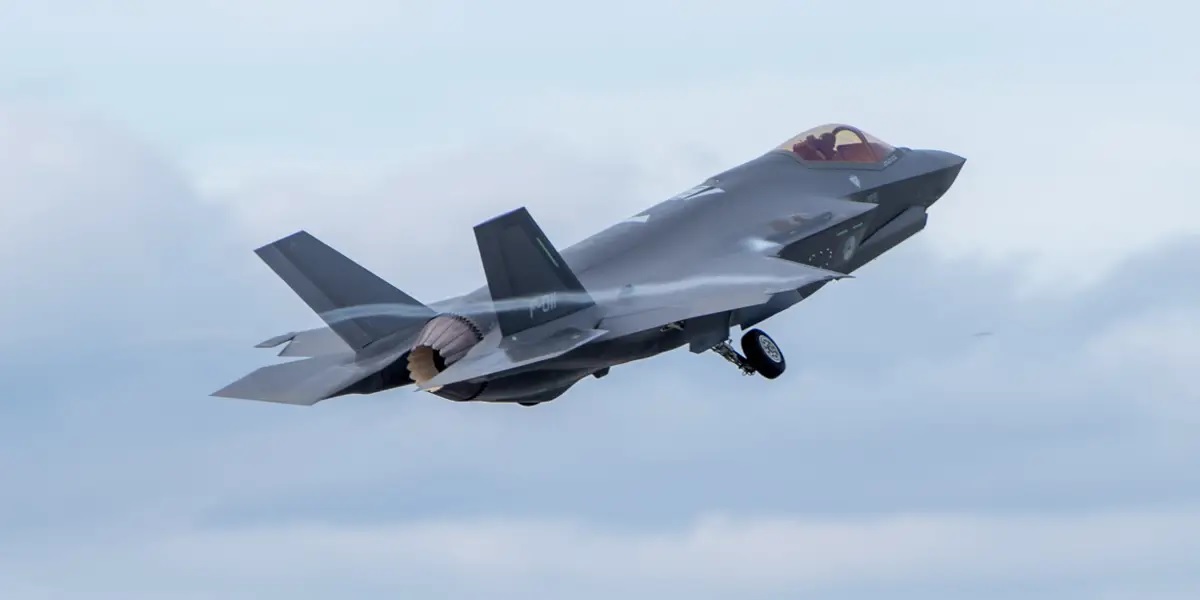
A Dutch F-35A fighter jet has shot down a Russian drone in Polish airspace, marking the first time since the start of Russia’s full-scale invasion of Ukraine in 2022 that a confirmed Russian asset has been destroyed inside NATO territory. The incident highlights both the growing role of drones in modern conflicts and the challenges facing NATO’s air policing missions.
The Intercept
The Royal Netherlands Air Force confirmed on September 30, 2025, that the downing took place during the night of September 9–10. According to the Dutch Ministry of Defense, the F-35 belonged to the 313 Squadron and was deployed under NATO’s Air Policing mission. The mission was launched after Polish radars tracked the drone crossing into Polish territory.
Polish F-16 fighters were also dispatched, but it was the Dutch F-35 that carried out the interception. Dutch authorities later released a photo showing a kill marking stenciled beneath the canopy rail of the aircraft, symbolizing the success of the operation.
The drone was initially believed to be a Shahed-type system, similar to the Iranian-made drones that Russia has extensively used in Ukraine. However, parts of the wreckage also showed similarities to other Russian-modified variants, such as the Geran-2 (Gerbera), which has been adapted to Russia’s operational requirements.
Conduct of the Mission
Details of the engagement remain classified, but officials confirmed it was carried out under Quick Reaction Alert (QRA) procedures. For NATO, this was a practical test of how advanced platforms like the F-35 can deal with slow, small unmanned systems, which are notoriously difficult to track and destroy with conventional fighter tactics.
The F-35’s sensor fusion, stealth capability, and precision weapons enabled it to neutralize the drone, which could otherwise have slipped through traditional radar and defense networks.
NATO Implications
This event is more than just a technical success. It is seen as part of NATO’s evolving strategy on its eastern flank. Since 2022, NATO’s approach has shifted from a primarily tripwire posture—focused on deterrence through presence—to a more proactive denial strategy that integrates fifth-generation aircraft, enhanced air defense systems, and faster intelligence-sharing.
By engaging the drone, NATO demonstrated that incursions into allied airspace will be met with immediate military action, regardless of whether the target is manned or unmanned. It also reinforces the message that drones—despite being relatively cheap and expendable—cannot be used for political or military signaling without risk.
Concerns Over Escalation
The downing of the Russian drone raises broader questions about escalation risks. Some reports circulating in European defense circles suggest that Ukraine may be involved in certain drone incursions near NATO borders, potentially as a way to draw the alliance more directly into confrontation with Russia. While there is no direct evidence linking Kyiv to this specific event, the speculation reflects the complex and multi-layered nature of the conflict, where attribution is not always clear.
Russia, for its part, has repeatedly used drones to probe European air defenses and gather intelligence on NATO responses. At times, these incursions are interpreted as deliberate attempts to test alliance coordination and reaction times. The increasing frequency of such encounters blurs the line between routine surveillance and hostile action, creating new challenges for decision-makers in Brussels and national capitals.
Strategic Significance
The engagement also highlights how air policing missions—once considered routine patrols—now carry the potential for live combat actions. The Dutch F-35’s kill marking is not only a symbol of squadron pride but also a reminder that NATO pilots may face operational decisions with broader geopolitical consequences.
The incident will likely be studied as a case example in NATO training and planning, showing how fifth-generation aircraft can adapt to the growing threat of unmanned systems. At the same time, it reinforces the need for clear communication channels between NATO and Russia to prevent accidental escalation.
About the Author
Aditya Kumar:
Defense & Geopolitics Analyst
Aditya Kumar tracks military developments in South Asia, specializing in Indian missile technology and naval strategy.