Finland and Sweden Acquire Advanced CNHF Manpack Radios in Landmark NORDEFCO Joint Procurement
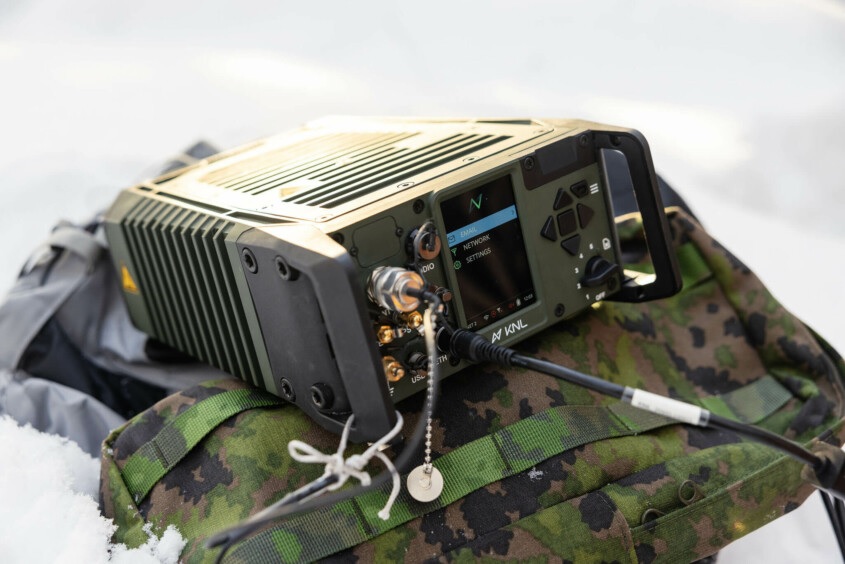
In a move aimed at strengthening Nordic defense interoperability, Finland and Sweden have jointly signed a €15 million ($17.5 million) contract with the Finnish company KNL Networks for the delivery of Cognitive Networked High Frequency (CNHF) Manpack radios. Deliveries are expected to be completed by the end of 2025, marking a significant milestone in the region’s defense modernization and joint operations capabilities.
A New Era in Tactical Communications
The CNHF Manpack system stands out for its advanced real-time spectrum sensing technology, capable of scanning over 4,000 channels simultaneously and locking onto the most reliable frequency in less than a second. Unlike traditional radios, it does not require manual operator input. Instead, it continuously adjusts transmission parameters, maintaining secure and stable communication links even under contested or degraded conditions.
One of its most critical features is its ability to function in satellite-denied environments, where access to GPS may be jammed or disrupted. By using asynchronous connections, CNHF radios ensure reliable operations without reliance on space-based navigation systems—an increasingly vital capability given the growing threat of electronic warfare and satellite-targeted disruption.
The radios support encrypted voice, data, and multimedia transmission, forming resilient tactical networks that can extend from a few kilometers to several thousand. Their design emphasizes ease of use, requiring only a single day of training, while standard interfaces enable seamless integration into existing command-and-control (C2) and tactical communication systems.
Strategic Importance for Nordic Security
KNL’s CEO Toni Lindén highlighted that the deal represents both a technical leap and a strategic milestone, enabling Finland and Sweden to establish a shared, secure communication infrastructure. This advancement is crucial for joint operations, allowing the two nations’ armed forces to coordinate seamlessly in training, crisis response, and potential military engagements.
The procurement is also notable for being the first joint acquisition under the Nordic Defence Cooperation (NORDEFCO) Implementing Arrangement for Joint Procurement of C4I systems, which was signed in April 2025. NORDEFCO brings together Denmark, Finland, Iceland, Norway, and Sweden to coordinate defense planning, procurement, and interoperability initiatives.
While the current contract is exclusive to Finland and Sweden, other NORDEFCO members—such as Norway and Denmark—are expected to join later. The agreement has an initial 10-year term, with automatic one-year extensions unless revised, ensuring long-term support and modernization.
Enhancing Regional Defense Resilience
For Finland and Sweden, both recent members of NATO, the acquisition is aligned with wider efforts to integrate seamlessly into the alliance’s C4ISR (Command, Control, Communications, Computers, Intelligence, Surveillance, and Reconnaissance) framework. The CNHF system provides an additional layer of communications resilience, especially critical in scenarios where satellite-based links may be compromised during conflicts with technologically advanced adversaries.
The deal also comes against the backdrop of heightened European security challenges following Russia’s war in Ukraine, which has underscored the vulnerability of traditional communications and the need for secure, adaptive, and resilient alternatives.
By pooling resources under NORDEFCO’s joint procurement framework, Finland and Sweden are not only cutting costs but also ensuring commonality of systems that will enhance joint operations, training, and logistics. This step signals a broader Nordic ambition to build a fully interoperable defense environment, capable of responding swiftly and cohesively to any regional threat.
The delivery of CNHF radios by the end of this year will mark the beginning of this shared communications architecture—laying the foundation for stronger collective defense and operational synergy across Northern Europe.
✍️ This article is written by the team of The Defense News.