F-35A Moves Closer to Long-Range Meteor Capability After Successful Ground Tests
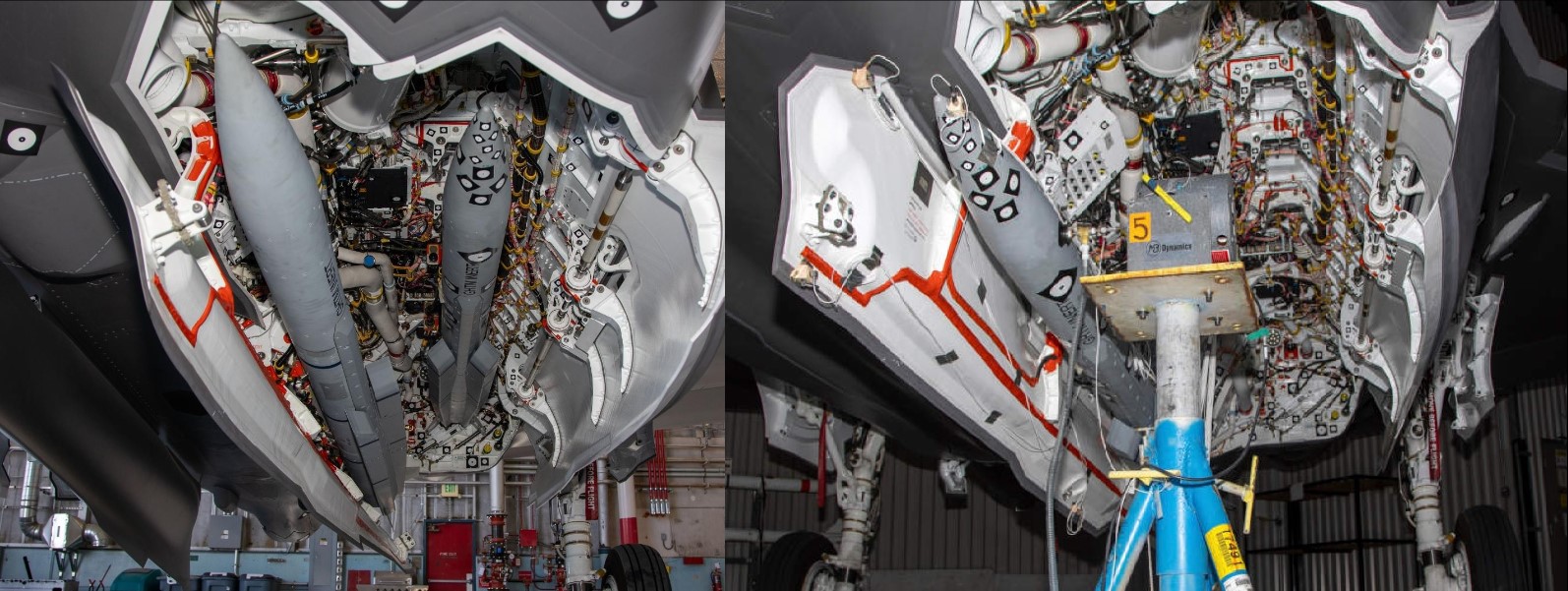
On 4 December 2025, European missile manufacturer MBDA confirmed that integration of the Meteor beyond-visual-range air-to-air missile on the US-built F-35A Lightning II has reached a decisive new stage, marking one of the programme’s most significant milestones to date. A series of extensive ground integration tests—conducted jointly by MBDA, Lockheed Martin, and the F-35 Joint Program Office—has successfully validated that Meteor can be safely housed and deployed from the F-35A’s internal weapons bay, a prerequisite for maintaining the aircraft’s stealth profile.
The trials, carried out at Edwards Air Force Base in California, place the programme on the verge of flight testing, opening the path for full operational clearance. Beyond technical achievement, this milestone represents a major evolution in European and NATO air-combat doctrine, reinforcing long-range deterrence at a time of rising geopolitical tensions and contested airspace.
A Transition from Design to Practical Integration
The latest test series included ground vibration trials, fit checks, and structural response assessments, all designed to evaluate how the missile and aircraft interact as a unified weapon system. During these tests, both the F-35A and Meteor were fitted with diagnostic instruments to measure structural loads and confirm safe clearances within the weapons bay.
These vibrations simulate the full range of forces the missile experiences during flight, hard manoeuvres, and aircraft operations. The checks also ensure that internal carriage does not compromise the F-35’s low-observable geometry, a central factor distinguishing the aircraft from 4th-generation fighters.
Engineers report that just one final ground test remains before shifting to airborne release trials, a major leap toward certification. According to MBDA, the programme is now “one step closer” to delivering a fully integrated European long-range missile for the world’s most widely operated 5th-generation fighter.
This effort builds on earlier UK-led Meteor testing on the F-35B, while Italy sponsors the F-35A integration, demonstrating the multinational nature of the programme. Norway, the Netherlands, and Denmark have also expressed strong interest, setting the stage for widespread European adoption.
Meteor: Europe’s High-Energy Long-Range Interceptor
At the core of this integration is Meteor itself—an advanced, network-enabled BVR missile jointly developed by six European nations: the UK, France, Italy, Germany, Spain, and Sweden.
Unlike traditional missiles that rely on a single rocket burn followed by a glide, Meteor employs a unique throttleable solid-fuel ramjet, allowing continuous, adjustable propulsion throughout its flight. This provides:
-
A dramatically enlarged no-escape zone, limiting an adversary’s ability to outrun or dodge the missile.
-
Sustained energy at long range, ensuring lethality even during end-game manoeuvres.
-
Mid-course updates via data link, enabling dynamic retargeting in networked combat scenarios.
The missile’s active radar seeker, inertial navigation, two-way data link, and blast-fragmentation warhead make it one of the most lethal air-superiority weapons in the world. It is already operational on Rafale, Eurofighter Typhoon, and Gripen, and is now under testing with South Korea’s KF-21 Boramae.
Meteor’s pairing with the F-35A—an aircraft designed to detect threats before being detected—creates a powerful long-range engagement capability unmatched by legacy systems.
What Meteor Means for F-35A Operators
For the F-35A, Meteor is more than an additional missile—it changes how the aircraft can fight.
The F-35’s combination of AESA radar, Electro-Optical Targeting System, and passive electronic intelligence sensors generates a multi-layered detection picture. With Meteor onboard:
-
The aircraft can engage targets at extreme ranges while maintaining stealth.
-
Meteor’s ability to receive updates enables cooperative engagements, using data from other aircraft, drones, AWACS, or ground-based sensors.
-
Internal carriage preserves the aircraft’s low radar signature, unlike traditional fighters that mount long-range missiles externally.
-
F-35 formations can operate in distributed networks, engaging threats without broadcasting their position.
This transforms the F-35A from a primarily strike-oriented platform into a dominant long-range air-superiority asset for NATO.
Geostrategic Significance
The integration reflects a broader strengthening of European defence autonomy, while still operating within the transatlantic F-35 ecosystem. With Europe supplying one of the jet’s most important air-to-air weapons, the partnership reinforces:
-
European industrial relevance in 5th-generation warfare
-
Interoperability across NATO
-
A unified deterrence posture across the Baltic, Black Sea, and Arctic theatres
Italy’s sponsorship and the UK’s leadership on the F-35B highlight how partner nations are leveraging their roles to shape the fighter’s future capability set.
As Meteor becomes available across Europe’s F-35 operators—including Norway, Denmark, the Netherlands, Belgium, Poland and Germany—air-policing missions and quick-reaction alert strategies will be reorganised around long-range, stealth-enabled interception.
The message to adversaries is explicit:
any attempt to challenge NATO airspace will confront a layered system combining stealth aircraft with high-energy, long-range interceptors designed to deny escape.
What Comes Next
Following completion of the final ground test, the programme will transition to:
-
Captive-carry flight tests
-
Safe separation trials
-
Live missile firings
-
Full operational evaluation
If airborne tests validate ground results, F-35A fleets will gain a new long-range air-combat dimension previously limited to high-performance 4.5-generation European fighters.
For MBDA, Lockheed Martin, and participating nations, the achievement marks more than a technical milestone—it represents a major step toward a future in which stealth platforms, high-speed ramjet missiles, and networked combat systems operate as an integrated strike web, giving NATO decisive advantage in 21st-century air warfare.
About the Author
Aditya Kumar:
Defense & Geopolitics Analyst
Aditya Kumar tracks military developments in South Asia, specializing in Indian missile technology and naval strategy.