Europe Launches €4.8 Million SPHYDA Project to Build Ultra-Silent Underwater Drones
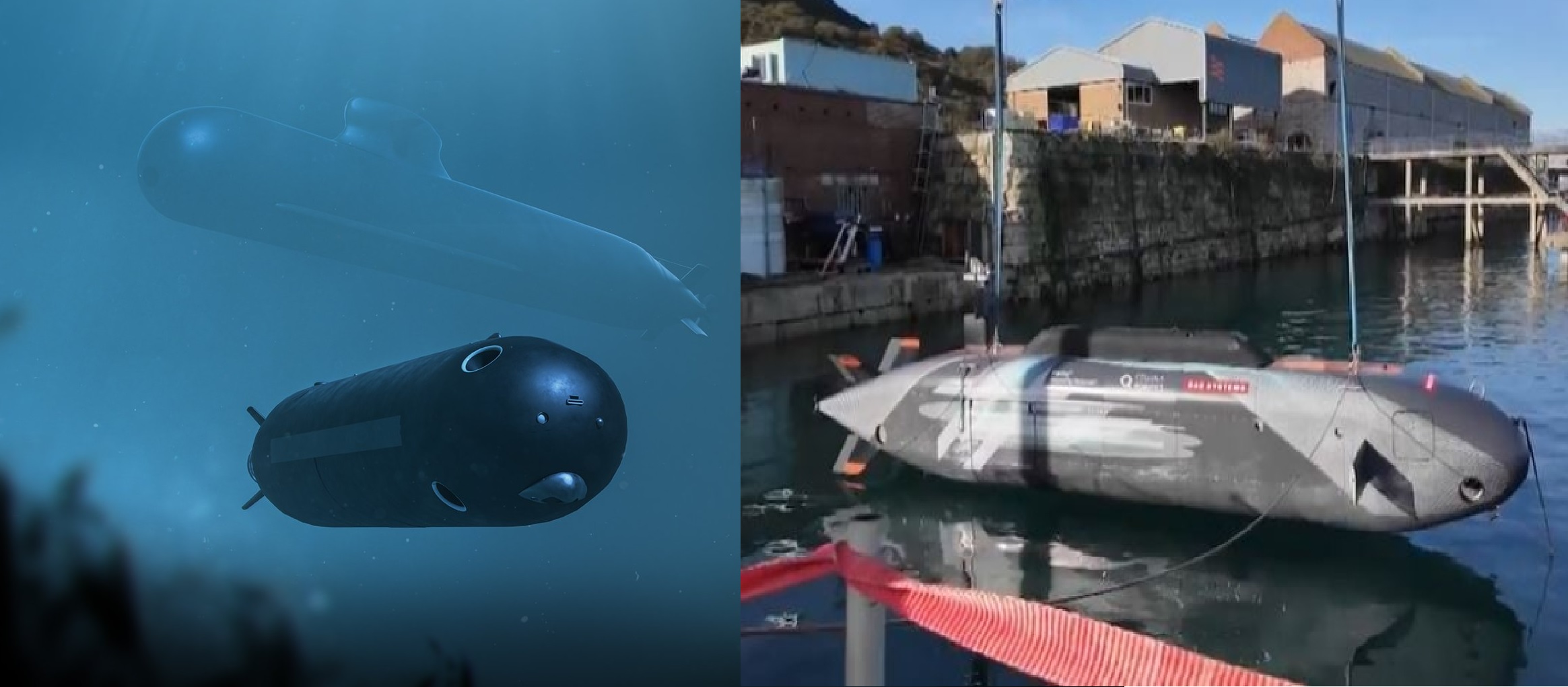
The European Defence Agency (EDA) has initiated a four-year, €4.8 million research programme aimed at sharply reducing the acoustic signatures of autonomous underwater vehicles (AUVs)—a move expected to boost naval stealth while also limiting the environmental impact of underwater noise on marine ecosystems.
The project, known as SPHYDA (Submarine PHYsics for Design and Assessment), unites Italy, Germany, the Netherlands, Spain, and Norway, with Italy serving as lead nation. The initiative will run until late 2029, marking one of Europe’s most ambitious efforts to date in underwater acoustic research.
A Broad Effort to Understand and Eliminate Underwater Noise
SPHYDA will focus on developing advanced numerical models and experimental techniques to understand how AUV hulls, rudders, propulsion systems, and overall hydrodynamics contribute to noise creation. Unlike previous European research—which concentrated primarily on propellers—SPHYDA expands the scope to include whole-vehicle acoustics, including:
-
Flow-induced vibrations
-
Cavity and vortex noise
-
Structural transmission of hydrodynamic loads
-
New low-noise materials and coatings
Researchers aim to produce high-fidelity computer simulations, new measurement standards, and validated datasets that will serve as reference material for future AUV designers.
According to early project documentation, SPHYDA’s goal is to create design guidelines that allow European shipyards and defense manufacturers to produce quieter, more efficient, and more environmentally compliant underwater platforms.
Building and Testing a Next-Generation AUV
A central element of the SPHYDA programme is the creation of a purpose-built experimental autonomous underwater vehicle that will serve as the core research platform for the project’s acoustic studies. This prototype will be subjected to a series of controlled and real-world trials, beginning with towing tank assessments to analyse hydrodynamic behaviour under precise laboratory conditions. It will then move to manoeuvring basin tests, where engineers will observe how noise is produced during complex movements such as turning, diving and rapid speed transitions. Finally, outdoor sea trials will record far-field acoustic signatures in natural marine environments. Together, these efforts will provide a comprehensive dataset that allows researchers to align simulation outputs with actual acoustic behaviour, a critical step for validating the next generation of digital acoustic modelling tools.
Strategic Importance for European Navies
The growing importance of stealth in underwater operations has placed new emphasis on reducing the radiated noise of autonomous systems, and SPHYDA is directly aligned with these operational priorities. Quieter underwater vehicles enhance Europe’s ability to conduct long-range intelligence and surveillance missions without alerting hostile forces. They also improve the efficiency of mine countermeasure operations and increase the survivability of deep-water autonomous platforms operating in high-threat environments. For European defence planners, the programme strengthens the continent’s strategic autonomy by reducing dependence on external acoustic technologies. It also dovetails with ongoing NATO research into advanced sonar systems and unmanned maritime platforms, ensuring that Europe’s future designs remain interoperable with allied naval forces.
Environmental Benefits and Regulatory Compliance
SPHYDA’s objectives extend beyond military capability, reflecting the European Union’s commitment to protecting marine ecosystems from harmful levels of human-generated sound. Underwater noise pollution has become a significant environmental concern, with documented impacts on whales, dolphins, migratory fish species and seabed habitats sensitive to vibration. The project integrates eco-acoustic considerations into the earliest stages of design, aiming to produce underwater vehicles that meet the EU’s Marine Strategy Framework Directive (MSFD) and broader conservation requirements. By advancing low-noise technologies and offering detailed acoustic guidelines, the programme supports both operational effectiveness and long-term environmental sustainability across European waters.
Expert View: A Critical Leap Forward
“SPHYDA is a crucial step toward developing the capability to diagnose and predict the complex hydrodynamic mechanisms responsible for the generation and propagation of noise from underwater vehicles in real operating conditions,” said Riccardo Broglia, Research Director at the Institute of Marine Engineering of the Italian National Research Council and project manager.
Analysts note that by 2030, the tools and datasets emerging from SPHYDA could significantly influence the design of all future European underwater platforms—including AUVs, torpedoes, and unmanned surveillance systems.
Positioning Europe at the Forefront of Underwater Stealth Technology
With global investment in underwater drones skyrocketing, SPHYDA places Europe in a strong position to lead the next wave of low-noise, high-stealth underwater systems. By combining scientific research, environmental compliance, and defence requirements, the project aims to deliver technologies that will shape both naval operations and marine conservation efforts for decades.
As the race for underwater stealth intensifies, SPHYDA could become a defining benchmark for how AUVs are engineered—silent, efficient, and environmentally responsible.
About the Author
Aditya Kumar:
Defense & Geopolitics Analyst
Aditya Kumar tracks military developments in South Asia, specializing in Indian missile technology and naval strategy.