Europe Fires Warning Shot at Dollar as U.S. Financial Order Comes Under Strain

DAVOS / WASHINGTON : The foundations of the U.S.-Led Global Financial Order are facing renewed scrutiny as Europe delivers its clearest signal yet that reliance on the U.S. Dollar is no longer viewed as sustainable. Surging U.S. Borrowing Costs, Record Federal Debt, and growing Political Risk in Washington are converging with a broader European reassessment of Dollar Dominance, raising the prospect of a Structural Shift in Global Capital Flows.
At the center of the turbulence is the U.S. Treasury Market, long considered the Safest and Deepest Pool of Capital in the world. The yield on the 30-Year U.S. Treasury has climbed close to the 5 Percent Threshold, a level rarely seen in modern financial history. In bond markets, Higher Yields reflect Falling Prices, and falling prices signal something more troubling: investors demanding Significantly Higher Compensation to lend to the United States.
Treasury Yields Flash A Warning
The rise in Long-Dated Yields comes at a moment when U.S. Debt Issuance is accelerating. Federal Debt has climbed toward $39 Trillion, while Annual Deficits are approaching $2 Trillion, driven by higher Interest Costs, Military Spending, and Structural Budget Imbalances. For decades, these deficits were absorbed with little friction by Foreign Buyers, particularly in Europe and Asia, who viewed U.S. Treasuries as the Ultimate Risk-Free Asset.
That assumption is now being questioned. Market participants note that the recent spike in yields has occurred despite expectations of Slower Economic Growth, an unusual combination that suggests Weakening Demand rather than Overheating Expansion. Traders describe the move as a “Buyers’ Strike,” in which global investors are stepping back from U.S. Debt rather than rushing toward it in uncertain times.
Davos And The Return Of The Nixon Question
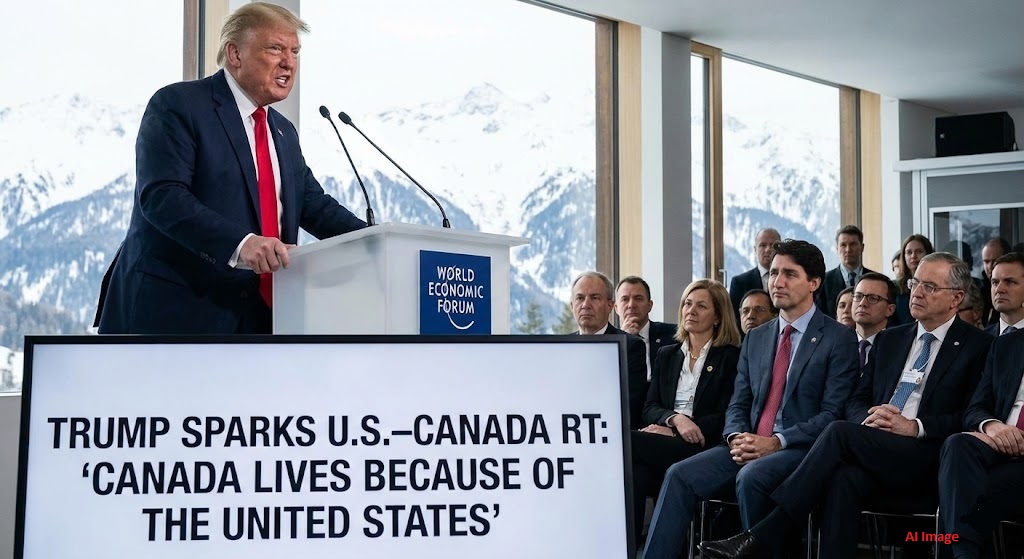
The political signal accompanying the market stress was delivered at the World Economic Forum in Davos. Speaking to global leaders, European Commission President Ursula von der Leyen invoked the 1971 Decision by U.S. President Richard Nixon to sever the dollar’s link to gold — the so-called Nixon Shock. That unilateral move reshaped the Global Monetary System and entrenched Dollar Dominance, but it also embedded Long-Term Vulnerabilities.
Von der Leyen’s message was pointed. Europe, she argued, cannot indefinitely anchor its Financial Stability to a Foreign Currency whose rules can be rewritten by another government in moments of crisis. The implication was unmistakable: Reducing Dependence on the U.S. Dollar is no longer a theoretical debate in Brussels, but an Emerging Strategic Necessity.
From Rhetoric To Action
What distinguishes the current moment from earlier European unease is the shift from Words to Concrete Steps. Denmark’s State Pension Fund has announced it will fully exit its holdings of U.S. Treasuries by the end of the month, citing declining Trust in the Long-Term Stability of the U.S. Economy. While the fund’s exposure — roughly $100 Million — is small in absolute terms, analysts describe the decision as a Symbolic Warning Shot rather than a financial shock in itself.
Europe’s leverage is far greater than any single fund. European Institutions collectively hold around 40 Percent of All Foreign-Owned U.S. Treasuries, amounting to more than $3.5 Trillion. When Equities, Corporate Bonds, and other financial assets are included, Europe’s total exposure to the U.S. Financial System is estimated at between $10 Trillion and $12.5 Trillion. Even a modest reduction in New Purchases, or a decision to let Maturing Bonds Roll Off Without Reinvestment, would materially tighten Financing Conditions for Washington.
Markets React: “Sell America” Gains Traction
Financial markets have begun to price in this risk. U.S. Equity Markets have experienced sharp, sudden sell-offs, with estimates suggesting that between $1 Trillion and $1.25 Trillion in market value was erased in a single trading session during recent volatility. At the same time, Gold and Silver Prices have surged, reflecting a renewed Flight to Physical Stores of Value as confidence in Paper Assets weakens.
The tone of U.S. Financial Commentary has shifted as well. Major outlets and influential analysts have openly discussed a “Sell America” Trade, a phrase that until recently would have sounded extreme. The concern is not about an imminent collapse, but about a Gradual Erosion of Trust — a far more dangerous process for a Debt-Dependent System.
A Capital War Takes Shape
Hedge fund founder Ray Dalio has described the current phase as a “Capital War,” in which the ability of the United States to fund itself cheaply collides with the growing reluctance of Foreign Investors to continue financing ever-larger deficits. In this framework, Capital Flows become a form of Geopolitical Leverage, and Reserve Currency Status is no longer guaranteed by history alone.
China has already reduced its Treasury Exposure over the past decade, and India has pursued policies aimed at settling more trade in Local Currencies. If Europe follows a similar path — not by dumping existing holdings, but by Slowing or Halting New Purchases — the impact on U.S. Borrowing Costs could be profound. Higher yields would feed directly into Higher Interest Expenses, amplifying Deficit Pressures and increasing Long-Term Financial Risk.
A Cracking Financial Order
Europe’s stance does not yet amount to a Coordinated Exit from the Dollar System, nor does it signal the immediate rise of an Alternative Reserve Currency. The Euro itself faces Structural Constraints, and no single currency is ready to fully replace the dollar’s global role. What is changing, however, is the assumption that the Status Quo Is Immutable.
For the first time in decades, Europe is openly questioning the foundations of the U.S.-Centric Financial Order rather than quietly adapting to it. Whether this moment marks a Tactical Warning designed to extract concessions, or the early stages of a genuine move toward a Multipolar Monetary System, remains uncertain.
What is no longer in doubt is that Trust — the central pillar of any Reserve Currency — is being tested. As Yields Rise, Gold Rallies, and policymakers revisit the lessons of 1971, the global system is entering a phase of Reassessment. The Warning Shots have been fired, and the direction of the next move may determine the shape of Global Finance for a Generation.
About the Author
Aditya Kumar:
Defense & Geopolitics Analyst
Aditya Kumar tracks military developments in South Asia, specializing in Indian missile technology and naval strategy.