EuroDASS Reveals Next-Gen Electronic Warfare Enhancements for Eurofighter Typhoon
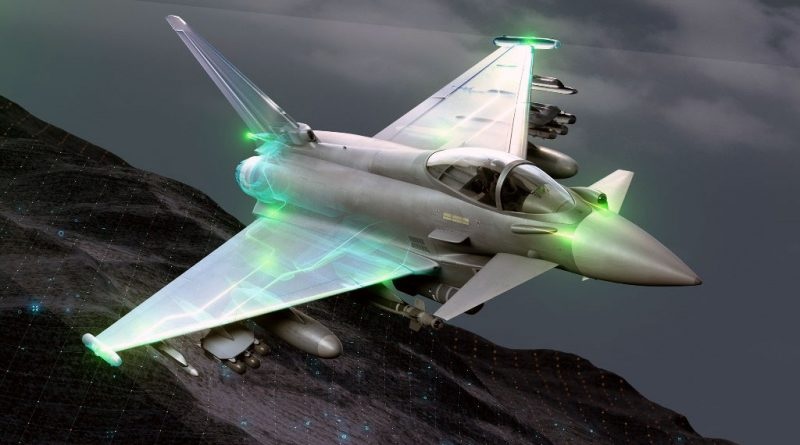
The Eurofighter Typhoon, a hallmark of European aerospace engineering, is set to receive a transformative upgrade in its electronic warfare (EW) capabilities. The EuroDASS consortium, comprising Leonardo, ELT Group, Indra, and Hensoldt, has unveiled the advanced Praetorian Defensive Aid Sub-System (DASS), promising unparalleled situational awareness and survivability for the aircraft well into the 2060s. This announcement follows extensive concept work and successful technology flight trials, cementing the system as a cornerstone of future combat readiness.
A Revolutionary Leap in Defensive Systems
The newly enhanced Praetorian DASS leverages Europe’s sovereign electronic warfare expertise, developed in collaboration with system integrator BAE Systems. This next-generation system builds upon the legacy of the original Praetorian suite, which has safeguarded Typhoons from radar-guided and infrared missile threats for over three decades. However, the upgrade is anything but incremental; it represents a holistic overhaul to address the rapidly evolving threat landscape.
At the heart of the new system lies its ability to process vast amounts of data using cutting-edge Digital Radio Frequency Memory (DRFM) capabilities. This technology enables the Typhoon to accurately characterize and counter highly complex threats, including advanced radar and missile systems. A high-speed data-centric architecture underpins the system, with wideband Active Electronically Scanned Array (AESA) Electronic Counter-Measures delivering significantly increased power for self-protection.
Advanced Features Tailored for NATO Operations
The upgraded Praetorian DASS is equipped with interfaces to accommodate an external, high-powered electronic attack pod. This capability is essential for NATO’s Suppression of Enemy Air Defence (SEAD) missions, enabling the Typhoon to neutralize sophisticated ground-based radar systems. The system also integrates seamlessly with the aircraft’s new AESA radar, offering synergistic enhancements to both offensive and defensive operations.
An emphasis on modularity ensures that the system can be easily retrofitted onto existing aircraft or integrated into newly built Typhoons without affecting their aerodynamic profile or operational range. This "form-fit retrofit" design reflects a commitment to operational efficiency and adaptability, crucial for modern air forces.
Harnessing AI for Cognitive Electronic Warfare
The Praetorian DASS introduces a groundbreaking capability in the form of Cognitive Electronic Warfare (CEW). Using artificial intelligence (AI) and machine learning algorithms, the system can rapidly analyze high-fidelity signal data, identify emerging threats, and prioritize responses in real-time. This cognitive approach ensures that the Typhoon remains ahead of adversaries, capable of adapting to unforeseen challenges on the battlefield.
To support this innovation, the system boasts a high-bandwidth infrastructure that transmits raw signal data to an advanced central processing hub. This architecture allows the Typhoon to detect and respond to threats at greater ranges, offering pilots critical decision-making advantages.
Future-Proofing for the Evolving Battlefield
The next-generation Praetorian DASS represents a significant leap forward in electronic warfare, ensuring the Eurofighter Typhoon remains a dominant force in contested airspaces. By incorporating AI-driven cognitive capabilities, wideband AESA technology, and robust SEAD support, the system aligns with NATO’s evolving operational requirements while maintaining Europe’s strategic autonomy in defense technology.
As threats continue to evolve, the Typhoon’s upgraded Praetorian DASS will enable it to meet the challenges of tomorrow, ensuring the aircraft remains a linchpin of air superiority for decades to come.
✍️ This article is written by the team of The Defense News.