Elbit Systems Develop Airborne Variant of Iron Beam Laser Weapons, Globale Race
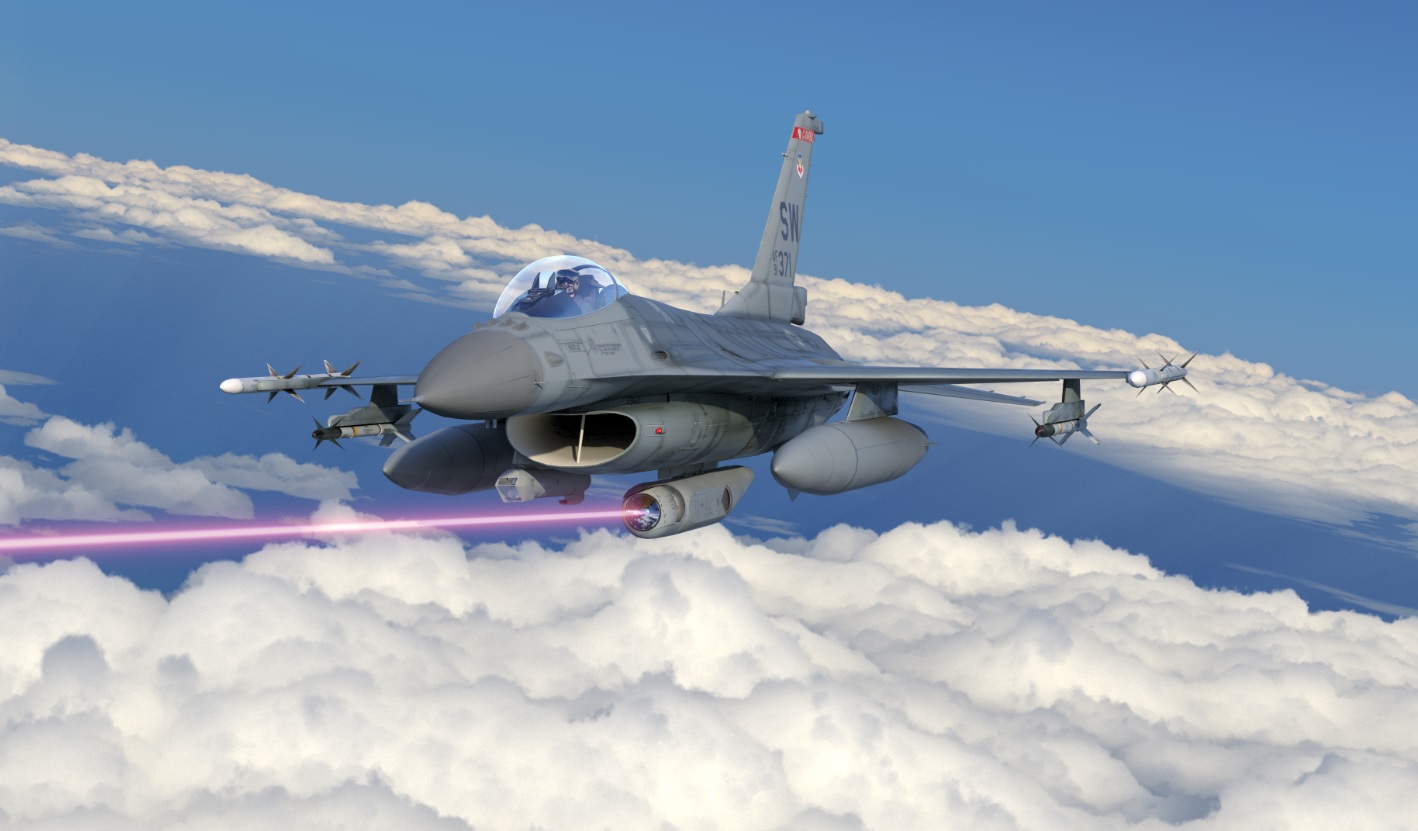
Elbit Systems has confirmed major progress in adapting the Iron Beam ground-based high-energy laser system into an airborne platform for the Israeli Air Force, a development that could mark a new era in directed-energy weapons. “We are developing as a prime an airborne high-power solution for the Israeli Air Force, and there is a lot of interest for this solution from other customers globally,” Elbit CEO Bezhalel Machlis said. The company supplies Iron Beam to prime contractor Rafael, with Israel’s Defense Ministry earlier suggesting the laser had successfully destroyed drones during operational testing.
Alongside the laser program, Elbit highlighted its role in Israel’s recent conflicts, confirming the use of systems such as the Hermes 900 UAV, which reportedly operated in missions over Tehran during the 12-day war with Iran. Its Rampage air-launched missile, co-developed with Israel Aerospace Industries, was also heavily deployed. Financially, Elbit announced a 20% rise in Q2 sales to $1.97 billion, driven by strong demand for precision-guided munitions in Israel and the Asia-Pacific, and UAV deliveries to Europe. The company’s order backlog surged to $23.8 billion, with 68% of that coming from overseas customers, and more than half extending beyond 2026.
Elbit also revealed a $1.6 billion, five-year contract with an unnamed European nation covering long-range strike, signals intelligence, electronic warfare, and loitering munitions. Despite diplomatic tensions around the Gaza war, the company emphasized that it sees “more business opportunities than ever.”
The Global Race for Airborne Lasers
Israel is not alone in pursuing airborne laser weapons, which are increasingly viewed as game-changing systems capable of intercepting missiles, rockets, drones, and even hypersonic threats.
-
United States: The U.S. Air Force previously tested the Airborne Laser Testbed (YAL-1), a megawatt-class chemical oxygen iodine laser mounted on a Boeing 747. Although retired in 2014, lessons learned are guiding newer programs such as the Self-Protect High-Energy Laser Demonstrator (SHiELD) designed for fighter jets. Lockheed Martin, Northrop Grumman, and Boeing are all contributing to U.S. directed-energy projects, with compact solid-state and fiber laser designs making deployment on smaller aircraft feasible.
-
China: Beijing is investing heavily in airborne and space-directed energy weapons, with reports of high-power tactical lasers tested on military aircraft. Chinese research institutions are developing compact laser systems capable of blinding or destroying hostile UAVs and potentially disabling satellites in low Earth orbit.
-
Russia: Moscow has fielded the Peresvet laser system, claimed to counter drones and satellites, and is reportedly working on smaller airborne versions. Russian defense sources have hinted at testing directed-energy weapons for deployment on MiG and Su-series aircraft, though details remain classified.
-
India: New Delhi is steadily moving into the laser weapons domain through the Directed Energy Weapons (DEW) program under the Defence Research and Development Organisation (DRDO). DRDO has already demonstrated 25kW truck-mounted laser systems capable of targeting UAVs and missiles. Work is ongoing on higher-powered 100kW-class lasers with the long-term aim of adapting them for airborne platforms, including fighter jets and transport aircraft. India has also been testing electronic warfare pods and high-power microwave systems, both seen as complementary to laser defense. Though still at an early stage compared to the U.S. or Israel, India’s push signals its intent to join the global competition in next-generation directed-energy capabilities.
-
Germany (MBDA & Rheinmetall): Germany has been working on 50 kW+ laser demonstrators, with integration trials aboard naval ships already showing promise. Rheinmetall has also tested scalable high-energy lasers that could, in principle, be adapted to aircraft in the future.
-
United Kingdom & France: Both countries have invested in laser-directed energy research under programs like the UK’s Dragonfire, a 50 kW-class demonstrator. While naval and ground-based deployments are currently prioritized, airborne integration is considered a long-term goal.
A New Era of Aerial Defense
With Elbit’s airborne Iron Beam moving closer to reality, the global race to field compact, high-power laser systems on aircraft is intensifying. For Israel, such technology would provide a critical edge against the growing threat of rockets, drones, and hypersonic weapons in contested airspaces. For nations like the U.S., China, Russia, and India, success in airborne lasers could redefine aerial combat, missile defense, and even space security in the decades ahead.
✍️ This article is written by the team of The Defense News.