Egypt Inducts First Locally Manufactured K9A1 EGY Thunder Howitzers Under South Korea Partnership
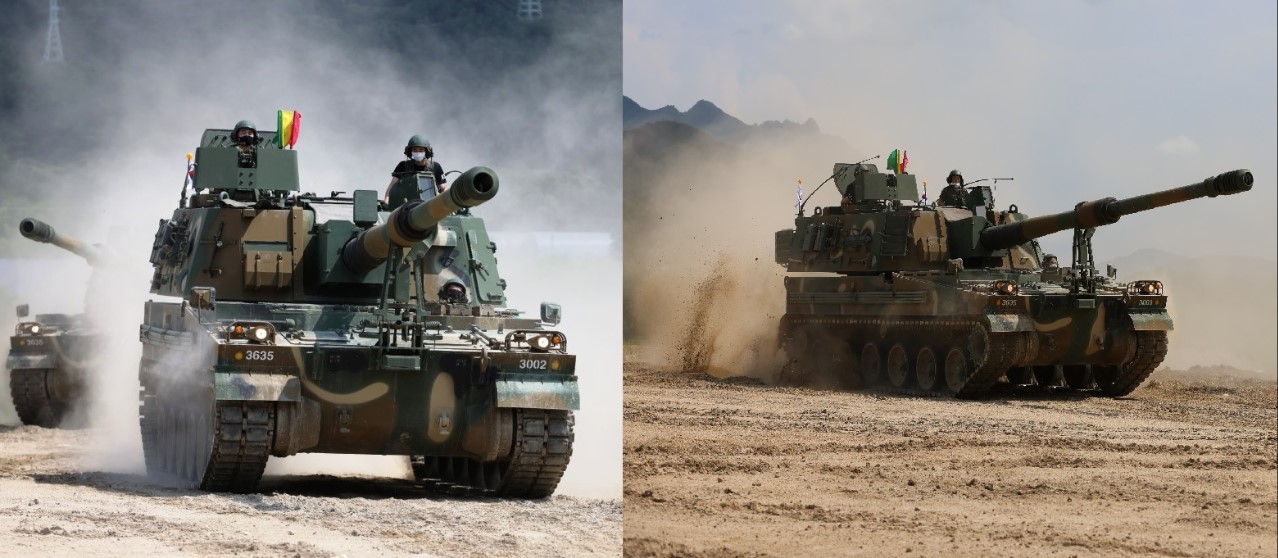
The Egyptian Armed Forces have formally received the first batch of K9A1 EGY Thunder 155mm self-propelled howitzers, marking a major milestone in the country’s defense modernization and industrial localization efforts. The systems were manufactured at Factory 200, located near Cairo, under a strategic defense industrial partnership between Egypt and South Korea.
The delivery represents the first operational outcome of a long-term cooperation framework designed to transfer advanced artillery manufacturing capabilities to Egypt. Defense officials described the program as a cornerstone of Cairo’s broader plan to strengthen domestic military production while upgrading core combat capabilities.
Advanced Artillery Capability Enters Egyptian Service
The K9 Thunder, developed by South Korea’s Hanwha Aerospace, is regarded as one of the most capable self-propelled howitzers currently in global service. The platform combines high mobility, long-range precision firepower, and sustained firing capability, making it suitable for both conventional warfare and high-tempo operations.
Equipped with a 155mm/L52 gun, the K9A1 EGY can engage targets at ranges of up to 40 kilometers using extended-range ammunition. It is capable of firing between six and eight rounds per minute and features an automated fire control system compatible with NATO artillery standards. The system is already operational with multiple armed forces worldwide, including South Korea, India, Turkey, Poland, Finland, and Norway, underscoring its operational maturity.
Strategic Deal And Integrated Artillery Ecosystem
Egypt’s induction of the K9A1 EGY stems from a $1.7 billion defense agreement signed with South Korea in 2022. The contract covers the procurement of hundreds of K9 howitzers and establishes a framework for progressive local assembly and manufacturing within Egypt. Over time, this approach is expected to reduce reliance on foreign supply chains while expanding domestic technical expertise.
In addition to the howitzers, the agreement includes K10 ammunition resupply vehicles and K11 command and fire-direction vehicles, forming a fully integrated artillery system. A notable element of the deal is the allocation of part of the fleet to the Egyptian Navy, where the platforms are intended to support coastal defense and naval fire support missions. Analysts note that this marks the first instance of a K9 variant being tailored for maritime and littoral operations.
New Powerplant Enhances Technological Independence
A key technological feature of the K9A1 EGY variant is the introduction of a new 1,000-horsepower diesel engine developed domestically in South Korea in cooperation with STX Engine. The powerplant replaces the German-made MTU 881 Ka-500 engine used in earlier export versions, reflecting a deliberate move toward greater technological self-reliance.
According to Hanwha Aerospace, the engine underwent extensive qualification trials, accumulating more than 10,000 kilometers of testing across desert and mountainous environments. These trials were designed to validate performance under conditions similar to those encountered in Egypt’s operational theaters, with improvements noted in reliability, mobility, and sustainment.
Industrial And Regional Implications
For Egypt, the K9A1 EGY Thunder program extends beyond battlefield capability. Local production at Factory 200 is expected to contribute to workforce development, technology transfer, and the long-term growth of the national defense industrial base. Officials have indicated that Egypt aims to position itself as a regional hub for the maintenance, overhaul, and potential future production of K9 systems serving North Africa and the Middle East.
As the first locally manufactured howitzers enter service, the K9A1 EGY Thunder stands as a symbol of Egypt’s evolving defense strategy—one that pairs advanced foreign technology with expanding domestic industrial capacity. The program reinforces Cairo’s deterrence posture while signaling its ambition to play a larger role in the regional military-industrial landscape.
✍️ This article is written by the team of The Defense News.