Early Warnings Blunt Russia’s Missile Strategy: How Intelligence Leaks, Surveillance, Alerts Are Shaping the Ukraine War
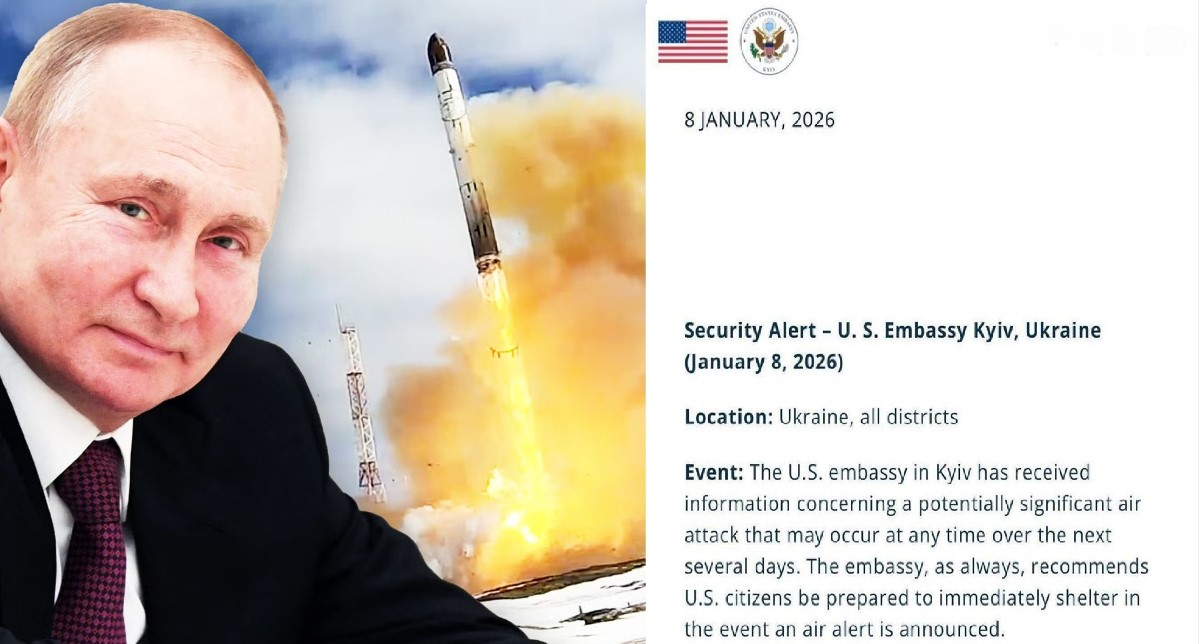
Kyiv : A security alert issued by the U.S. Embassy in Kyiv on January 8, 2026, warning of a potentially significant Russian air attack, has once again highlighted a defining feature of the Ukraine war: Russia’s growing inability to achieve strategic surprise with its advanced missile weapons.
The embassy’s warning — urging U.S. citizens across Ukraine to be ready to immediately shelter during air raid alerts — came amid heightened military activity inside Russia and fresh reports from Ukrainian media of preparations for a large-scale missile strike. Together, these signals have intensified debate among defense analysts over whether persistent intelligence leaks and surveillance failures inside Russia are undermining Moscow’s war effort.
Embassy Warning Signals Elevated Threat
In its official notice, the U.S. Embassy Kyiv stated it had received credible information pointing to a potentially significant air attack that could occur “at any time over the next several days.” The alert applied to all districts of Ukraine, underscoring the perceived nationwide scope of the threat.
Such embassy warnings are not issued lightly. They are typically based on a combination of classified intelligence, satellite monitoring, allied intercepts, and real-time assessments of Russian military movements. The January 8 alert closely followed reports of unusual activity at Russian missile facilities, suggesting that Western intelligence agencies may have detected concrete indicators of imminent launches.
Kapustin Yar Activity Raises Alarm
At the center of current concerns is Russia’s Kapustin Yar missile test range, a long-established site used for ballistic missile testing and evaluation. Ukrainian media outlets reported heightened activity at the range, including preparations consistent with missile fueling, transport, or launch-readiness drills.
Particular attention has focused on the Oreshnik IRBM, an intermediate-range ballistic missile that Russian sources have described as part of a new generation of strike weapons. While Moscow has promoted such systems as game-changing, analysts note that repeated early warnings have sharply reduced their battlefield impact.
Ukrainian President Volodymyr Zelensky publicly acknowledged that Kyiv had received intelligence pointing to the possibility of a large-scale Russian attack during the night of January 8, reinforcing the credibility of the embassy warning.
How the U.S. and Media Warn Before Missiles Fly
Western governments and major media outlets have increasingly been able to warn of Russian missile strikes hours or days in advance. According to defense analysts, this capability rests on several pillars.
First, satellite surveillance allows the United States and its allies to observe missile storage sites, test ranges, and launch units in near real time. Movements such as transporter-erector-launchers, fueling operations, or changes in base activity patterns are often visible from space.
Second, signals intelligence, including intercepted communications and electronic emissions, can reveal heightened alert levels or launch preparations within Russian missile units.
Third, and most controversially, analysts believe there is an internal Russian intelligence leak problem. Information about planned strikes appears to reach Ukrainian and Western intelligence services with striking regularity, pointing to weak operational security, compromised command chains, or deliberate insider leaks.
Russia’s Intelligence Failure and the Loss of Surprise
Military experts increasingly argue that Russia’s failure to protect sensitive operational plans has become one of the central weaknesses of its war effort. Advanced missile systems such as the Oreshnik IRBM, hypersonic glide vehicles, and long-range cruise missiles rely heavily on surprise to be effective.
When early warnings are issued, Ukraine is able to:
- Move high-value military assets away from target zones
- Disperse aircraft, air-defense systems, and command elements
- Protect energy infrastructure crews and emergency services
- Reduce civilian casualties through early sheltering
As a result, even technologically advanced Russian missiles often achieve limited strategic effect, striking empty facilities, decoys, or hardened targets instead of the intended critical assets.
A War Shaped by Intelligence, Not Just Firepower
Nearly four years into the war, many analysts now describe Russia’s intelligence shortcomings as a structural reason for its prolonged military stalemate in Ukraine. Despite possessing large missile inventories on paper, Moscow has repeatedly failed to deliver decisive strategic blows.
Ukraine’s ability to remain in the fight, analysts say, depends not only on air defenses or Western weapons, but on information dominance — knowing when and where attacks are coming, and acting before missiles strike.
The January 8 U.S. Embassy alert fits squarely into this pattern: a public warning, based on classified intelligence indicators, that strips Russia of the element of surprise before launch.
Strategic Implications Going Forward
If current trends continue, Russia’s reliance on increasingly advanced missile systems may deliver diminishing returns. Each early warning strengthens Ukraine’s resilience and highlights the effectiveness of Western intelligence-sharing networks.
At the same time, continued leaks and predictability may push Moscow toward riskier escalation paths or short-notice launches, options that carry serious technical and political risks.
For now, the message from Kyiv, Washington, and allied capitals is clear: missiles may still fly, but secrecy no longer belongs to Russia.
About the Author
Aditya Kumar:
Defense & Geopolitics Analyst
Aditya Kumar tracks military developments in South Asia, specializing in Indian missile technology and naval strategy.