EU Prepares €93 Billion Tariff Strike on U.S, Seeks Last-Minute Deal to Avert Trade War
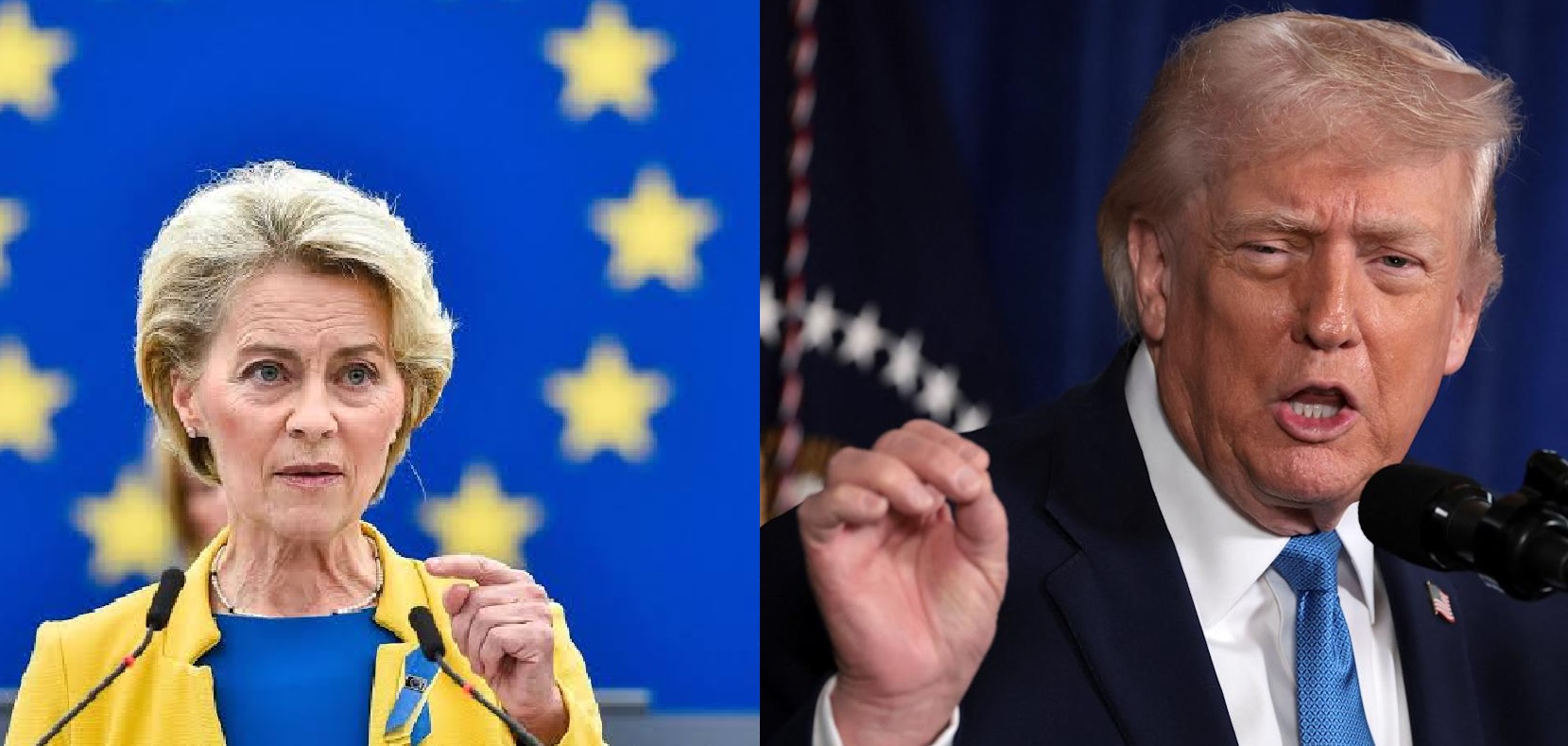
BRUSSELS : The European Union has quietly assembled a sweeping €93 billion ($107 billion) package of tariffs and market restrictions targeting U.S. companies, even as it deliberately pauses retaliation in favor of last-minute diplomacy with U.S. President Donald Trump.
Senior EU officials describe the move as a calibrated show of force: the countermeasures are finalized, legally vetted, and ready to deploy, but Brussels is choosing restraint to avert a wider rupture over trade, security, and Washington’s revived demands related to Greenland.
A Retaliation Package on Standby
According to officials familiar with the planning, the European Commission has completed a retaliation list that would strike politically sensitive U.S. exports, echoing earlier transatlantic trade confrontations. The €93 billion figure reflects a reactivation and expansion of tariffs that were previously frozen under a mid-2025 trade truce, now updated to reflect current trade volumes and strategic leverage points.
The package is designed to be modular. Brussels could activate it in phases, escalating pressure on U.S. sectors with strong domestic political constituencies while minimizing immediate blowback to European consumers.
“Everything is ready,” one EU diplomat said. “This is not improvisation. It is leverage.”
The Trigger: Tariffs and Greenland
The crisis intensified after President Trump threatened a universal 10 percent tariff on imports from several European states—including Germany, France, and Denmark—set to take effect on February 1, with a warning that duties could climb to 25 percent by June if European governments refuse to engage with U.S. demands over Greenland.
Trump has publicly framed Greenland as strategically indispensable for U.S. missile-defense architecture and Arctic security, arguing that expanded American control would bolster early-warning systems and counter growing Russian and Chinese activity in the region. European leaders, however, see the linkage of trade penalties to territorial pressure as an unprecedented escalation within the alliance.
Brussels Pulls Back For Now
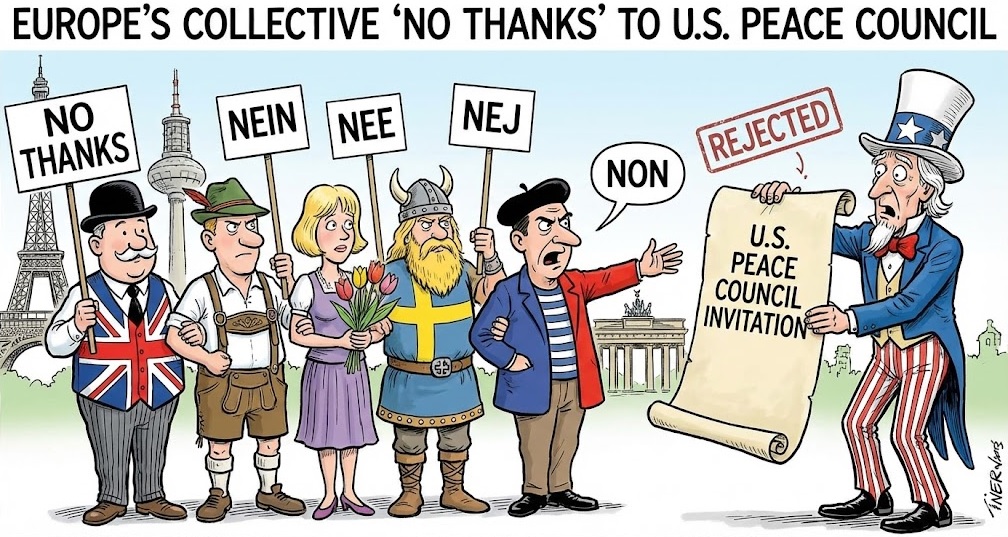
Despite the scale of the threat, EU leaders are deliberately stepping back from immediate retaliation. Officials say the decision reflects concern that an all-out trade war—combined with a dispute over sovereignty—could destabilize NATO at a moment of already heightened global insecurity.
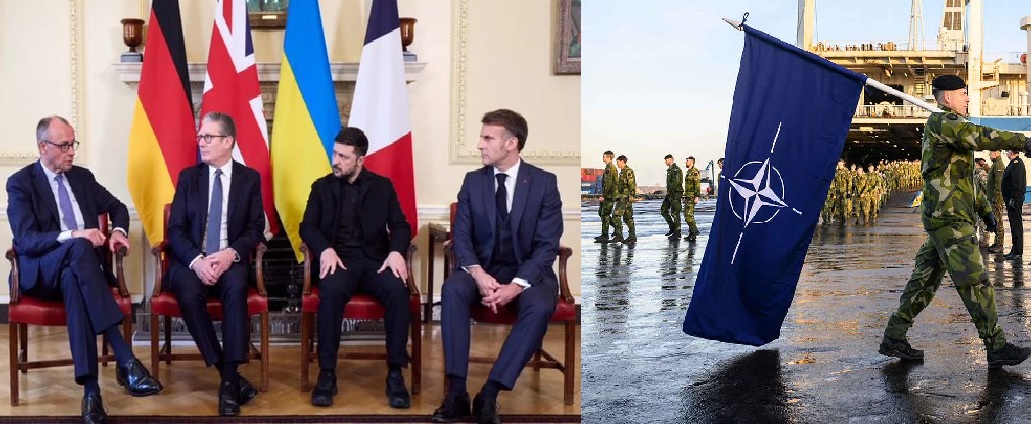
European Council President António Costa, working closely with French President Emmanuel Macron, has urged a shift toward a “security-first” dialogue with Washington. The message being relayed to the White House is blunt but conciliatory: suspend the tariffs, and Europe is prepared to talk seriously about Arctic security—without reopening questions of sovereignty.
Behind closed doors, officials describe this as a “strategic pivot” rather than a concession.
“If we retaliate immediately, we lock in confrontation,” said one senior source. “If we talk first, we test whether Washington wants a deal or a showdown.”
Economic Pressure Beyond Tariffs
While tariffs dominate the headlines, the EU’s options extend further. The bloc retains the ability to impose regulatory barriers, procurement exclusions, and financial restrictions on U.S. firms operating in Europe. These tools fall under the EU’s Anti-Coercion Instrument, a powerful legal mechanism created for situations where economic pressure is used to force political outcomes.
The existence of these measures—unused but credible—is intended to reinforce Brussels’ negotiating position as talks begin.
The Debt Dimension
Complicating the standoff is Europe’s deep financial interconnection with the United States. European countries are among the largest foreign holders of U.S. government debt, underscoring the mutual costs of escalation.
The United Kingdom holds roughly $888.5 billion in U.S. Treasuries, followed by Belgium ($481.0 billion), Canada ($472.2 billion), Luxembourg ($425.6 billion), France ($376.1 billion), Germany ($109.8 billion), and Denmark (about $12 billion).
EU officials stress that debt holdings are not a weapon, but they illustrate how deeply entwined the transatlantic economic relationship remains—and how damaging a prolonged conflict could become.
A Narrow Diplomatic Window
With the February 1 tariff deadline approaching, European and U.S. negotiators face an exceptionally tight timeline. Brussels’ strategy hinges on convincing Washington that cooperation on Arctic security and defense coordination offers more strategic value than a trade war that would cost both sides tens of billions of euros.
For now, the EU’s retaliation list remains sealed but ready. The message from Brussels is unmistakable: Europe has prepared for economic confrontation, but it is betting—at least for the moment—that diplomacy can still prevail.
About the Author
Aditya Kumar:
Defense & Geopolitics Analyst
Aditya Kumar tracks military developments in South Asia, specializing in Indian missile technology and naval strategy.