EU Moves to Ban All Russian Gas by 2027 in Major Geopolitical Shift, Eyeing Energy Independence
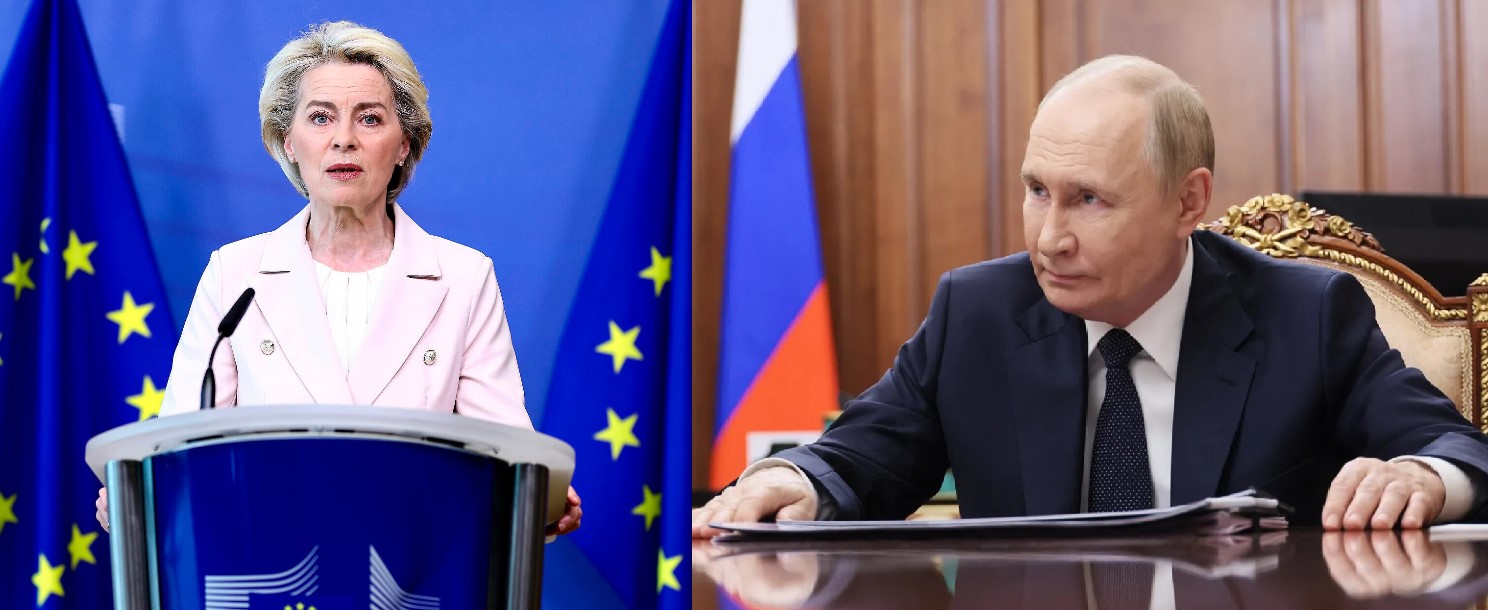
BRUSSELS — In a landmark decision on Wednesday, the European Union formally committed to phasing out imports of Russian natural gas, including both liquefied natural gas (LNG) and pipeline gas, by late 2027 — a move aimed at ending decades-long dependency and undermining Moscow’s financial ability to sustain its war efforts in Ukraine.
Under the agreement struck by member states and the European Parliament, LNG imports from Russia will be banned by end-2026, while pipeline gas imports must cease by autumn 2027, with a latest deadline of November 1, 2027.
The decision forms part of the broader REPowerEU initiative, launched after Russia’s 2022 invasion of Ukraine, which aims to wean Europe off Russian fossil fuels and accelerate the transition to diversified and sustainable energy sources.
European Commission President Ursula von der Leyen, speaking after the agreement, said the move is about “ending forever” Europe’s reliance on Russian gas and delivering a “new era” of energy independence for the bloc.
Phased Ban: How and When the Imports Will End
The timeline laid out in the agreement spells a step-by-step wind-down of Russian gas imports, accounting for existing contracts and supply security. For supply deals signed before mid-June 2025, the ban on Russian LNG will take effect from April 25, 2026, and for pipeline gas from June 17, 2026.
For longer-term contracts, the prohibition will apply to LNG as of January 1, 2027, while pipeline gas contracts will end by September 30, 2027 — or no later than November 1, 2027, even if gas storage targets are not fully met.
To ensure compliance, the regulation introduces a prior-authorization requirement for gas imports. Companies importing Russian gas will need to submit documentation of origin and contract history; any change in contracts will only be allowed under narrow “operational” reasons. Violations of the ban will lead to penalties on both companies and private individuals.
The agreement also obliges all member states to draw up national energy-diversification plans — not only to replace Russian supply sources, but also to ensure stability and security during the transition period.
Furthermore, the EU Commission is expected next year to propose similar legislation to phase out Russian oil imports by end-2027, signaling a broader decoupling from Russian fossil fuels.
Hitting Moscow’s "War Chest"
The war in Ukraine and Russia’s repeated use of gas supply as geopolitical leverage galvanized the EU to act. The dependence on Russian gas had long been a vulnerability — for decades Russia was the bloc’s dominant supplier.
By cutting off Russian gas imports, the EU aims to deny Moscow a major stream of revenue — potentially undermining its capacity to wage war and diminishing its leverage over European energy security. Commission officials have framed the decision as not just an economic or energy policy, but a geopolitical one.
This shift also aligns with the EU’s long-term push for energy diversification, investment in renewables and sustainable alternatives such as hydrogen, and reducing overall fossil-fuel dependence — all central pillars of REPowerEU.
Who’s Resisting, What Could Happen
The ban is not without resistance. At least two EU member states — Hungary and Slovakia — have signalled their intention to challenge the decision. Both countries remain heavily dependent on Russian gas for their energy needs. Hungarian officials have already warned of legal challenges at the Court of Justice of the European Union.
Critics argue that the ban could drive up energy prices across the EU, especially in countries with low capacity to import alternative gas or energy. Some warn of potential economic consequences for industries, households, and energy-intensive sectors.
Nevertheless, EU negotiators say they have included a “safeguard clause”: in case of serious supply-security issues — for example, if gas storage levels fall dangerously low — the bloc may temporarily suspend the ban for affected countries. But they stressed this would be allowed only under strict and limited conditions.
The Broader Implications for Europe and Beyond
For the European Union, the decision marks a turning point: a definitive break from Russian gas, which for decades shaped its energy strategy, economics, and geopolitics. The bloc is signaling that it will no longer tolerate energy dependence as leverage in conflict.
The move is also likely to accelerate Europe’s shift toward diversified energy imports — including from the United States and other non-Russian suppliers — and hasten the deployment of renewable and alternative energy solutions. This could reshape global energy trade patterns over the coming years.
Politically, the ban sends a strong message to Moscow. By depriving Russia of significant export revenue, the EU aims to weaken its capacity to fund military aggression. It also strengthens the EU’s strategic autonomy, reducing vulnerability to external coercion through energy supply.
At the same time, for opposition-minded EU members, the decision will test the balance between collective security interests and national energy security concerns. The legal challenges anticipated from Hungary and Slovakia may delay or complicate the transition — and highlight the intricate trade-offs involved in forging a unified European energy strategy.
About the Author
Aditya Kumar:
Defense & Geopolitics Analyst
Aditya Kumar tracks military developments in South Asia, specializing in Indian missile technology and naval strategy.