EU Flags Indo-Russian Relations as Obstacle to Stronger India-EU Ties, Months After Support to Pakistan
The European Union has openly acknowledged that Indo-Russian relations are proving to be a stumbling block in the path of closer India-EU cooperation. The remarks come at a time when Brussels is pushing hard to conclude a Free Trade Agreement (FTA) with New Delhi, while also seeking stronger collaboration on defence, technology, and climate issues.
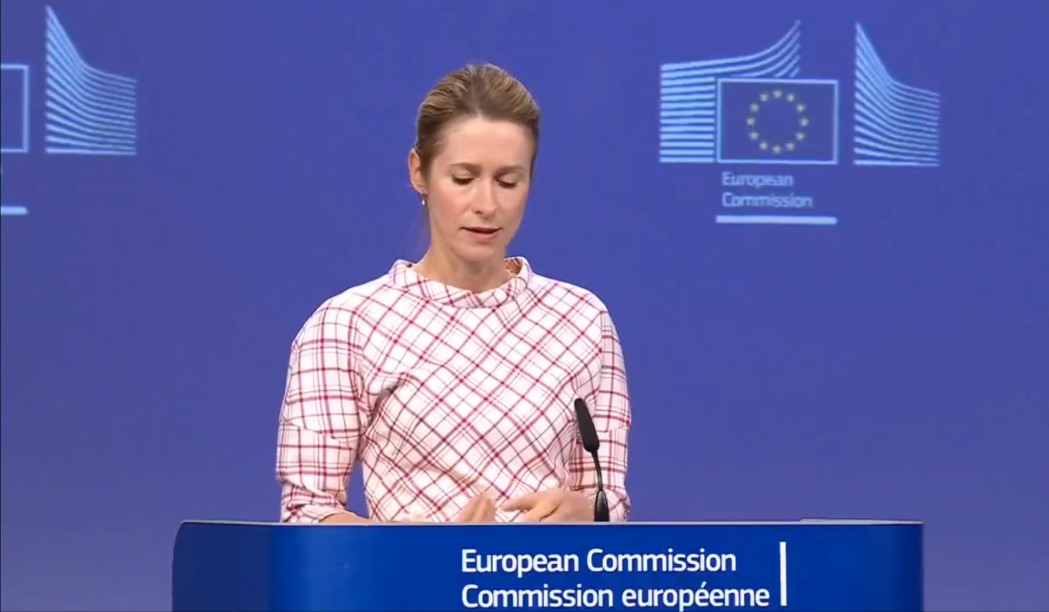
EU Foreign Policy Chief Kaja Kallas stated that India’s continued purchase of Russian oil and participation in Russian-led military drills undermine the bloc’s expectations of strategic alignment. According to her, such moves make it difficult for Brussels to treat India as a fully reliable partner, despite recognising India’s importance in balancing power in the Indo-Pacific.
The EU and India have been negotiating an ambitious FTA, aiming to seal it by the end of this year. Alongside the trade talks, the EU recently unveiled a Strategic Roadmap with India, focusing on trade, connectivity, defence cooperation, and technology. However, the Russia factor continues to overshadow these efforts.
Since the Ukraine conflict began in 2022, India has sharply increased imports of discounted Russian crude oil, a step that has benefited its domestic economy but frustrated Western partners. Adding to European unease, Indian forces recently took part in Zapad 2025, a large-scale military exercise led by Russia and Belarus near NATO’s eastern front.
India, however, views its relationship with Russia as deeply rooted in history, particularly in areas of defence and energy security. New Delhi has repeatedly stressed that it will act according to its national interests and maintain balanced ties with all global powers.
The EU’s concerns come just four months after the bloc extended financial and humanitarian support to Pakistan, a development that has not gone unnoticed in Indian strategic circles. The timing of these remarks raises questions about the EU’s balancing of interests in South Asia.
How Much Trade Still Happens: EU-Russia Data
Despite strong sanctions and restrictions since 2022, trade between the EU and Russia has not disappeared completely.
-
In 2024, the total value of goods trade (imports plus exports) between the EU and Russia was about €67.5 billion.
-
EU imports from Russia were around €35.9 billion, largely dominated by energy products, minerals, and raw materials.
-
EU exports to Russia were about €31.5 billion, led by chemicals, machinery, transport equipment, and food.
-
In the second quarter of 2025, trade fell sharply: EU imports from Russia were roughly €7 billion, and exports to Russia were about €7.5 billion, bringing total bilateral trade to around €14.5 billion.
-
Compared with early 2022, this represents an 82% collapse in overall trade. Imports have fallen about 86%, while exports are down by about 61%.
-
The EU’s energy trade deficit with Russia, which stood at over €40 billion in early 2022, dropped to about €4.2 billion by mid-2025 due to reduced reliance on Russian fuel.
Why This Matters
These numbers highlight that while India is being pressed over its energy and defence ties with Moscow, the EU itself still maintains a reduced but notable level of trade with Russia. This duality underscores the complexity of global diplomacy, where economic necessities and strategic alignments often clash with political messaging.
For India, the challenge is to sustain its historic partnership with Russia while expanding trade and technological cooperation with the EU. For Brussels, the task is to balance its principles with its own remaining dependencies on Russian goods.
The EU’s statement that Indo-Russian relations stand in the way of closer India-EU ties reflects the new reality of global geopolitics. India continues to walk a tightrope between its long-standing ties with Moscow and its desire for deeper engagement with Europe. Whether both sides can bridge this divide will determine if the much-awaited FTA and broader partnership move forward or stall once again.
✍️ This article is written by the team of The Defense News.