EU Clears First Defence Plans for Eight Member States, Unlocking €38 Billion in Funding
BRUSSELS : The European Union has taken a decisive step toward reshaping its collective security architecture after the European Commission approved the national defence investment plans of eight Member States, paving the way for nearly €38 billion in low-cost, long-term loans aimed at strengthening Europe’s military readiness.
The move, announced on Wednesday, advances the EU’s broader effort to respond to growing security threats on its eastern flank and to reduce decades-long reliance on external defence suppliers. A formal proposal has now been submitted to the Council of the European Union to grant financial assistance to Belgium, Bulgaria, Denmark, Spain, Croatia, Cyprus, Portugal and Romania under the Security Action for Europe (SAFE) framework.
A Turning Point in EU Defence Policy
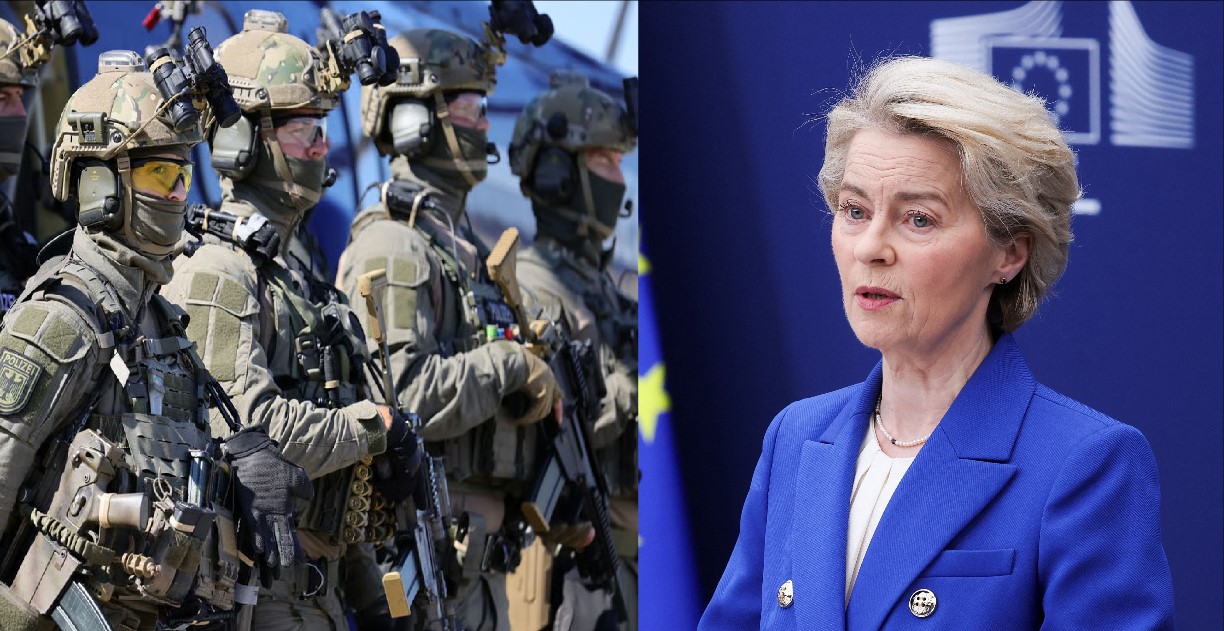
Speaking in Brussels, Ursula von der Leyen described the decision as a historic acceleration in European defence cooperation.
“Last year, the EU made more progress in defence than in decades before,” von der Leyen said, pointing to the White Paper on Defence and the Readiness Roadmap 2030 as the foundations for a new era of military investment. Together, she noted, these initiatives enable Member States to mobilise up to €800 billion for defence spending across the bloc.
Central to this effort is the SAFE mechanism, which allocates €150 billion for joint procurement of military equipment. The Commission has now approved an initial batch of SAFE plans for the eight countries, with further approvals expected in the coming weeks.
“It is now urgent for the Council to approve these plans to allow fast disbursement,” von der Leyen said, stressing the need to move quickly amid an increasingly unstable security environment.
Why the EU Is Taking This Step Now
The decision comes against the backdrop of Russia’s ongoing war against Ukraine, heightened tensions in the Middle East, and growing concerns over Europe’s ability to defend itself independently. EU officials argue that fragmented national defence spending has left the bloc with capability gaps, duplication of weapons systems, and limited interoperability between armed forces.
By approving coordinated national plans under SAFE, the EU aims to address these weaknesses collectively. The initiative is designed to help Member States rapidly modernise their militaries, replenish depleted stockpiles, and invest in advanced technologies, while ensuring that equipment can be used seamlessly across borders.
Another strategic objective is to integrate Ukraine more closely into the European security framework. SAFE explicitly allows Ukraine to participate in joint procurement projects, reinforcing Kyiv’s defence capabilities while aligning them with EU standards.
How the Funding Will Work
The approval follows an in-depth assessment of the National Defence Investment Plans submitted by the eight countries. Once the Council adopts the necessary implementing decisions — a process expected to take up to four weeks — loan agreements will be finalised, and the first payments are projected for March 2026.
Funding amounts were provisionally set in September based on principles of solidarity and transparency. Cyprus is expected to receive €1.18 billion, while Romania, reflecting its strategic position on NATO’s eastern flank, has been earmarked for €16.68 billion. In total, the eight Member States will be eligible for around €38 billion to support key strategic capabilities.
The loans are designed to be low-interest and long-term, easing pressure on national budgets while encouraging swift defence investment.
Benefits for Europe and Its Partners
EU officials say the benefits of SAFE extend well beyond individual countries. Joint procurement is expected to reduce costs through economies of scale, strengthen Europe’s defence industrial base, and reduce dependence on non-European suppliers. Greater interoperability between national forces is also seen as essential for credible collective defence.
The framework further allows participation by EFTA and EEA countries, as well as EU candidate and partner states, widening Europe’s defence cooperation network at a time of heightened geopolitical uncertainty.
Part of the Readiness 2030 Strategy
The SAFE Regulation, adopted on 27 May 2025, is a cornerstone of the Readiness 2030 defence package. The strategy aims to ensure that Europe can deter aggression, respond rapidly to crises, and act more autonomously in security matters by the end of the decade.
With Council approval now pending, EU officials say the first wave of funding represents a critical test of whether the bloc can translate political ambition into concrete military capability.
As von der Leyen made clear, the message from Brussels is one of urgency: Europe’s security, long considered a distant concern, has become an immediate priority — and collective action is no longer optional.
About the Author
Aditya Kumar:
Defense & Geopolitics Analyst
Aditya Kumar tracks military developments in South Asia, specializing in Indian missile technology and naval strategy.