Drone Strike Destroys Colombian Police Black Hawk Helicopter, 12 Killed in Antioquia
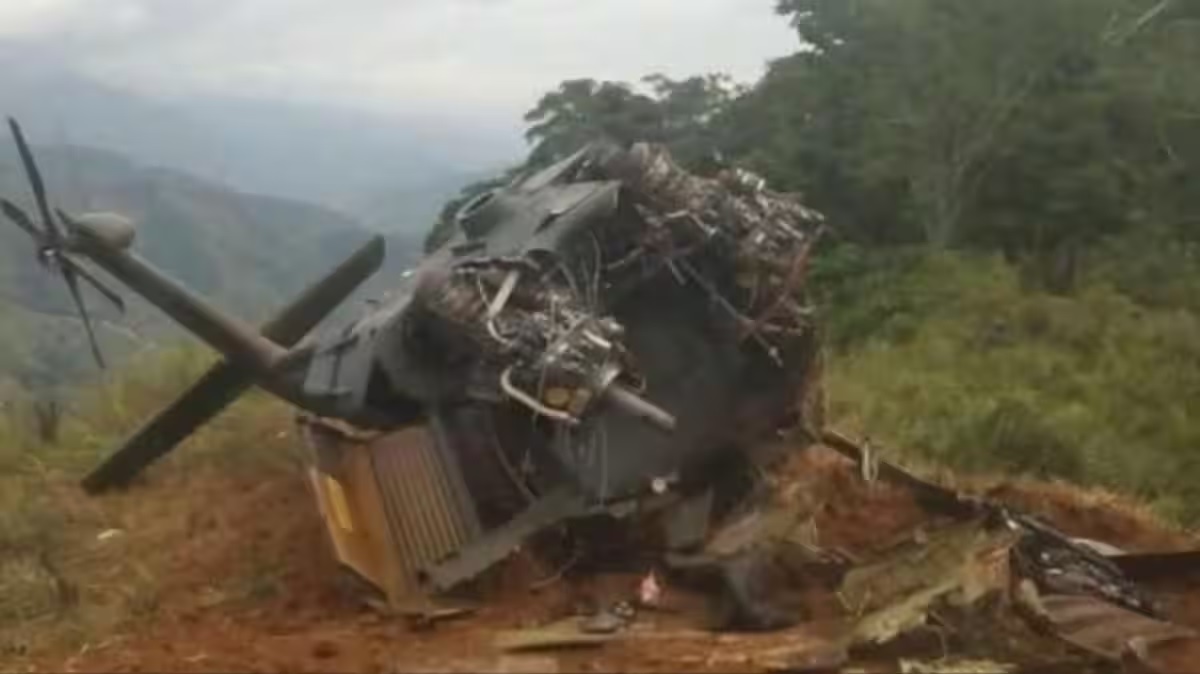
Bogotá, August 2025 – Colombian authorities have confirmed that a UH-60 Black Hawk police helicopter was destroyed in a drone attack while conducting a counternarcotics mission in the Antioquia region. The attack marks one of the deadliest uses of weaponized drones against state forces in the country’s recent history, raising alarm about the growing sophistication of armed groups.
The Attack
The Black Hawk was carrying personnel to rural areas near Amalfi, where security forces were engaged in eradication of coca crops, the base ingredient for cocaine production.
According to officials, as the helicopter hovered above a hillside preparing to land, it was struck by an FPV (first-person-view) drone rigged with explosives. Video released by the government showed the drone slamming into the aircraft, followed by a powerful explosion. The blast destabilized the helicopter, which tipped over and crashed, leaving it completely destroyed.
A second helicopter in the operation, tasked with coordination, captured the footage of both the impact and the subsequent crash.
Casualties
Local authorities reported that 12 people aboard were killed, including police officers and members of the counternarcotics unit. Rescue teams were dispatched, but there were no survivors.
Antioquia governor Andrés Julián posted on social media, stating, “A drone attacked a Black Hawk helicopter while it flew over coca fields in our region. This is a new and serious threat to our security forces.”
Government Response
Colombian President Gustavo Petro and Defense Minister Pedro Sánchez blamed the attack on dissident factions of the Revolutionary Armed Forces of Colombia (FARC). These groups, though the original guerrilla organization officially disbanded in 2016 under a peace accord, continue to operate in remote areas, often aligning with cartels to control cocaine production and trafficking routes.
President Petro condemned the attack, vowing that counternarcotics operations will not stop and that new counter-drone measures will be implemented to protect security forces.
A Growing Threat
The Colombian government has long relied on Black Hawk helicopters to move troops and police into remote, hostile areas where ground access is limited. The helicopters provide rapid insertion, medical evacuation, and fire support. However, the latest attack underscores the emerging challenge of drones in modern conflict and organized crime, a tactic increasingly seen in regions like the Middle East, Ukraine, and Latin America.
Security analysts note that FPV drones, inexpensive and commercially available, can be modified to carry small explosive charges. Their use by criminal groups in Colombia represents a serious escalation in the narco-war, as helicopters have traditionally been among the most resilient assets of the police and military.
Operations Continue
Despite the loss, Colombian authorities have confirmed that eradication and security missions will continue in Antioquia. Special forces have been reinforced in the region to prevent further attacks, while efforts are being made to develop and deploy anti-drone systems capable of detecting, jamming, and intercepting hostile UAVs.
The destruction of the Black Hawk in Antioquia is a grim reminder of the evolving tactics of armed groups and cartels in Colombia. As drones become more accessible and lethal, the government faces a new challenge in securing its skies. The attack not only claimed the lives of 12 personnel but also highlighted the urgent need for modern counter-drone defenses to safeguard future missions in the country’s long-running fight against drug trafficking and insurgency.
✍️ This article is written by the team of The Defense News.