Draganfly Unveils Precision Strike Drone with Combat-Proven Mjolnir Munition in Pentagon Demo
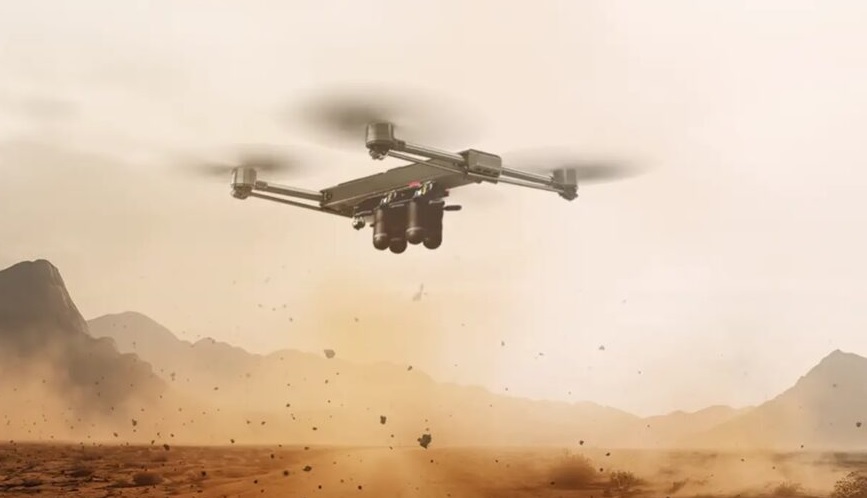
In a major leap for tactical drone warfare, U.S.-based Draganfly Inc. has unveiled a new modular precision strike drone system equipped with the combat-proven Mjolnir Modular Munition, marking a significant shift in how small drones may be used on future battlefields. The announcement came after a successful demonstration held on August 5, 2025, at the Pentagon, under the U.S. Department of Defense’s Low-Cost Uncrewed Combat Attack Systems (LUCAS) initiative.
The system demonstrated combines Draganfly’s Group I UAV—a lightweight, portable drone—with the Mjolnir Modular Munition System from MMS Products Inc. Together, they form a highly flexible and scalable precision-strike platform designed for modern and emerging conflict zones.
What stood out during the demo was the drone’s ability to autonomously locate and engage targets using a multi-drop payload launcher, enabling the deployment of different munitions based on mission needs. These ranged from anti-personnel to anti-vehicle and armor-piercing configurations, showing how one small drone can handle a variety of battlefield roles.
The Mjolnir munition, weighing between 2.3 to 2.5 kg, is fully modular. It comes with a swappable warhead system, internal guidance stabilizer, and a programmable electronic fuze. Current variants include:
-
High-fragmentation warheads for anti-personnel missions
-
Explosively Formed Penetrators (EFPs) to destroy light vehicles and field bunkers
-
Shaped charges that can penetrate light to medium armored targets
These munitions can detonate on impact or with a time delay, giving added flexibility during urban or underground operations. The drone’s launcher holds up to four munitions, which can be released either one at a time or all together—perfect for dynamic, fast-moving situations.
What makes this drone system truly innovative is that it brings precision strike capability to a drone category that was earlier used mainly for Intelligence, Surveillance, and Reconnaissance (ISR). Its low cost, small size, and stealthy signature mean it can perform hunter-killer missions, disrupt enemy logistics, or support special forces in hostile environments—all without risking human lives.
The Pentagon’s LUCAS program aims to build attritable, low-cost combat drones that can be easily deployed, replaced, or adapted. In that context, Draganfly’s system is a major step forward. Its plug-and-play nature means that different types of munitions can be quickly fitted for different missions—without the need for long planning or heavy logistics.
Draganfly CEO Cameron Chell called the demo a "major validation" of the company's work in tactical drone development, emphasizing that this technology was built to boost operational effectiveness, lower costs, and increase soldier survivability—especially when facing modern threats from both peer and near-peer adversaries.
In a world where future wars are expected to rely heavily on networked, autonomous systems, this kind of drone tech offers the military the ability to strike quickly, quietly, and precisely. It also signals a broader shift in U.S. defense thinking—moving away from expensive, complex platforms toward simple, flexible systems that can saturate and overwhelm enemy forces in a coordinated strike.
As armed forces around the world look to upgrade their battlefield tools, Draganfly’s precision strike drone with Mjolnir munitions could become a key player in the next generation of smart, scalable, and survivable drone warfare.
✍️ This article is written by the team of The Defense News.