Denmark Signs $580 Million NASAMS Deal Under Europe’s €9 Billion Air-Defence Expansion
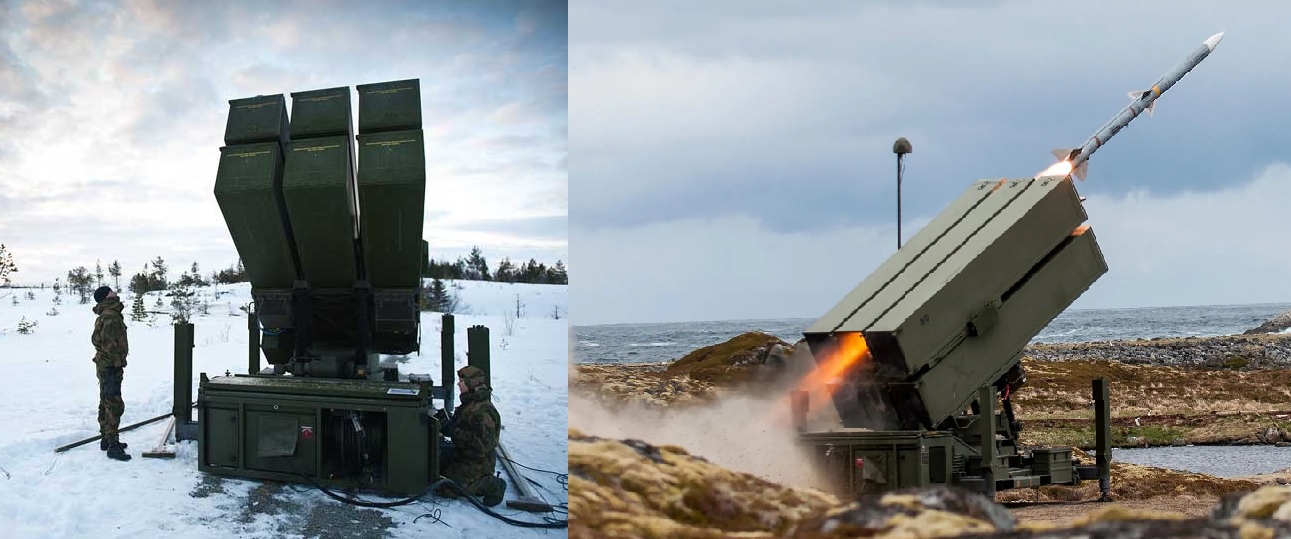
Denmark has signed a €500 million ($580 million) contract with Norway’s Kongsberg Defence & Aerospace to procure the NASAMS (National Advanced Surface-to-Air Missile System), a major step in building a modern, layered shield against missiles, drones, and hostile aircraft over Danish territory.
The agreement, announced on 27 November 2025, is one of the first concrete purchases under Copenhagen’s record-breaking plan to spend 58 billion Danish kroner (about €9.1 billion) on European-made air and missile defence systems amid a sharply deteriorating security environment in Europe.
A €500 Million Deal with Norway’s Kongsberg
Under the new contract, Kongsberg will supply Denmark with NASAMS batteries that provide medium-range, ground-based air defence. The package includes launchers, command-and-control elements and associated radar and support systems, though neither Copenhagen nor Kongsberg has disclosed the exact number of fire units or delivery schedule.
Kongsberg describes NASAMS as “the most modern and advanced air defence capability in the world,” emphasizing its modular, networked design and ability to counter a wide spectrum of air threats.
The system typically uses AIM-120 AMRAAM and related missiles to engage targets at medium ranges, and has already been adopted by more than a dozen countries, including Norway, the United States, Finland, Lithuania, the Netherlands, Qatar and Ukraine
For Kongsberg, the Danish order further consolidates NASAMS’ position in Northern Europe, where Norway and several NATO partners are building a common architecture for integrated air and missile defence.
Part of Denmark’s Record €9 Billion Air-Defence Overhaul
The NASAMS deal is not an isolated purchase; it is one building block in Denmark’s largest arms acquisition in history.
In September 2025, the Danish government approved a plan to invest 58 billion kroner (about $9.1 billion) in eight medium- and long-range ground-based air-defence systems, all sourced from European suppliers.
Key elements of this broader package include:
-
Long-range layer: Denmark has selected the Franco-Italian SAMP/T system, built by Eurosam and firing Aster missiles, as the long-range backbone capable of defending cities and critical infrastructure and providing limited anti-ballistic missile capability.
-
Medium-range layer: NASAMS is one of the chosen medium-range systems, alongside other European solutions such as IRIS-T SLM and VL MICA, giving Denmark a mix of batteries sourced from Norway, Germany and France.
-
Very short-range and mobile defence: Denmark is also fielding Skyranger 30 turrets with Mistral 3 missiles on Piranha V armoured vehicles, designed to protect manoeuvre forces and key sites against drones, helicopters and low-flying aircraft.
Together, these purchases form a layered air-defence architecture reaching from very short range up to long-range, area-defence systems.
The investments are being coordinated through the newly created Air Defence Wing, established in March 2025 to manage Denmark’s ground-based air and missile defence build-up. Danish officials have stressed that experience from Russia’s war in Ukraine, particularly the mass use of cruise missiles and drones against cities and energy infrastructure, has made robust ground-based air defence an “absolute top priority.”
Why Denmark Is Rushing to Build an Air Shield
Copenhagen’s push is driven by several overlapping concerns:
-
Russian military pressure and Baltic security : Danish leaders openly link the 58-billion-kroner plan to rising tensions with Russia, including repeated airspace incidents in the Baltic region and concern that a future escalation could reach Denmark or its neighbours.
-
Protection of critical infrastructure and population centres : With major ports, energy hubs and NATO facilities on its territory – and key sea lanes passing through the Danish Straits – Denmark wants the ability to protect cities, ports, air bases and critical infrastructure from missile and drone attacks, rather than relying almost entirely on allied assets.
-
European defence autonomy and industrial logic : Denmark explicitly chose European systems over U.S. Patriot batteries, citing the higher cost and longer delivery times of the American system. Officials also argue that buying from European suppliers strengthens industrial capacity on the continent and ensures faster delivery at a moment when Patriot production is heavily backlogged.
-
Integration with NATO and Nordic partners : Denmark’s choice of NASAMS, SAMP/T, IRIS-T and MICA mirrors systems being fielded by Norway, Germany, Italy, France and other NATO allies, easing integration into a common radar and command network. In the Nordic region, the Danish NASAMS order in particular deepens longstanding Norwegian-Danish defence cooperation and supports a more unified Nordic air defence posture.
What NASAMS Brings to Denmark’s Air Defence
Although Denmark has not yet disclosed the exact configuration it will receive, the NASAMS system stands out for several capabilities that closely match Copenhagen’s operational needs. Its modular architecture allows each battery to be configured for different missions, whether defending the capital region, safeguarding military bases, or protecting critical national infrastructure.
Another major strength is its networked command-and-control capability. NASAMS can fully integrate with Danish and NATO air-defence networks, enabling operators to pull in targeting data from allied radars, aircraft and sensors while also contributing their own real-time information to the wider battlespace picture. This creates a more unified and resilient air-defence environment.
The system also benefits from proven missile technology, using the AIM-120 AMRAAM family—an extensively tested and continuously upgraded missile with a strong global production base. This ensures long-term reliability, modernization potential and sustained availability.
NASAMS has also demonstrated a credible combat record, with Ukrainian-operated batteries successfully intercepting Russian cruise missiles and drones. These real-world engagements provide clear evidence of the system’s effectiveness against the same categories of threats Denmark is preparing to counter.
By incorporating NASAMS into its defence structure, Denmark gains a medium-range protective “wall” positioned between its short-range point-defence assets such as Skyranger/Mistral and its long-range SAMP/T batteries. This layered setup gives Danish commanders multiple opportunities to detect, track and neutralize aerial threats before they reach critical targets.
Building a European Layered Air-Defence Network
The Danish NASAMS contract is also part of a wider European trend: accelerated investment in a continent-wide air and missile defence network in response to the war in Ukraine and uncertainty about long-term U.S. security guarantees.
Denmark’s €9 billion plan dovetails with broader EU-level efforts such as Germany’s European Sky Shield Initiative and the European Commission’s wider Readiness 2030 / “ReArm Europe” defence push, which aims to mobilize hundreds of billions of euros for new capabilities and joint procurement.
By opting decisively for European suppliers and rapidly contracting systems like NASAMS, Copenhagen is positioning itself not just as a consumer, but as a front-line contributor to this emerging networked shield protecting European airspace.
What Happens Next
Although a precise delivery schedule has not been published, Danish officials have repeatedly stressed that initial air-defence capabilities must be operational before the end of the decade, with some systems arriving earlier as “interim” solutions.
Over the coming years, Denmark will:
-
Stand up and expand its Air Defence Wing,
-
Integrate NASAMS batteries with SAMP/T, IRIS-T, MICA and short-range systems, and
-
Link its national network more deeply into NATO’s integrated air and missile defence architecture.
The €500 million NASAMS order is therefore best seen not as a one-off purchase, but as a crucial building block in a new Danish – and European – air-defence era, shaped by the hard lessons of Ukraine and the return of high-intensity military competition in Europe.
About the Author
Aditya Kumar:
Defense & Geopolitics Analyst
Aditya Kumar tracks military developments in South Asia, specializing in Indian missile technology and naval strategy.