Denmark Orders 44 More CV90 Mk IIIC Infantry Fighting Vehicles in US $450 Million Deal
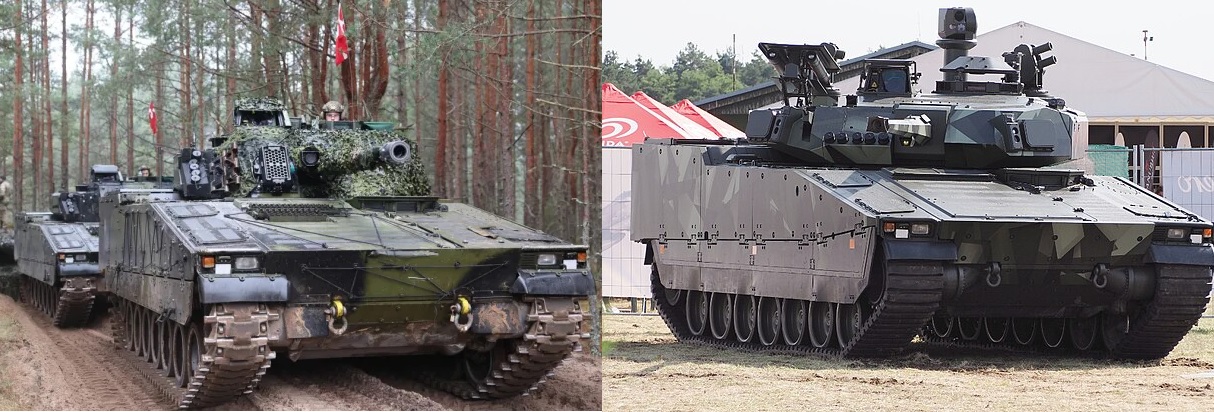
The Danish Ministry of Defence Acquisition and Logistics Organisation (DALO) has awarded a contract to BAE Systems Hägglunds worth approximately US$450 million for 44 additional infantry fighting vehicles (IFVs) of the CV90 Mk IIIC family. The contract covers not only the vehicles themselves, but also spares, training, logistics support and related lifecycle services.
This new order builds on a 2024 framework deal for 115 vehicles, bringing the future total of CV90 Mk IIICs for the Royal Danish Army to 159 tracked IFVs. The acquisition replaces an earlier plan to perform a mid-life upgrade of Denmark’s existing CV9035DK fleet.
Major General Peter Boysen, Commander of the Danish Army, explained that “the infantry fighting vehicle is an essential part of the combat power in the heavy brigade. It is therefore crucial that we acquire a consolidated fleet of vehicles as quickly as possible.” The goal is to have the full 159 vehicles fielded by the end of 2030, thereby accelerating Denmark’s plan to deploy a fully capable heavy brigade under NATO command by that timeframe.
What the Deal Means
By ordering 44 more vehicles, Denmark is ensuring that the forthcoming heavy brigade will operate on a single, modern tracked IFV platform, simplifying logistics, training, maintenance, and interoperability with other CV90 operators. The decision underscores Denmark’s commitment to shared defence standards within NATO.
From an industrial standpoint, the move reinforces the CV90 family’s position as a standardised NATO IFV, strengthening supply-chain efficiency and cross-European military cooperation.
Specifications & Capabilities of the CV90 Family
While the exact Mk IIIC configuration may include Danish-specific modifications, the broader CV90 capabilities include:
-
The CV90 is a Swedish-designed tracked infantry fighting vehicle series active since the 1990s.
-
Weight range: 23 to 38 tonnes, depending on variant.
-
Crew: 3, plus 7–8 dismounts.
-
Road speed: up to ~70 km/h.
-
Armament: 30 mm, 35 mm or 40 mm cannon, depending on version, plus 7.62 mm coaxial MG.
-
Protection: Modular armour, mine/IED protection, and optional active protection systems (APS).
-
The Mk IIIC is built to the same standard as the latest Dutch MLU vehicles, featuring a new turret design, improved ergonomics, situational awareness, and fire-power upgrades.
For Denmark, the 159-vehicle fleet replaces the older CV9035DK vehicles, which have served for more than a decade.
Operational Background & Strategic Context
Denmark has real-world combat experience with earlier CV9035DKs, notably in Afghanistan, where their mine and IED protection saved lives. A catastrophic 2010 IED strike demonstrated the limits of any single system, but also helped guide later upgrades and procurement decisions.
Across Europe, the CV90 is widely used by Sweden, Norway, Finland, Denmark, the Netherlands, Switzerland, Estonia, and Ukraine, with Czechia and Slovakia procuring the latest Mk IV variants. This forms a strong “CV90 club” inside NATO, supporting interoperability and shared logistics.
In Ukraine, the CV90 has been described as a “force multiplier” for mechanised units due to its survivability, fire-power, and mobility.
Broader Implications and Next Steps
For Denmark, the new order fits within its national defence strategy to build a credible, deployable heavy brigade fully interoperable with NATO. By 2030, Denmark expects the fleet fully operational, supporting the alliance's readiness requirements in northern Europe.
For BAE Systems, the deal extends the CV90’s export success, adding to more than 1,900 vehicles across 17 variants already ordered worldwide. Denmark will now move toward multi-year deliveries, integrating the vehicles into its brigade structure while phasing out older platforms.
The US$450 million deal for 44 additional CV90 Mk IIIC IFVs expands Denmark’s future tracked IFV fleet to 159 vehicles and marks a major strategic shift toward a fully modern, unified mechanised platform. With procurement underway, attention now turns to delivery schedules, brigade integration, and the strengthened role these vehicles will play in NATO’s northern defence posture.
About the Author
Aditya Kumar:
Defense & Geopolitics Analyst
Aditya Kumar tracks military developments in South Asia, specializing in Indian missile technology and naval strategy.