Dassault Invests $200 Million in Harmattan AI to Embed Sovereign Autonomy in Rafale F5
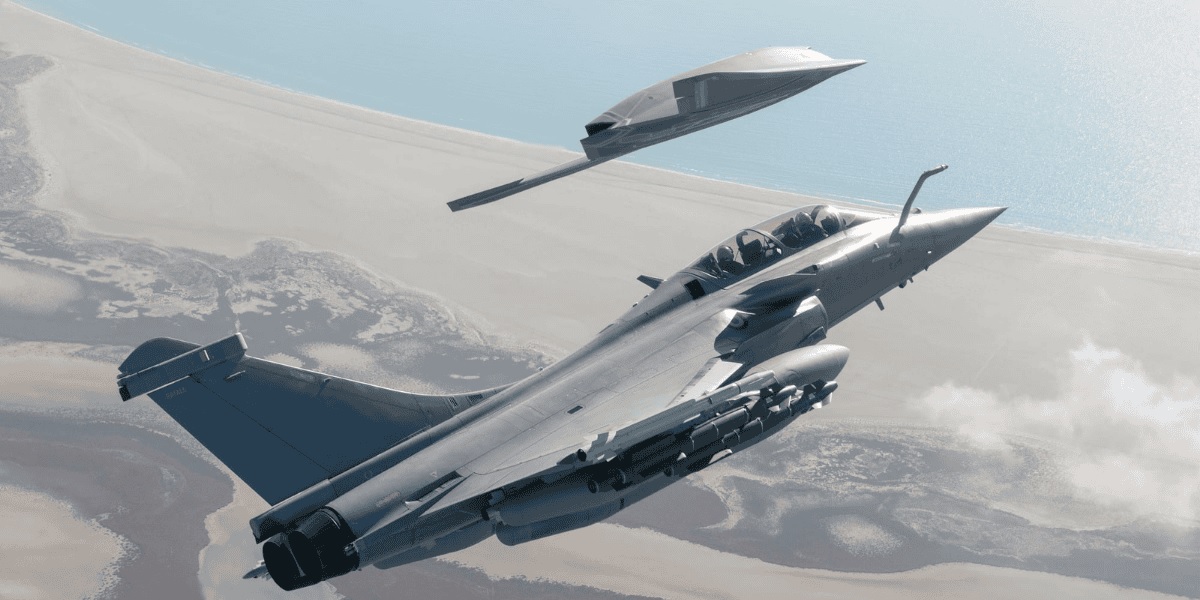
Paris : Dassault Aviation has announced a $200 million Series B investment in defence startup Harmattan AI, marking a major step in France’s effort to embed sovereign, human-controlled artificial intelligence into its next generation of combat aircraft. The partnership, formally revealed on January 12, 2026, is designed to place embedded autonomy at the core of the Rafale F5 standard and a future unmanned combat aerial system (UCAS) intended to fly alongside manned fighters.
Company officials described the move as a strategic industrial decision rather than a conventional funding round. At its centre is the objective of ensuring that combat AI remains predictable, certifiable and under human authority, even as air warfare becomes increasingly shaped by autonomy, electronic warfare and data saturation.
Investment Signals Long-Term Strategic Alignment
The Series B round, led by Dassault Aviation, elevates Harmattan AI from a fast-growing defence technology supplier to a core partner in France’s air combat roadmap. Unlike many military AI initiatives that rely on modular or external software, the partnership focuses on deeply embedded autonomy, integrated directly into mission systems and command architectures.
Founded in 2024, Harmattan AI has positioned itself as a defence-native AI company, developing vertically integrated systems rather than standalone algorithms. Its portfolio spans ISR and strike UAV coordination, counter-drone solutions, electronic warfare, and command-and-control platforms designed to operate under degraded communications.
The company states that its systems are already fielded at scale with several NATO and allied partners, including active programmes in France and the United Kingdom. The new funding will be used to expand deployments into new operational theatres, extend AI capabilities across additional domains, and scale industrial production for ISR, counter-UAS and electronic warfare platforms.
Rafale F5: A Shift Toward Collaborative Combat
For Dassault, the partnership directly supports the evolution of the Rafale F5, expected to enter service around the turn of the 2030s. French defence planners increasingly describe F5 not as a simple upgrade, but as a transformation of the Rafale into a collaborative combat platform within a broader system-of-systems.
Artificial intelligence plays a central role in this vision. Embedded AI is intended to function as a cockpit multiplier, helping pilots manage sensor overload, prioritise threats, coordinate unmanned assets and operate effectively in environments dominated by electronic warfare and contested communications. By integrating Harmattan AI’s technology directly into Rafale’s mission systems, Dassault aims to preserve transparency and pilot authority over all critical decisions.
Industry sources indicate that incremental AI capabilities could begin appearing on Rafale platforms in the late 2020s, ahead of full F5 operational capability.
UCAS and Loyal Wingman Operations
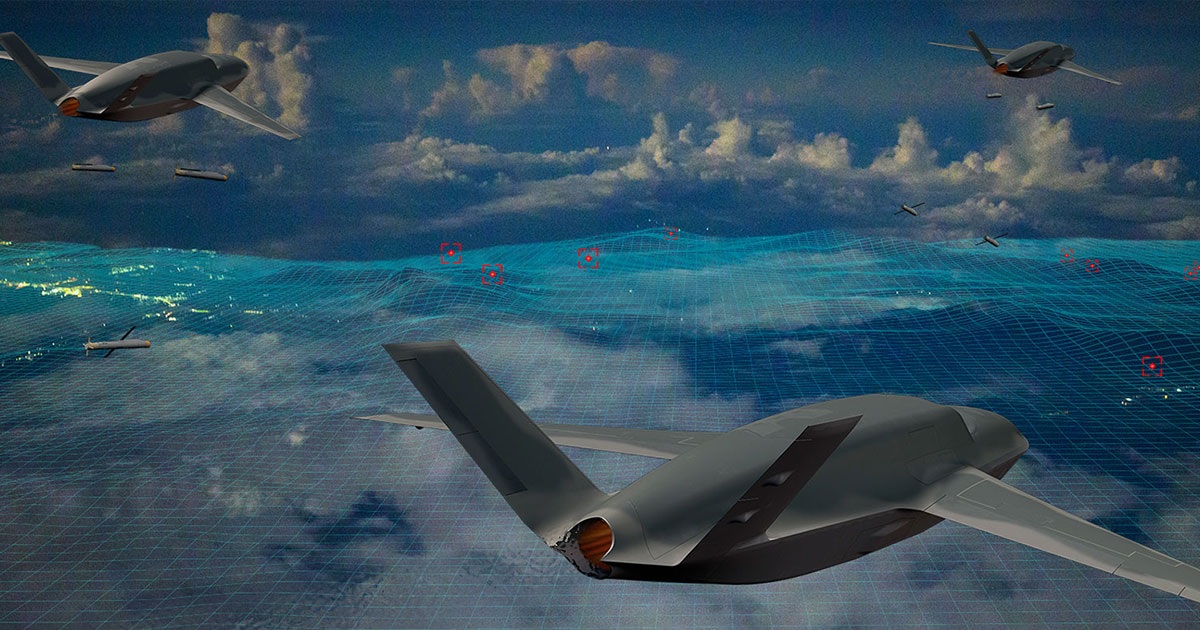
The investment is also closely tied to France’s UCAS programme, launched under a contract awarded in late 2024. The programme envisions a stealthy, internally armed unmanned aircraft designed to complement manned fighters rather than replace them.
Operating as a loyal wingman, the UCAS is expected to carry out missions such as reconnaissance, electronic attack and strike, while remaining under human supervision. Within this framework, Harmattan AI’s role focuses on enabling reliable, formation-level autonomy, resilient command links and secure coordination between manned and unmanned platforms.
Current programme timelines point to demonstrator flights before 2030, with an initial operational capability likely in the early 2030s, broadly aligned with the Rafale F5 roadmap.
Sovereignty and Industrial Control
Beyond technology, the Dassault–Harmattan partnership reflects France’s broader concern over strategic dependence on non-sovereign AI systems. Retaining national control over source code, training data and upgrade pathways is increasingly viewed as essential for operational trust and long-term autonomy.
The deal also fits into France’s wider defence-industrial strategy, which seeks to balance participation in multinational projects with the preservation of independent national capabilities. While European programmes such as FCAS remain long-term ambitions, Rafale F5 and the UCAS initiative ensure that France fields credible, sovereign air combat systems throughout the next decade.
With substantial new funding and direct backing from France’s leading combat aircraft manufacturer, Harmattan AI is set to become a pillar of the country’s future air combat ecosystem. For Dassault Aviation, the partnership reinforces a vision of warfare in which manned and unmanned platforms operate seamlessly together, guided by artificial intelligence that enhances — rather than replaces — human judgement.
As development timelines converge toward the early 2030s, the success of this model may help define how responsible, controlled autonomy is integrated into high-end air combat, not only for France, but for allied air forces watching closely.
About the Author
Aditya Kumar:
Defense & Geopolitics Analyst
Aditya Kumar tracks military developments in South Asia, specializing in Indian missile technology and naval strategy.