DRDO’s RCI Begins Development of Quantum Avionic Sensors For 6th-Generation Warfare
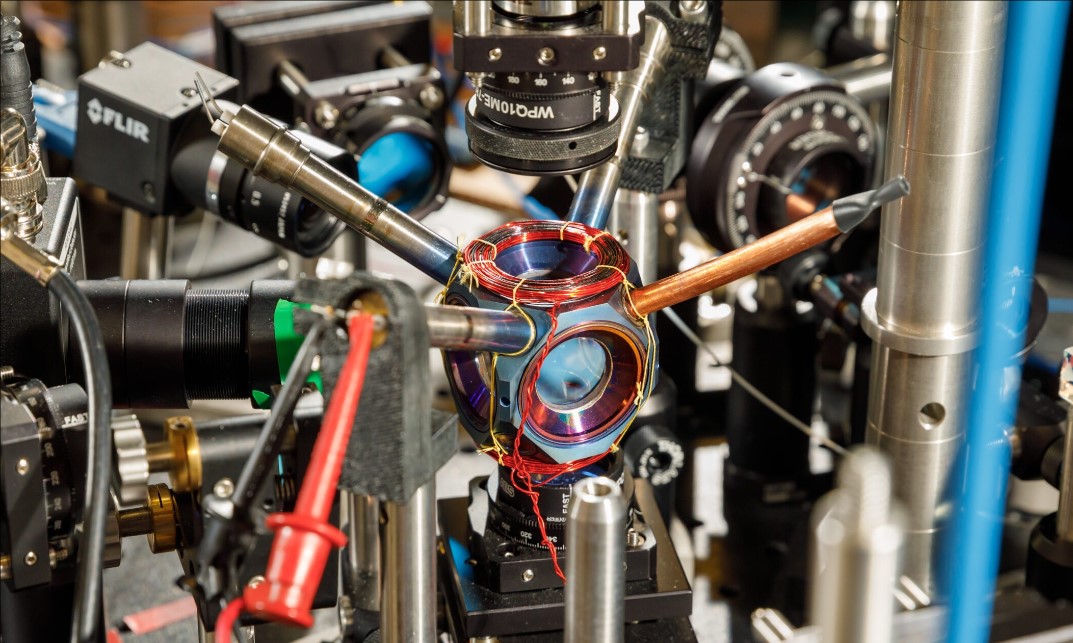
India’s Defence Research and Development Organisation (DRDO) has taken a decisive step toward future aerospace warfare with its Research Centre Imarat (RCI) launching development work on Quantum Avionic Sensors, a technology widely regarded as a defining element of sixth-generation aircraft systems. The laboratory has also invited Indian industries and start-ups to collaborate on research and development, signalling an effort to build a domestic ecosystem around advanced quantum technologies.
A Leap Toward 6th-Generation Avionics
Quantum avionics refers to the application of quantum physics in navigation, sensing, communication and situational awareness. These systems are designed to deliver drastically higher accuracy, improved survivability, and greater resilience against electronic warfare, compared to conventional avionics.
In military aviation, sixth-generation aircraft are expected to rely heavily on quantum-enhanced sensors to operate in contested environments where GPS denial, electronic jamming, and counter-stealth warfare are routine threats. RCI’s programme places India among the early movers working to operationalize quantum solutions for future air combat systems.
What Quantum Avionic Sensors Can Deliver
Quantum sensors use atomic-level interactions, superposition and entanglement to measure physical parameters with extreme precision. RCI’s research is expected to focus on several applications:
- Quantum accelerometers and gyroscopes: enabling inertial navigation systems that do not depend on GPS, offering unmatched accuracy during long-range missions.
- Quantum magnetometers: capable of detecting submarines, stealth aircraft or hidden metallic objects by sensing tiny changes in magnetic fields.
- Quantum clocks: essential for timing-sensitive systems such as secure communication networks, missile guidance and electronic warfare suites.
- Quantum gravimeters: potentially useful for underground structure detection or terrain mapping during low-visibility missions.
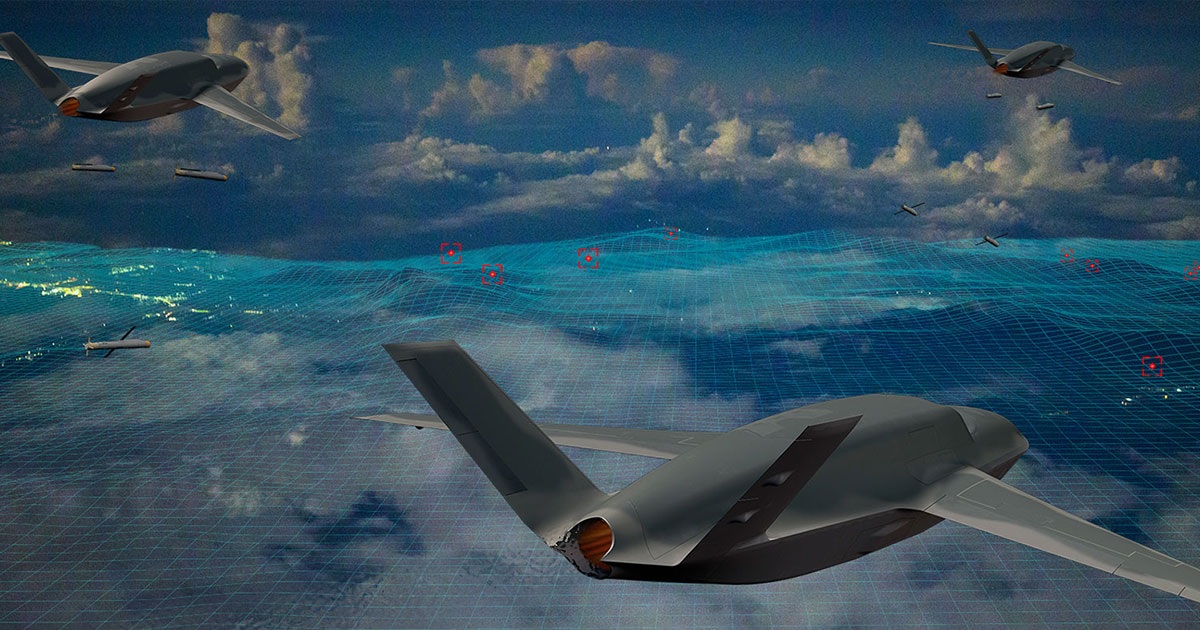
Such capabilities collectively enhance an aircraft’s navigation, targeting and survivability — especially crucial for unmanned combat aircraft or loyal wingman drones expected in future Indian Air Force (IAF) fleets.
DRDO Pushes for Industry Participation
RCI’s announcement explicitly calls for Indian private companies and start-ups to join hands in developing indigenous quantum technologies. This aligns with the government’s broader strategy under Aatmanirbhar Bharat and the National Quantum Mission (NQM), which has earmarked thousands of crores to build quantum research infrastructure across the country.
Industry collaboration is expected in key areas such as:
-
high-precision optical and atomic systems
-
cryogenic and vacuum technologies
-
quantum computing algorithms for avionics
-
miniaturization of quantum instruments for airborne platforms
Start-ups specialising in photonics, microelectronics, sensor design, or AI-driven avionics could play a major role in transitioning prototypes into deployable systems.
India’s Broader Quantum Push
India has already initiated work on quantum communication networks, quantum key distribution (QKD), satellite-based quantum encryption tests, and quantum computing testbeds. The addition of quantum avionics marks an expansion of defence-oriented quantum applications.
Global defence leaders — including the United States, UK, China and France — are also investing heavily in quantum navigation to counter the growing risk of GPS jamming on the battlefield. India’s entry into this arena suggests an ambition to secure parity with major military powers in emerging airborne technologies.
Strategic Impact on India’s Future Air Programmes
RCI’s work is expected to eventually integrate into India’s next-gen platforms such as the AMCA (Advanced Medium Combat Aircraft), the Ghatak UCAV, future reconnaissance UAVs, hypersonic systems and long-range precision weapons.
By developing quantum avionics domestically, India could reduce reliance on foreign navigation sensors and ensure operational secrecy in critical missions.
A Step Toward the Future Battlespace
The launch of the Quantum Avionic Sensors initiative represents not only a technological milestone but also a strategic move to empower Indian industry and accelerate breakthroughs in future warfare capabilities. As DRDO opens the doors for collaboration, the programme could become a cornerstone of India’s sixth-generation defence ecosystem.
In a battlefield shaped by electronic warfare, stealth platforms and autonomous systems, quantum avionics may well become India’s next major leap — positioning the IAF for the challenges of the mid-21st century.
About the Author
Aditya Kumar:
Defense & Geopolitics Analyst
Aditya Kumar tracks military developments in South Asia, specializing in Indian missile technology and naval strategy.