DRDO’s Hypersonic Glide Vehicle “Dhvani” Set for Test in Coming Months
India is preparing to conduct a major test of its indigenous Hypersonic Glide Vehicle (HGV), codenamed “Dhvani”, in the coming months. According to officials from the Defence Research and Development Organisation (DRDO), the much-anticipated trial could take place as early as December, marking a critical milestone in India’s pursuit of next-generation hypersonic weapon capabilities.
The Dhvani HGV is designed to travel at speeds up to Mach 21, covering a distance of around 5,500 km. This capability places it among the fastest and most advanced hypersonic systems under development globally. Notably, Dhvani is maneuverable, allowing it to evade modern missile defence systems, which rely on predicting fixed trajectories.
Advanced Thermal Protection System
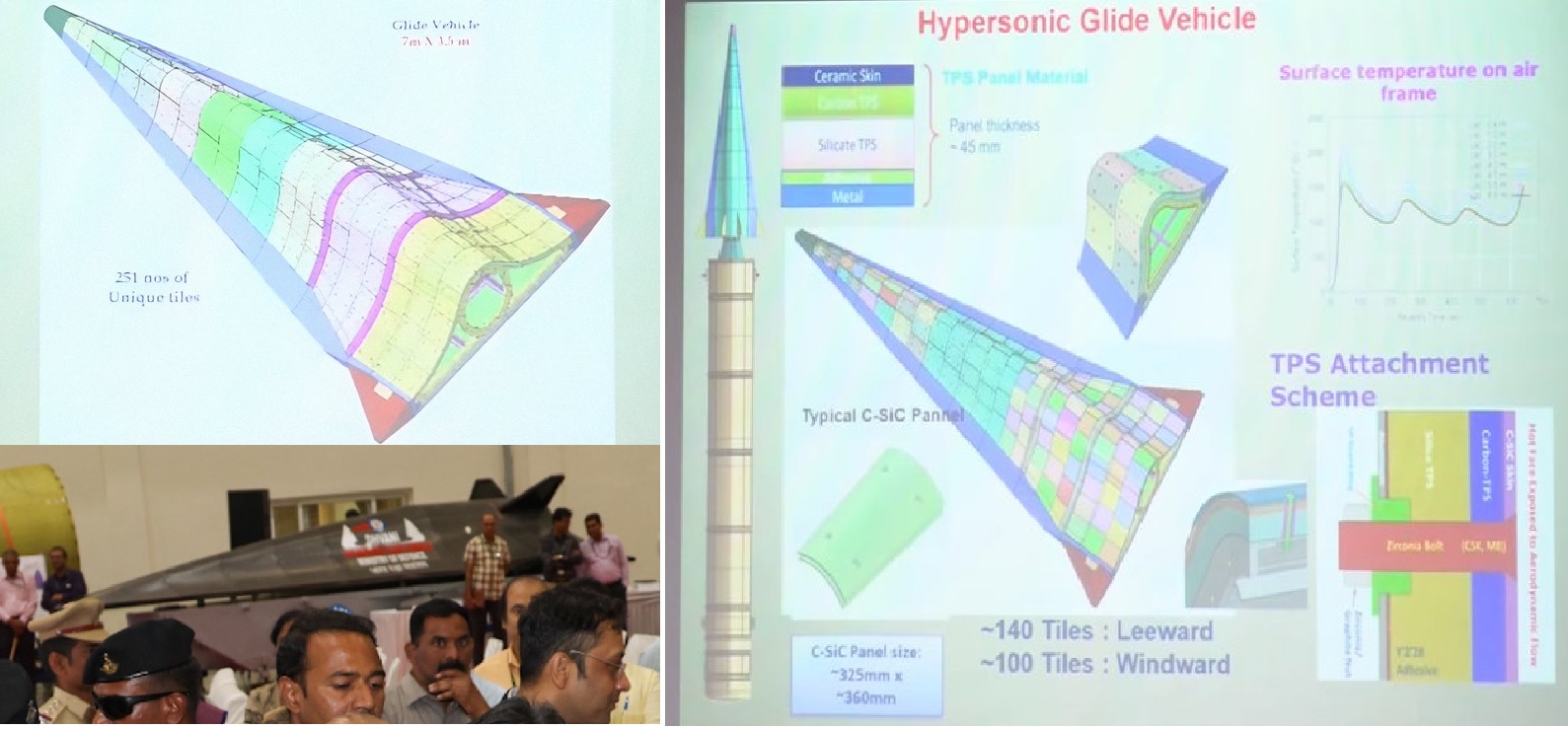
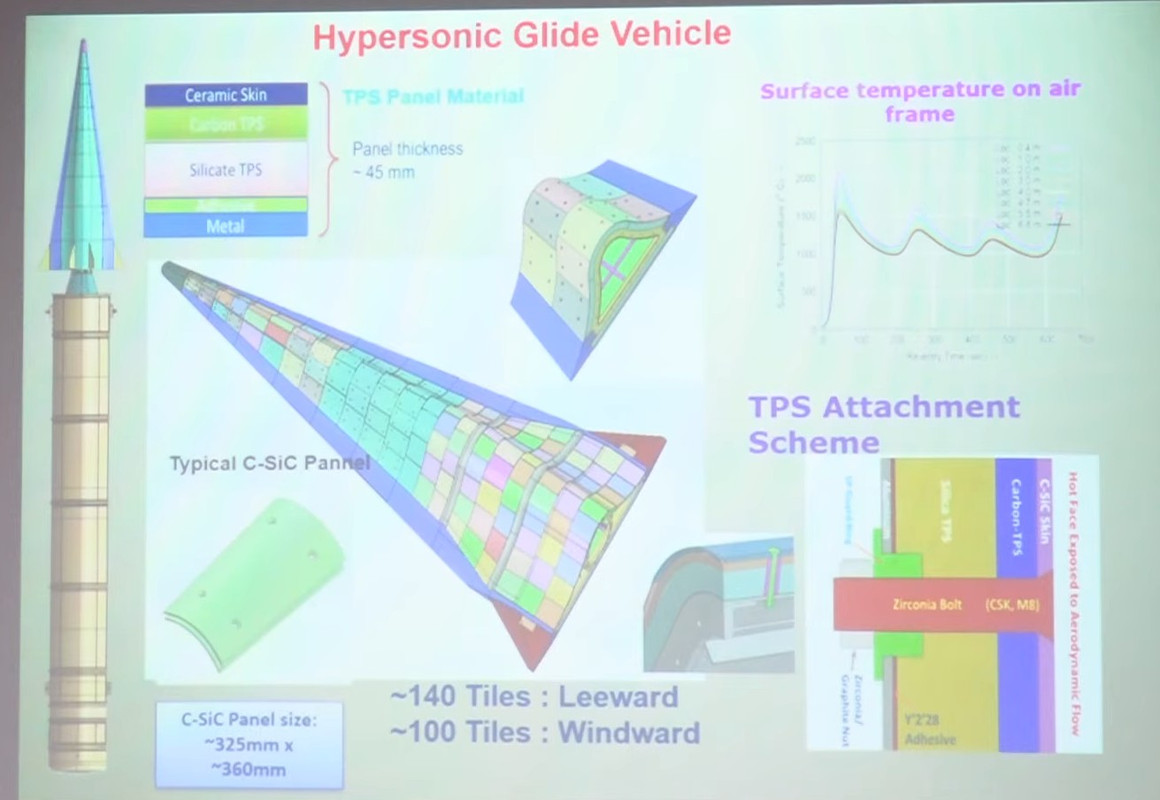
One of the defining features of the Dhvani HGV is its Thermal Protection System (TPS), critical for withstanding the extreme aerodynamic heating experienced during hypersonic flight. The vehicle employs 251 unique Thermal Protection Tiles, meticulously engineered to endure surface temperatures exceeding 2,000°C.
As seen in internal DRDO design visuals, Dhvani’s structure is composed of several specialized layers:
-
Ceramic skin
-
Carbon-based TPS
-
Silicate TPS
-
Metallic substructure
The TPS panels are approximately 45 mm thick, offering multi-layered thermal insulation. The configuration includes about 140 tiles on the leeward side and 100 on the windward side, each with a typical C–SiC (Carbon–Silicon Carbide) panel measuring roughly 325 mm × 360 mm.
A detailed TPS attachment scheme shows the use of Zirconia bolts and high-temperature adhesives for securing the tiles to the metallic frame, ensuring both strength and heat resistance during prolonged hypersonic flight.
Flight Profile and Objectives
Dhvani is believed to be launched atop a solid-fuel booster, similar in configuration to that used in DRDO’s earlier Hypersonic Technology Demonstrator Vehicle (HSTDV) tests. After separation, the glide vehicle would coast through the atmosphere at hypersonic speeds, executing controlled maneuvers to demonstrate aerothermal resilience, guidance accuracy, and structural integrity.
The test aims to validate Dhvani’s:
-
Thermal management under extreme heating
-
Aerodynamic control during glide phase
-
Terminal maneuvering and survivability against defences
Strategic Significance
If successful, Project Dhvani will place India among a select group of nations—such as the United States, Russia, and China—that possess operational or near-operational hypersonic glide vehicle technology. It would significantly enhance India’s strategic deterrence posture, providing the capability to deliver precision strikes at unprecedented speeds and ranges.
A DRDO official hinted that the system’s performance data will also support future hypersonic programs, including potential dual-use applications for spaceplane or reusable launch systems.
As preparations intensify, the December test of the Dhvani Hypersonic Glide Vehicle is set to be one of the most closely watched milestones in India’s defence technology roadmap.
About the Author
Aditya Kumar:
Defense & Geopolitics Analyst
Aditya Kumar tracks military developments in South Asia, specializing in Indian missile technology and naval strategy.