DRDO’s ARDE Developing Indigenous GatlingGun For CIWS and Air-Launched Pinaka Variant for IAF
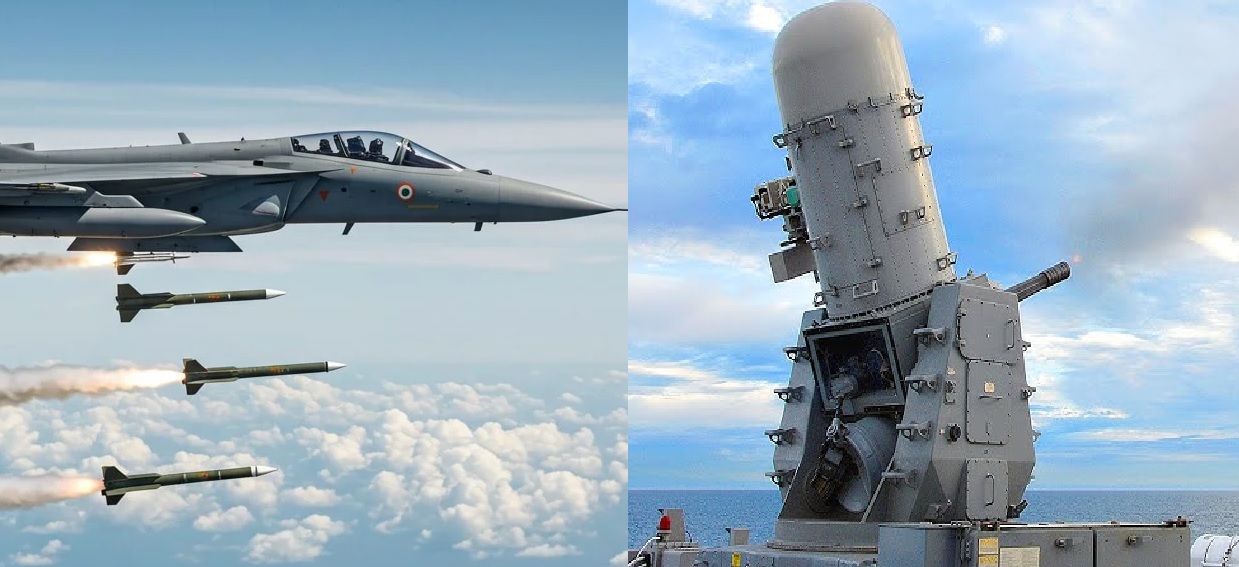
In a major push toward indigenous defense technology, the Armament Research and Development Establishment (ARDE), a key laboratory under the Defence Research and Development Organisation (DRDO), is advancing the development of two crucial systems: a multi-barrel Gatling gun for Close-In Weapon System (CIWS) roles and a new air-launched medium-calibre weapon, which is likely an aerial version of the Pinaka rocket system.
These developments aim to reduce India's dependence on foreign imports and enhance both naval and aerial strike capabilities through modular, cost-effective, and high-impact indigenous solutions.
ARDE’s Rotary Gatling Gun for CIWS
ARDE’s upcoming Gatling gun is designed as an Indian alternative to legacy systems like the Russian AK-630, widely used in naval CIWS roles. The system is under development with the following features:
-
Multi-barrel rotary design offering a high rate of fire of approximately 4,200 rounds per minute.
-
Electric drive and actuation system, designed for rapid traverse and accurate response to high-speed aerial threats.
-
Digital fire control and embedded software integrated with radar and electro-optical/infrared (EO/IR) targeting for automated threat acquisition and engagement.
-
Stealth-compatible mount with a 360-degree rotating slip-ring mechanism and thermal/acoustic signature management.
-
Capable of firing medium-calibre ammunition, potentially with programmable or proximity fuzes for anti-air and anti-drone effectiveness.
The system is intended for deployment on naval vessels, coastal defense stations, and potentially land-based air defense roles, capable of neutralizing low-flying aircraft, cruise missiles, and drones at close range.
Air-Launched Pinaka Variant in Development
Alongside the Gatling CIWS, ARDE is also working on an air-launched version of the Pinaka multi-barrel rocket system. This project aims to create a medium-calibre precision-strike weapon for the Indian Air Force (IAF), capable of being carried by fighter aircraft such as the Su-30MKI, Mirage-2000, Rafale, and Tejas.
Key specifications and concepts include:
-
Based on the existing Pinaka Mk-II/Mk-III rockets, with integration of GPS/INS guidance systems and potential trajectory correction kits.
-
Estimated range of 60 to 75 kilometers for the air-launched variant, depending on altitude and release speed.
-
Designed as a cost-effective standoff weapon, ideal for neutralizing enemy infrastructure, air defenses, and high-value battlefield targets.
-
Offers quick reaction capability, faster deployment, and higher saturation than traditional bombs or missiles in tactical scenarios.
Reports indicate that the Indian Navy is also collaborating on a naval version of the same rocket system, with flight testing expected to begin in 2025. The air-launched version is likely to proceed in parallel.
Strategic Implications
The development of these two systems represents a shift in India’s defense focus toward next-generation indigenous armaments with enhanced automation, precision, and modularity. The indigenous CIWS solution would significantly reduce reliance on Russian or Western point-defense systems and improve naval self-defense in close combat scenarios.
On the other hand, the air-launched Pinaka variant fills a critical gap in medium-range standoff weapons for the IAF. Unlike larger ballistic missiles, this rocket-based system allows for rapid saturation strikes against hardened or mobile targets without exposing aircraft to high-risk airspace.
Together, these innovations demonstrate DRDO's growing capabilities in developing advanced, integrated armament systems for modern warfare, aligned with India’s broader Atmanirbhar Bharat (self-reliant India) initiative. As prototypes are refined and tested, both systems could see operational deployment within the next few years, significantly boosting India’s multi-domain strike and defense capabilities.
✍️ This article is written by the team of The Defense News.