DRDO to Begin Trials of Truck-Mounted VL-SRSAM After Successful Naval Deployment

The Defence Research and Development Organisation (DRDO) is now preparing to test a truck-mounted version of its Vertical Launch Short-Range Surface-to-Air Missile (VL-SRSAM) system. This comes after a string of successful trials of the naval variant, which has already proven effective in defending Indian warships.
The land-based version is expected to begin initial trials by late 2025 or early 2026, and is specially designed for the Indian Army and Indian Air Force. Mounted on high-mobility 8x8 trucks, this mobile version will offer a fast, relocatable, and powerful shield against various aerial threats.
The VL-SRSAM is an advanced missile system derived from the Astra Mk-1, India’s indigenous beyond-visual-range air-to-air missile currently deployed on Su-30MKI and Tejas fighter jets. For the naval version, it was developed as a replacement for the aging Israeli Barak-1 missile systems on Indian warships.
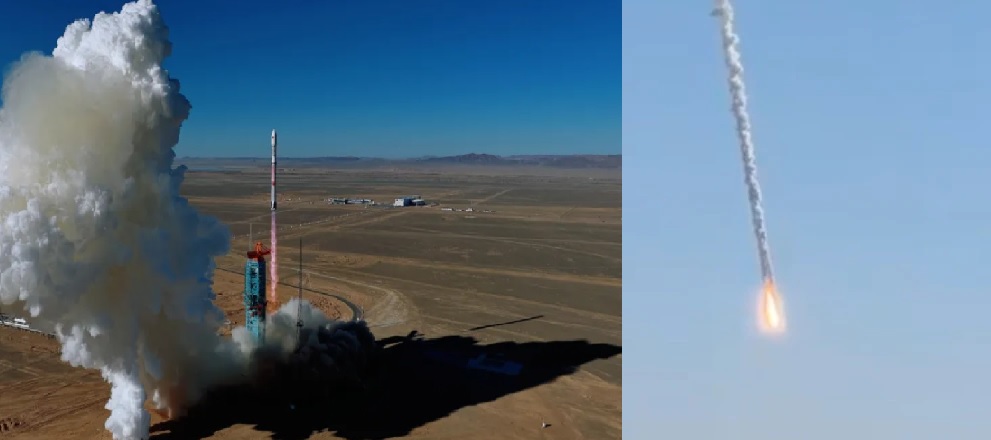
During a critical test in June 2022 from a warship off the Odisha coast, the system successfully intercepted a fast, low-flying aerial target, showcasing its ability to respond to modern airborne threats like drones, helicopters, fighter jets, and even sea-skimming missiles, within a range of about 50 km.
Technically, the VL-SRSAM missile features indigenous components, including a highly accurate Radio Frequency (RF) seeker for terminal guidance, giving it precise interception capability. Its vertical launch capability with thrust vectoring allows the missile to turn sharply towards targets post-launch. Additional fins on the airframe have been introduced to ensure in-flight stability when launched from land platforms.
Each mobile launcher is expected to carry eight missiles, forming part of a larger unit consisting of a command vehicle, 4 to 6 mobile launchers, and support vehicles for reloads. These will be deployable to forward areas, protecting key assets like mobile army columns, air bases, and command posts.
Crucially, the system will be fully integrated with India’s existing air defence networks, such as the Indian Air Force's Integrated Air Command and Control System (IACCS) and the Indian Army's ‘Project Akashteer’ network. This will allow it to plug into multi-layered defence coverage, complementing both very short-range systems and medium-range systems like the Akash missile.
The VL-SRSAM programme represents a joint effort by DRDO and key Indian defence firms, including Bharat Dynamics Limited (BDL) for missile production and Bharat Electronics Limited (BEL) for radar and control systems.
With the launcher platform now fabricated, the upcoming tests will focus on evaluating the missile’s performance on land and ensuring smooth integration with military radar grids. If successful, this will be another major milestone in India’s pursuit of self-reliance in high-end defence technologies under the ‘Aatmanirbhar Bharat’ initiative.
By bringing the proven naval system to land in a mobile format, DRDO is aiming to offer the Indian Armed Forces a flexible, quick-reaction air defence system that can be deployed anywhere, anytime.
✍️ This article is written by the team of The Defense News.