DRDO Invites Indian Industry Into Stealth Combat Drone Programme with Fresh RPSA EoI

New Delhi: In a major step towards accelerating India’s indigenous stealth combat drone capability, the Aeronautical Development Establishment (ADE), a key laboratory under the Defence Research and Development Organisation (DRDO), has released a new Expression of Interest (EoI) for the selection of additional Development cum Production Partners (DcPPs) for the Remotely Piloted Strike Aircraft (RPSA) programme.
The EoI formally invites Indian industry to participate in one of the country’s most strategically important aerospace projects, covering the entire lifecycle of the RPSA, from design engineering to manufacturing and testing, signalling DRDO’s intent to deepen private-sector involvement in next-generation combat systems.
Full Lifecycle Responsibility for Industry
As per the EoI issued by Aeronautical Development Establishment, the selected DcPPs will be entrusted with Engineering, Manufacturing, Assembly, Integration, Testing and Evaluation (EMI-T&E) of the RPSA platform. This represents a comprehensive responsibility structure, placing Indian vendors at the core of development, productionisation and long-term sustainment of the system.
Defence officials note that the DcPP model goes well beyond build-to-print manufacturing, requiring partners to demonstrate advanced design competence, systems integration capability and quality assurance maturity consistent with cutting-edge military aviation standards.
About the RPSA Programme
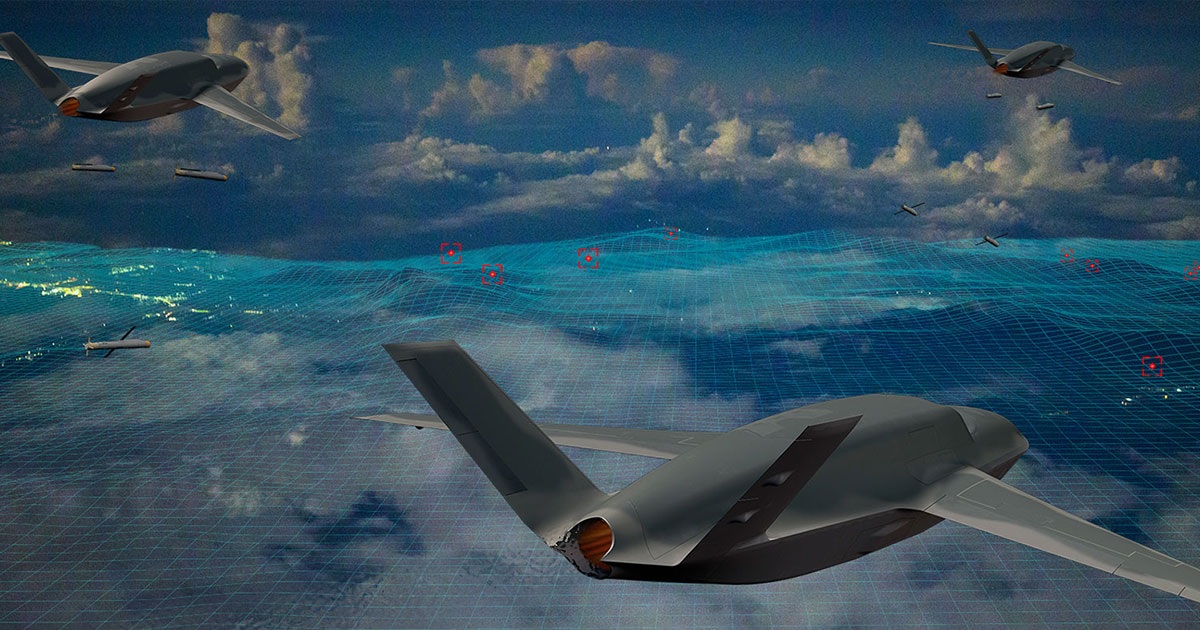
The Remotely Piloted Strike Aircraft (RPSA) is India’s flagship stealth Unmanned Combat Aerial Vehicle (UCAV) programme. Conceived as a deep-strike, survivable and autonomous combat platform, the RPSA is designed to operate in highly contested airspace, carrying precision-guided munitions within an internal weapons bay to maintain a low radar signature.
The programme is widely seen as a foundational element of India’s future manned–unmanned teaming (MUM-T) doctrine and is expected to complement frontline fighter fleets by undertaking high-risk strike and suppression missions without endangering pilots.
Why DRDO Is Expanding the DcPP Base
The decision to select additional DcPPs reflects the growing technical complexity and scale of the RPSA programme. Stealth UCAV development demands expertise in composite aerostructures, autonomous flight control systems, secure datalinks, propulsion integration and low-observable design, areas where DRDO is increasingly leveraging specialised industrial capabilities.
By onboarding more qualified partners, DRDO aims to reduce programme risk, enable parallel development streams and shorten timelines between prototype validation and operational deployment.
Eligibility and Industrial Opportunity
The EoI is restricted to Indian vendors, including private defence companies, public sector units and industry-led consortia with proven experience in aerospace engineering, advanced manufacturing and defence certification processes.
Industry analysts describe the RPSA DcPP opportunity as a rare entry point into the global stealth UCAV domain, offering participating companies long-term visibility in high-value defence production and potential downstream export prospects as demand for combat drones rises worldwide.
Strategic Significance
For India’s armed forces, the RPSA represents a critical force multiplier, enhancing deterrence and operational flexibility. For the domestic defence ecosystem, the latest DRDO EoI marks a clear shift towards industry-led execution of complex combat platforms, reinforcing the broader objectives of self-reliance, technological sovereignty and defence industrial depth.
With the issuance of this EoI, DRDO has effectively opened the door for Indian industry to play a decisive role in shaping the future of India’s unmanned combat aviation.
About the Author
Aditya Kumar:
Defense & Geopolitics Analyst
Aditya Kumar tracks military developments in South Asia, specializing in Indian missile technology and naval strategy.