DRDO Grants PTC Industries Clearance for AMCA Titanium Rear Fin Root Casting
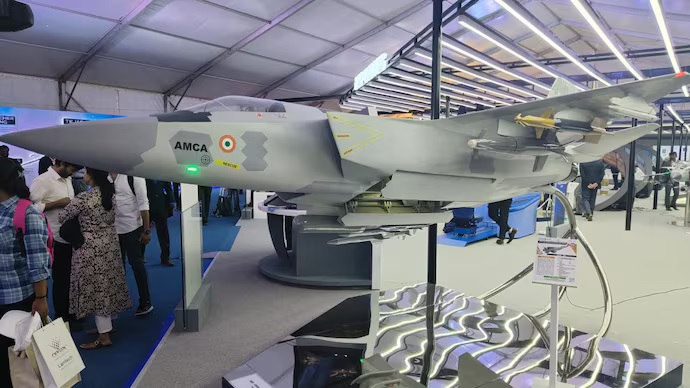
The Defence Research and Development Organisation (DRDO), through its Centre for Military Airworthiness and Certification (CEMILAC), has granted PTC Industries a Letter of Technical Acceptance (LoTA) for the development and production of the Titanium Rear Fin Root Casting for India’s Advanced Medium Combat Aircraft (AMCA) program.
The Letter of Technical Acceptance is a critical milestone in defence manufacturing. It signifies that the proposed design, materials, and production processes meet the stringent technical and airworthiness standards set by the DRDO and the Indian Air Force (IAF). Essentially, it is a green signal allowing the company to transition from prototype development to full-scale production under strict quality and performance guidelines.
The Titanium Rear Fin Root Casting is a vital structural component of the AMCA, contributing to its aerodynamic stability and structural integrity. Titanium is favored in modern combat aircraft due to its high strength-to-weight ratio, excellent corrosion resistance, and ability to withstand extreme temperatures, all of which are essential for a stealth fighter like the AMCA.
With this approval, PTC Industries can now manufacture components that will undergo rigorous testing and integration into the AMCA airframe. This step also reflects the progress of India’s indigenous fifth-generation fighter program, which aims to reduce dependence on foreign suppliers and strengthen the nation’s defence manufacturing ecosystem.
Currently, the AMCA program has achieved significant development milestones, including advanced design finalization, wind tunnel testing, and avionics integration. The approval of critical airframe components like the Titanium Rear Fin Root Casting indicates that the program is steadily moving toward prototype assembly and flight testing phases.
The partnership between DRDO, CEMILAC, and private industry players like PTC Industries showcases India’s Make in India initiative in aerospace, encouraging indigenous production of advanced materials and components for future combat aircraft.
This step marks a crucial technical and industrial achievement, bringing India closer to realizing a fully indigenous fifth-generation stealth fighter capable of competing with global counterparts.
About the Author
Aditya Kumar:
Defense & Geopolitics Analyst
Aditya Kumar tracks military developments in South Asia, specializing in Indian missile technology and naval strategy.