DRDO Gets Green Light for ₹20,000 Crore Indigenous AWACS Project
In a major push for self-reliance in defence, the Indian government has approved a ₹20,000 crore project to develop indigenous Airborne Warning and Control Systems (AWACS) for the Indian Air Force. The program, known as Netra MK-2, will be developed by the Defence Research and Development Organisation (DRDO), marking one of India’s most ambitious aerospace projects to date.
This homegrown AWACS system is designed to act as the “eyes in the sky”, giving the Indian Air Force the ability to detect enemy aircraft, track missile launches, and control air operations far beyond the visual range. Once completed, this will significantly enhance India’s surveillance and combat readiness along its borders and beyond.
Six Airbus A321 Jets to Become Flying Radar Stations
As part of this program, six Airbus A321 aircraft, earlier taken from Air India, will be structurally modified to house a powerful radar dome on their fuselage. These aircraft will be equipped with state-of-the-art AESA (Active Electronically Scanned Array) radars, enabling 360-degree radar coverage and long-range detection of threats in the air and on the ground.
In a significant development, Adani Defence & Aerospace will be a lead partner in the project, helping to manufacture and integrate key mission systems. The mission control suite, radar electronics, and software will be developed entirely in India, underlining the project’s alignment with the Atmanirbhar Bharat initiative.
What Makes Netra MK-2 Special?
The Netra MK-2 will provide several major improvements over current systems:
-
Full 360° coverage using a large radar dome and additional forward-mounted sensors
-
Ability to monitor enemy aircraft and ground threats at long ranges
-
Advanced ELINT and COMINT functions to intercept enemy communications and electronic signals
-
Real-time command and control for air operations
-
Increased endurance and altitude, making it ideal for long missions over vast areas
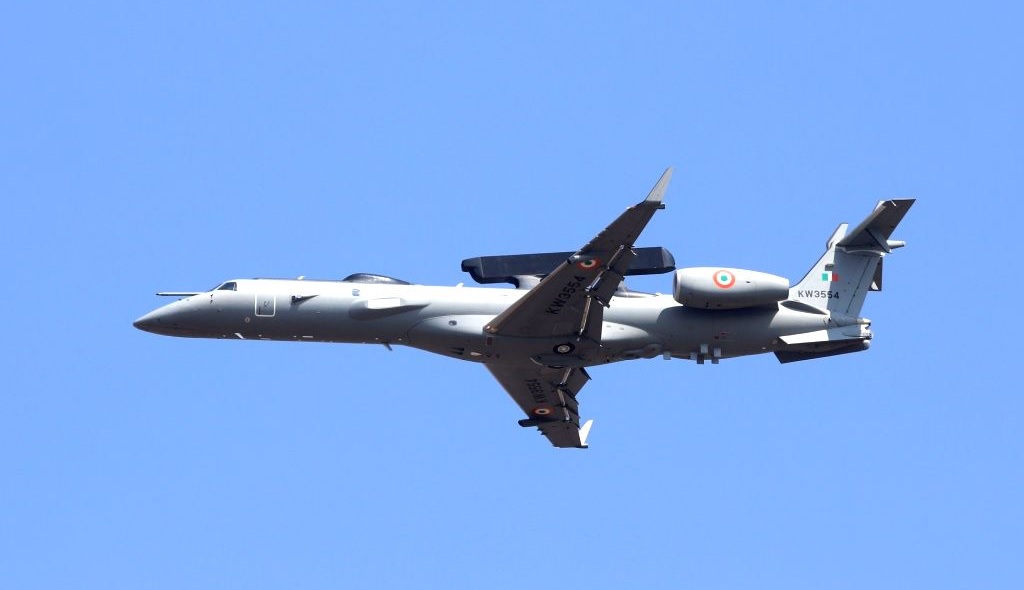
This project builds on the earlier Netra MK-1, a smaller system mounted on the Embraer EMB-145 aircraft. While effective, it has limited range and capacity. India also operates three imported IL-76-based Phalcon AWACS from Israel, which have proven useful but are aging and have limited availability due to maintenance challenges.
Why This Is a Big Deal
For the first time, an Airbus platform will be adapted for such a complex military role in India—a space traditionally dominated by American Boeing aircraft. Once operational, the Netra MK-2 will be a powerful force multiplier for the Indian military, improving airspace surveillance, response coordination, and battlefield management.
The first aircraft is expected to be ready by 2026–27, with DRDO aiming for a three-year development window. Once delivered, these aircraft will fill a crucial gap in India’s air defence network.
Beyond the IAF, the project is also expected to build valuable expertise within Indian defence firms, opening the door for future exports of AWACS systems to friendly countries.
The indigenous AWACS program is not just a technology upgrade—it is a strategic leap forward for India’s air power and defence industry. With its emphasis on Indian innovation, industry partnerships, and high-end aerospace engineering, the project represents a shining example of what self-reliant defence capability looks like in action.
✍️ This article is written by the team of The Defense News.