DRDO Develops Advanced Low-RCS Air Intake Ducts for AMCA and Ghatak Stealth Programs
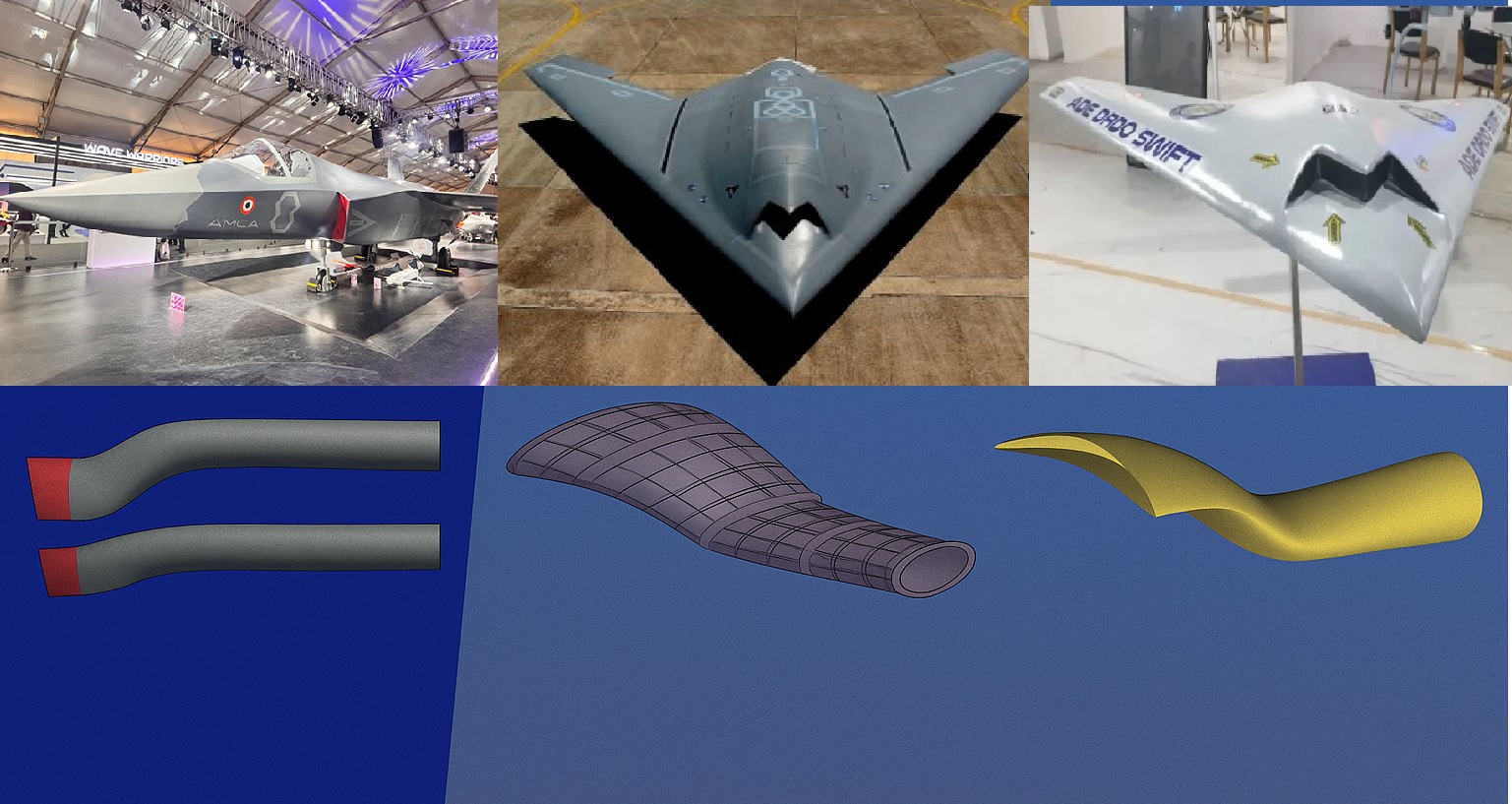
Defence Research and Development Organisation (DRDO) is developing next-generation Low Radar Cross Section (RCS) air intake ducts for the upcoming AMCA fighter jet, Ghatak unmanned combat aerial vehicle (UCAV), and its testbed SWiFT. These ducts are a critical part of stealth aircraft design, helping reduce radar visibility by shaping and absorbing electromagnetic waves.
Designed with a serpentine geometry, the ducts block direct radar line-of-sight to the engine, a major source of radar returns. Internally, they are lined with Radar Absorbing Structures (RAS) made from carbon composite materials, engineered to suppress radar reflections in the 2–18 GHz frequency band. These measures are expected to provide over 10 decibels (dB) of radar signature reduction, significantly boosting survivability in contested airspace.
Three major designs are under development:
-
AMCA intake ducts, aimed at >10 dB RCS reduction in frontal aspects.
-
Ghatak UCAV ducts, following a similar reduction profile.
-
SWiFT ducts, optimized for up to 40-degree radar incidence angles, mimicking extreme combat conditions.
The technology effort isn't limited to shape alone. DRDO has identified and is testing advanced RAS materials like ferrite foams, ceramic radar-absorbent composites, and conductive polymers. The structural design is tuned to allow non-uniform cladding thickness, exploiting the physics of multiple radar reflections to reduce radar bounce-back while keeping weight under control.
Work is being carried out at multiple DRDO labs, including DLRL, DMSRDE, RCI, ADE, and CEMILAC, with support from simulation and materials centers like DMRL and LASTEC. Advanced simulations, electromagnetic validation, and structural prototype testing are already underway, with full-scale ducts being fabricated for integration trials.
Overcoming challenges such as material endurance at high speed, thermal resilience, and aerodynamic flow stability, the program is progressing with high national priority. Once operational, these indigenous stealth air intake ducts will become a cornerstone of India’s ambition to field true fifth-generation aircraft with deep penetration and low observability, reducing dependence on foreign stealth technologies.
This marks a critical milestone in India's aerospace self-reliance under the Atmanirbhar Bharat initiative.
✍️ This article is written by the team of The Defense News.