DRDO Developing RF System-on-Chip Based RWR Processing Unit to Enhance Electronic Warfare Systems
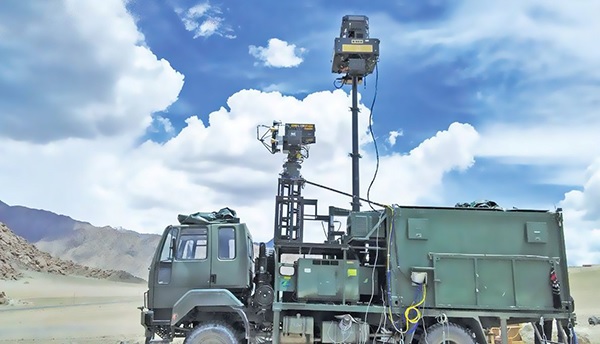
The Defence Research and Development Organisation (DRDO) is developing a new Radio Frequency (RF) System-on-Chip (SoC) based Radar Warning Receiver (RWR) processing unit aimed at significantly enhancing the performance and responsiveness of India’s Electronic Warfare (EW) systems. The new development represents a key technological upgrade to existing systems such as the DHRUTI RWR (DR118), which is currently operational on platforms like the Su-30MKI fighter aircraft.
The RF SoC-based RWR processing unit will integrate multiple high-frequency analog and digital components—such as RF front-end modules, high-speed converters, and advanced digital processors—into a single compact chip. This integration will reduce size, weight, and power (SWaP) requirements, while enabling faster and more accurate detection of radar emissions. The system will be capable of real-time signal analysis, improving the ability to identify and classify both known and new radar threats in complex electromagnetic environments.
The DHRUTI RWR system, which uses digital receivers and fast-switching down converters, already provides wideband coverage, high sensitivity, and effective detection against a variety of radar types. It employs digital signal processing (DSP) techniques to replace bulky analog hardware, ensuring better selectivity and accuracy. The new RF SoC-based processing unit under development by DRDO builds upon this foundation by embedding the signal processing architecture within a miniaturized SoC framework.
According to available information, DRDO’s new RF SoC design will allow wideband instantaneous signal capture, real-time emitter tracking, and dynamic reception control, improving threat response time. The technology will also serve as a master control element for Countermeasure Dispensing Systems (CMDS) and jammers, ensuring seamless coordination between radar warning and countermeasure activation.
The RF SoC-based architecture is expected to support a range of future EW suites across multiple platforms—fighter aircraft, helicopters, unmanned aerial vehicles (UAVs), and naval assets. It will also enable easier scalability and software-defined adaptability, allowing updates to threat libraries and signal processing algorithms without hardware changes.
The DHRUTI RWR program itself has reached a mature stage, with user trials completed and production clearance granted for 129 systems for the Indian Air Force. Multiple Indian firms, including BEL, Data Patterns, Mistral Solutions, FLIC Microwaves, and Astra Microwave Ltd, are participating in the production and integration.
Once operational, the RF SoC-based RWR processing unit will form the core of India’s next-generation EW systems, delivering improved sensitivity, faster reaction time, and better resistance to modern radar countermeasures—furthering DRDO’s ongoing efforts toward indigenous, high-performance electronic protection technologies.
About the Author
Aditya Kumar:
Defense & Geopolitics Analyst
Aditya Kumar tracks military developments in South Asia, specializing in Indian missile technology and naval strategy.