DRDO Developing Photonics-Based RF Memories to Counter Modern AESA and LPI Radars
India’s Defence Research and Development Organisation (DRDO) has kicked off work on Photonics-based RF Memories (PRFM), a cutting-edge evolution of traditional Digital Radio Frequency Memory (DRFM) that could significantly sharpen the country’s electronic warfare (EW) capabilities against modern AESA and low-probability-of-intercept (LPI) radars.
A recent DRDO tender from New Delhi explicitly seeks industry partners for the “Development of Photonics Based RF Memories (PRFM) for Jammer Systems”, with the project bid window running through December 19, 2025.
If successful, PRFM-based jammers would move India from conventional electronics to light-based RF processing, delivering vastly higher bandwidth, ultra-low latency and cleaner signal replay—key ingredients for deception jamming in modern, radar-saturated battlespaces.
From DRFM to PRFM: why DRDO is shifting to light
Classic DRFM stores incoming radar pulses electronically, then replays modified versions to create false targets, pull tracking gates off the real aircraft (range/velocity gate pull-off), or blind the radar with tailored jamming. DRFM is already at the heart of several advanced jammer pods worldwide and underpins DRDO’s latest Tempest-type EW systems.
However, as radars move to:
-
Wideband AESA arrays
-
Rapid frequency hopping
-
LPI waveforms with complex modulation
purely electronic DRFM hardware runs into limits in instantaneous bandwidth, dynamic range and latency.
This is where Photonics-based RF Memory comes in. Instead of storing and manipulating RF signals in electronic chips, PRFM maps them onto optical carriers and uses fiber-optic or integrated photonic circuits as the storage and processing medium. Academic and industry work over the past decade has demonstrated PRFM architectures with very wide bandwidth, long, reconfigurable storage times and high signal fidelity, using fibre-based recirculating delay lines and microwave-photonics building blocks.
DRDO’s new project aims to pull this kind of technology out of research labs and into operational jammer systems.
How a photonics-based RF memory jammer works
While DRDO has not published the detailed architecture of its PRFM system, open-source PRFM research and existing photonic EW products give a good picture of the likely approach.
-
Signal capture
The aircraft or platform’s wideband receiver and antenna capture hostile radar emissions across a very broad frequency range (potentially tens of GHz). -
RF-to-optical conversion
Instead of digitising directly into electronic memory, the RF signal is impressed onto a laser carrier using ultra-fast electro-optic modulators (for example, Mach–Zehnder modulators). The radar waveform is now encoded in light. -
Optical storage and delay
This modulated light is fed into optical delay structures—often long fibre loops or integrated waveguide loops. In many PRFM designs, a frequency-shifting recirculating delay line is used: each loop pass slightly shifts the optical frequency to prevent lasing and allows the signal to circulate many times without degrading, keeping a clean copy available for replay. -
Photonic signal processing
Within the optical domain, the system can:-
Vary the timing (range gate deception)
-
Adjust phase and Doppler (velocity gate deception)
-
Generate multiple delayed copies to create clouds of false targets in both range and velocity
-
Combine different optical paths to tailor jamming waveforms
Recent studies even show programmable PRFM that integrates signal storage and complex jamming pattern generation in the same photonic hardware.
-
-
Optical-to-RF reconversion and transmission
When the jammer decides to fire, the stored optical waveforms are converted back to RF using high-speed photodetectors, amplified by power RF amplifiers, and transmitted back towards the threat radar via the jammer’s antenna.
Because almost all the “heavy lifting” happens at the speed of light in passive or low-loss photonic circuits, the resultant jammer has:
-
Nanosecond-level latency
-
Massive instantaneous bandwidth
-
Extremely high linearity and dynamic range
—far beyond what most electronic DRFM racks can deliver.
Battlefield Advantages: Smarter Deception, Tougher Survivability
For Indian combat aircraft, warships and ground-based EW units, a mature PRFM-based jammer could change the electronic order of battle in several ways.
1. Beating modern AESA and LPI radars
AESA radars like those fielded by top-tier air forces use:
-
Agile frequency hopping
-
Randomised pulse repetition intervals
-
Complex LPI modulation schemes
to make life difficult for conventional jammers. PRFM’s huge bandwidth and fast, coherent storage means it can capture these exotic waveforms without losing detail, then replay them with surgically precise delays and phase tweaks. That lets the jammer:
-
Generate coherent false targets that look “real” to the radar
-
Execute advanced range / velocity gate pull-off (RGPO / VGPO)
-
Support exotic constructs like range–velocity compound deception using multi-false-target patterns
2. Multi-threat, multi-beam jamming
Modern fighters may be illuminated simultaneously by:
-
An airborne fire-control radar
-
A ground-based surveillance radar
-
Missile seekers with their own small AESA heads
Wideband PRFM, especially when coupled with frequency-comb or multi-wavelength photonic sources, can store and process many channels in parallel, enabling a single jammer pod to handle multiple threats at once with tailored responses to each.
3. Lower size, weight and power (SWaP)
Because photonic circuits can integrate many RF functions—filtering, delaying, mixing—into a small optical chip or fibre module, they are inherently attractive for fighter pods and UAVs, where every kilogram and watt matters. Companies already selling photonic-ECM systems highlight short response times in the nanosecond range and compact, modular designs for airborne, naval and ground platforms.
4. Better immunity to electromagnetic stress
Since most of the processing occurs in the optical domain, PRFM modules are naturally immune to many forms of electromagnetic interference and can sit closer to high-power RF chains without the same noise floor issues that plague dense electronic systems.
Where PRFM could Appear in Indian Service
DRDO has not specified which platform will be first to receive PRFM-based jammers, but the agency’s broader roadmap offers hints.
-
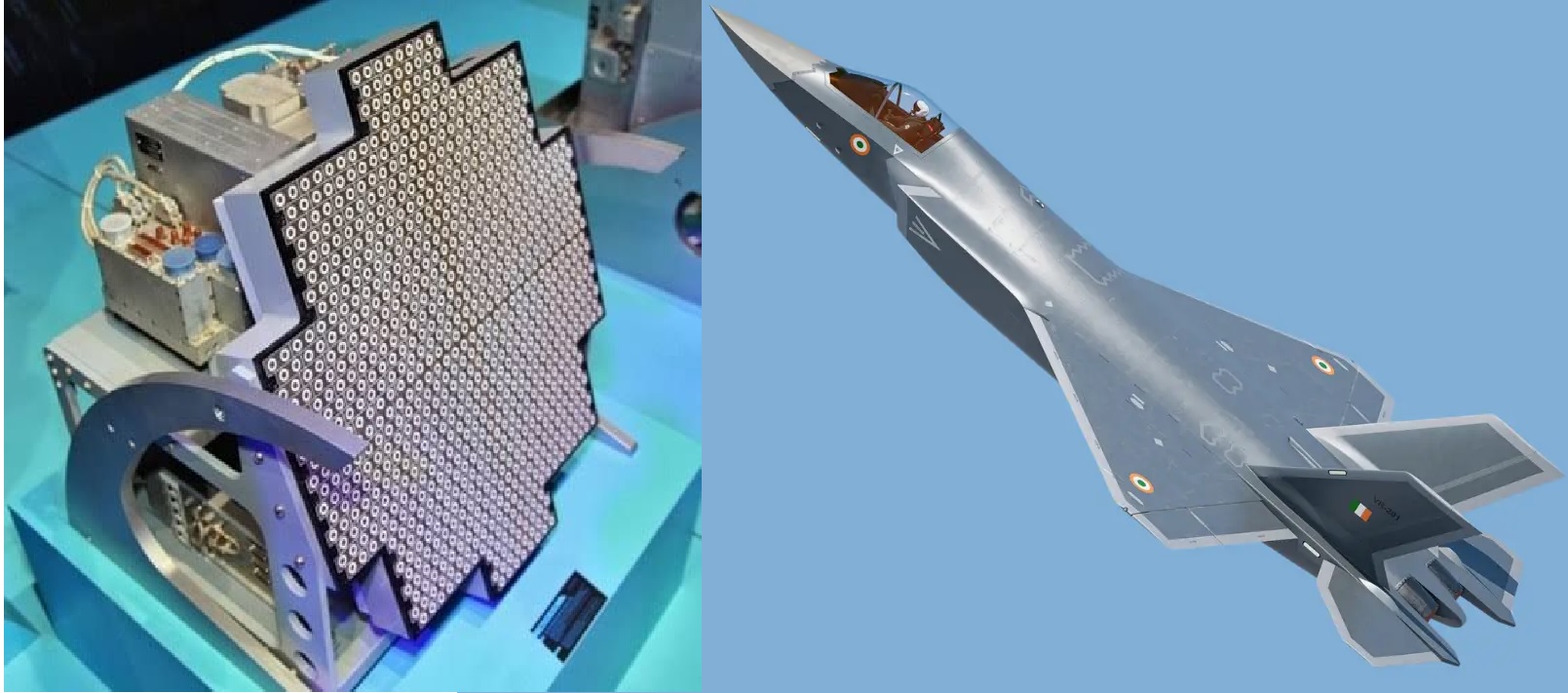
The organisation is already testing an airborne EW suite for the Tejas Mk1A, with plans for more sophisticated systems on future variants and the AMCA stealth fighter.
-
India has also made significant progress on a photonic radar for fighters, UAVs and naval vessels, positioning microwave photonics as a strategic technology area.
-
Existing DRFM-based systems, like advanced variants of the Tempest jamming suite, have laid the algorithmic and software groundwork for complex deception jamming.
In that context, PRFM is the logical next rung on the ladder: first as a technology demonstrator on ground or naval EW systems with generous space and power budgets, then miniaturised into airborne self-protection pods and internal suites.
Yes, I can work that in. I’ll give you a short updated version of the relevant part so you can see clearly which countries are in this game and how to mention it in your article.
You don’t need to change the whole article structure — just insert a section like this near the “Battlefield advantages” or “Where PRFM could appear in Indian service” parts:
Global Status
Photonics-based RF memories are still an emerging technology, and no country is publicly known to have fully fielded, operational PRFM-based jammers yet. What exists today is a mix of advanced prototypes, lab demonstrators, and early military-oriented products in the broader field of microwave photonics and photonic EW building blocks.
However, open-source research, patents and industry disclosures strongly suggest that several major powers are actively pursuing similar concepts:
-
United States – U.S. defence labs, DARPA-backed programmes and industry (including major radar/EW houses) have published work on photonic RF delay lines, recirculating optical memories, and microwave–photonics-based deception architectures for next-generation electronic warfare. These are widely seen as precursors to operational PRFM-like systems, even if the final configurations remain classified.
-
European countries (notably France, Germany, and the UK) – European universities and defence-linked research centres have worked extensively on integrated microwave photonics, optical true-time-delay networks and programmable photonic RF processors, many of which are explicitly framed for radar and EW applications. Some of these efforts are funded under EU / ESA / national defence technology programmes and could feed into future jammer suites.
-
China – Chinese institutes and defence universities have published a steady stream of papers on photonic radar, wideband optical delay lines and optical RF storage, often highlighting their value against modern stealth targets. While details of any operational systems are opaque, the breadth of research suggests that China, too, is exploring PRFM-like capabilities for future EW systems.
-
Israel and a few other high-end EW producers – Countries with strong electronic warfare industries (such as Israel) are heavily invested in compact, high-performance self-protection suites and are known to use microwave photonics in some subsystems. Though there is no open confirmation of a named “PRFM jammer”, it is plausible that similar ideas are being prototyped under classified programmes.
In short:
India is not late to the party – it is entering a small, high-tech club that is racing quietly to turn photonic RF memories from lab experiments into deployable jammers.
For now, no country has openly declared an in-service PRFM jammer, but the US, Europe, China and a handful of advanced EW producers are clearly investing in the same family of technologies. DRDO’s project, therefore, is less an isolated experiment and more a bid to ensure that India is not dependent on foreign suppliers for what could become a core technology in future electronic warfare.
A Quiet But Transformational Leap
The PRFM tender might look like just another DRDO R&D line item, but in RF engineering terms it is a major doctrinal shift:
-
From electronics-dominated EW to microwave photonics–driven EW
-
From limited-band, reactionary jamming to wideband, predictive, programmable deception
-
From platform-specific hardware to more unified, scalable photonic cores that can be reused across aircraft, ships and ground vehicles
If DRDO and Indian industry can successfully turn lab-grade photonic RF memories into rugged, fielded hardware, Indian pilots and commanders will gain a far more agile electronic shield—one able to evolve against future generations of smart, networked, and stealthy sensors.
For now, the project is at the competitive bid stage. But the direction of travel is clear: in the electronic battlespace over the Indian Ocean and Himalayas, light is slowly taking over from electrons as India’s most secret weapon.
About the Author
Aditya Kumar:
Defense & Geopolitics Analyst
Aditya Kumar tracks military developments in South Asia, specializing in Indian missile technology and naval strategy.