DRDO Developing Next-Generation AI Missile Guidance System With Extreme Precision
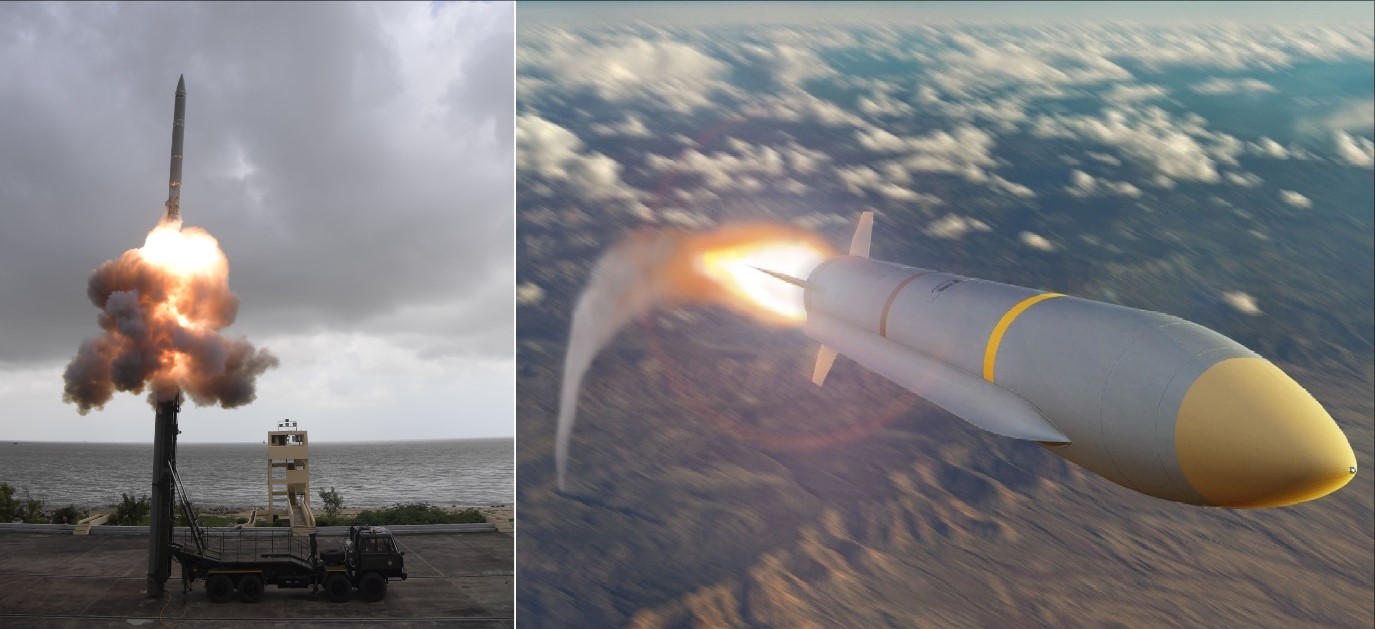
India is preparing for a major technological jump in its missile arsenal as the Defence Research and Development Organisation (DRDO) accelerates work on AI-powered guidance systems designed to deliver sub-5-metre Circular Error Probable (CEP). Officials familiar with the programme describe it as one of the most ambitious upgrades in Indian missile guidance history—shifting from pre-programmed flight paths to real-time, self-optimising trajectories powered by artificial intelligence.
The new guidance systems, still under development, are expected to significantly strengthen India’s precision-strike capabilities across land, air, and naval platforms.
From Fixed Guidance to Adaptive Intelligence
For decades, Indian and global missiles have relied on a conventional architecture built around Inertial Navigation Systems (INS), GPS/NavIC corrections, and terminal seekers such as radar or infrared sensors. These systems use fixed guidance laws—mainly Proportional Navigation—that are highly reliable but fundamentally predictable.
These classical systems already give India strong precision. Weapons like the Smart Anti-Airfield Weapon (SAAW) and the manoeuvrable Pralay missile achieve impressive accuracy thanks to improved INS packages and terminal seekers. But they still operate within predefined boundaries, offering limited flexibility once the missile is in flight.
DRDO’s upcoming AI guidance suite aims to break out of this fixed framework and introduce missiles that can “think” during flight, adapting continuously to battlefield conditions.
What AI Guidance Brings to the Missile Battlefield
DRDO’s new guidance architecture brings several transformative technologies together:
-
AI-enabled radar seekers capable of identifying targets with far higher precision, rejecting decoys, and adapting to jamming attempts.
-
Imaging Infrared (IIR) seekers with neural-network processing, allowing the missile to recognise shapes, movement patterns, and heat signatures.
-
Onboard AI processors (“edge computing”) that evaluate hundreds of trajectory options per second, selecting the most accurate path on the fly.
-
Terrain-matching, visual navigation, and advanced sensor fusion that allow guidance without GPS or external support.
Together, these elements allow the missile to run real-time trajectory optimisation, constantly refining its flight path until the final seconds. This ability is key to achieving sub-5-metre CEP even against moving, evasive, or well-defended targets.
How AI Achieves Sub-5-Metre CEP
DRDO engineers explain that AI-enabled guidance pushes missile accuracy into the sub-5-metre range by transforming how the weapon interprets its environment, manages its sensors, and adjusts its flight path. Instead of relying on every sensor equally, the onboard AI constantly evaluates which inputs are most reliable at any given moment. If GPS or NavIC signals are jammed, the missile automatically shifts its dependence to terrain matching, optical imagery, radar cues, and inertial data, ensuring high precision even under intense electronic warfare conditions.
Another major factor is real-time trajectory re-planning. Conventional missiles follow a predetermined path with only limited corrections, but an AI-guided weapon continuously recalculates the most accurate and efficient route to the target. This allows it to compensate for atmospheric changes, evasive movements by the target, and unexpected threats that appear mid-flight.
Accuracy improves even further during the final approach. As the missile closes in, AI-assisted terminal seekers analyse visual, infrared, or radar signatures to identify the most vulnerable or vital point of impact—whether it is a runway intersection, a ship’s bridge, a radar face, or an ammunition bay. This intelligent aim-point selection ensures that the weapon hits not just the target, but the part of the target that will cause maximum effect.
Finally, AI-based computer vision and terrain-referenced navigation give the missile the ability to remain highly accurate even when satellite guidance is denied. By comparing real-time sensor inputs with stored terrain or target imagery, the system can pinpoint its own position and maintain a precise trajectory despite GPS jamming or spoofing. Together, these innovations enable DRDO’s next-generation missiles to consistently achieve single-digit-metre accuracy, marking a significant leap in India’s precision-strike capability.
AI vs Traditional Guidance: What Changes
The differences between current and next-gen guidance systems are profound:
| Traditional Guidance | AI-Powered Guidance |
|---|---|
| Fixed navigation laws applied throughout flight | Adaptive algorithms that change mid-flight |
| Heavy dependence on GPS/NavIC | Visual, radar, and terrain cues reduce GPS dependence |
| Predictable reaction to threats | Instant response to jamming, evasive manoeuvres |
| Limited mid-course corrections | Continuous optimisation until impact |
| Best for static pre-defined targets | Equally effective against moving or defended targets |
In short, AI transforms the missile from a guided projectile into an autonomous decision-maker.
How DRDO Plans to Integrate the New System
Multiple DRDO programmes already show a shift toward intelligent guidance:
-
Astra air-to-air missiles now feature advanced indigenous RF seekers with higher processing capability.
-
Pralay uses trajectory-shaping algorithms that will eventually merge with AI-based optimisation.
-
Glide bombs and precision munitions are being prepared to host AI-enabled imaging seekers.
-
New radar technologies, including monopulse and AI-assisted RF seekers, are being readied for long-range cruise and anti-ship missiles.
The larger objective is to create a unified AI guidance module that can be scaled across platforms—from short-range tactical missiles to long-range precision strike systems.
What It Means for India’s Future Combat Power
If DRDO successfully operationalises these systems, the Indian military will gain:
-
Higher lethality per strike, cutting the number of missiles needed per mission
-
Better survivability for aircraft and launchers due to longer stand-off ranges
-
Stronger resistance to electronic warfare, jamming, and spoofing
-
Sharper effectiveness against mobile, time-sensitive, and defended targets
-
Swarm coordination, allowing multiple missiles to share information and strike intelligently
The move aligns India with global trends, where advanced militaries are transitioning to AI-optimised, GPS-independent missile guidance as electronic warfare grows more intense.
Towards the Era of Intelligent Missiles
The AI-powered guidance systems DRDO is developing represent a generational shift in Indian missile technology. By enabling missiles to analyse, adapt, and optimise in real time, India is positioning its next wave of precision-strike weapons to operate effectively in the most contested battlefields of the future.
If the current development trajectory holds, the coming decade could see Indian missiles evolve from highly accurate weapons to smart, autonomous strike systems that redefine precision warfare for the subcontinent.
About the Author
Aditya Kumar:
Defense & Geopolitics Analyst
Aditya Kumar tracks military developments in South Asia, specializing in Indian missile technology and naval strategy.