DRDO Design Two Smart Missile Canisters with Shock Dampers and Sliding Mechanisms For Project Kusha
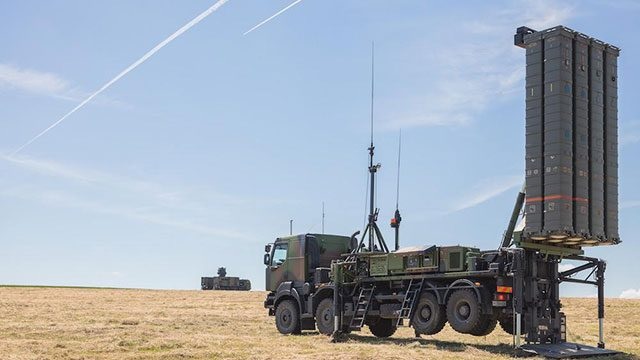
India’s ambitious Project Kusha has taken a crucial step forward with the development of two highly advanced missile canister designs. These new canisters—equipped with shock dampers, sliding mechanisms, and tailored support for multiple interceptor variants—are set to significantly enhance the performance and deployment of India's upcoming long-range surface-to-air missile system.
Officially called the Extended Range Air Defence System (ERADS), Project Kusha is a high-stakes initiative led by the Defence Research and Development Organisation (DRDO). Approved by the Cabinet Committee on Security in May 2022, and granted formal procurement clearance in September 2023, the project is backed by a ₹21,700 crore (~$2.6 billion) budget to supply five Indian Air Force squadrons. Full deployment is planned between 2028 and 2030.
This system lies a trio of missiles—M1 (150 km), M2 (250 km), and M3 (350–400 km)—each tailored to neutralise a specific class of threat, ranging from stealth aircraft and drones to ballistic and cruise missiles. The upcoming canisters are being built to house these missiles securely and ensure reliable launch, even under extreme battlefield conditions.
The first of these, Canister Type-1, is designed specifically for the M1 interceptor missile, the closest-range variant. Intended for quick-response tactical engagements, the M1’s canister includes mechanical dampers and isolators that act as cushions to protect its sensitive dual-pulse rocket motor and warhead during road transport and launch. Made with lightweight materials like aluminium alloys or fibre-reinforced plastic, this design is also compact—ideal for mobile deployment units.
Meanwhile, the more sophisticated Canister Type-2 is a modular, dual-purpose container for the M2 and M3 missiles. Because these long-range interceptors vary in size and weight—especially with the M3's extended booster stage—the new design incorporates a smart internal sliding mechanism. This lets engineers adjust the canister’s internal supports depending on the missile inside, ensuring a snug fit and stable launch regardless of configuration.
This adaptive format removes the need for separate canisters for each missile type—simplifying logistics, reducing production complexity, and giving operators far greater mission flexibility. The interior is also lined with felt or rubber-based padding for additional vibration dampening.
As a system, Project Kusha is India’s answer to global missile defence systems like Russia’s S-400, but with a key difference: it’s being built from the ground up by Indian hands. The launchers, radars, interceptors, and now the canisters—everything is being developed domestically, marking a significant leap toward Atmanirbhar Bharat (self-reliant India) in defence technology.
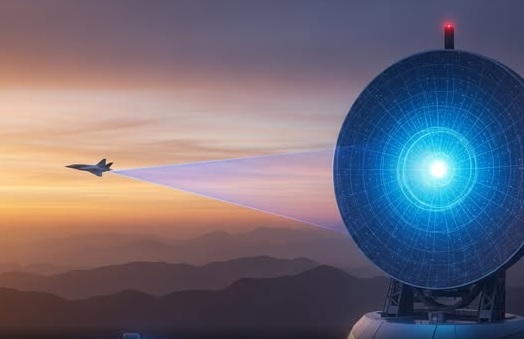
Initial test flights for the M1 missile are slated for September 2025, and their success will be closely watched as a benchmark for future progress. The Indian Air Force will integrate the system into its Integrated Air Command and Control System (IACCS)—the same backbone that links sensors from S-400 radars and other indigenous surveillance assets—offering a 360-degree real-time threat detection and response capability.
What’s more, the Indian Navy also plans to equip its next-gen warships with the M1 and M2 missile variants, adding an advanced layer of maritime defence—particularly against rising regional threats like China’s DF-21D “carrier-killer” missile.
In short, these smart new canister designs aren’t just metal shells—they’re a symbol of how far India’s defence technology has come. With advanced features, precision engineering, and adaptability built into the core, Project Kusha is shaping up to be one of India’s most advanced air defence systems yet.
✍️ This article is written by the team of The Defense News.