DARPA’s New MASH Program to Save Soldiers’ Lives in Battlefield by Battlefield Trauma Care with Autonomous Robotics
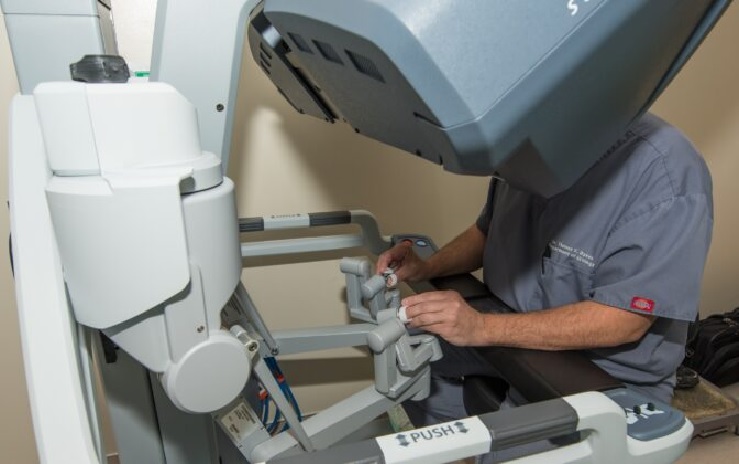
The Defense Advanced Research Projects Agency (DARPA), a top-secret U.S. government research organization, has launched an ambitious new initiative to transform battlefield trauma care. Known as the Medics Autonomously Stopping Hemorrhage (MASH) program, this groundbreaking effort aims to tackle one of the most life-threatening and challenging medical conditions faced by soldiers in combat—non-compressible torso hemorrhage.
Internal bleeding within the torso is a significant cause of preventable death among U.S. warfighters. Unlike external injuries where tourniquets or field dressings can be applied, internal hemorrhaging is often hidden and requires highly specialized surgical interventions, which are rarely available on the front lines. DARPA’s MASH program seeks to bridge this critical gap by developing robotic systems that can detect and stop internal bleeding with minimal human supervision, potentially stabilizing injured personnel for up to 48 hours—long enough for evacuation to advanced medical facilities.
“We owe it to our warfighters to give them the best possible chance to survive,” said Dr. Adam Willis, MASH program manager. “In large-scale battles, many soldiers die from injuries that could have been survivable with prompt surgical care.”
The MASH initiative leverages advanced technologies including artificial intelligence, robotics, and sophisticated sensor arrays. These components will work together to create what DARPA describes as an “internal GPS system” capable of mapping the complex terrain inside the human torso. By navigating around organs and tissues, the robotic system can accurately locate bleeding sites and apply precise interventions such as sealing arteries or controlling hemorrhage.
“The real challenge is finding that bleed,” Dr. Willis explained. “The torso is a maze of organs, bones, and tissues, and identifying the exact source of internal bleeding in chaotic battlefield conditions is incredibly difficult.”
The program is structured over three years and split into two phases. The first phase involves integrating cutting-edge sensors into robotic platforms to reliably detect internal hemorrhages. The second phase focuses on developing autonomous control software that will allow the robots to make surgical-level interventions without constant human oversight.
This system is being designed for ease of use in battlefield conditions, much like automated external defibrillators (AEDs), which non-medical personnel can operate to restart a heart after cardiac arrest. The goal is to make the technology accessible and reliable, even under extreme environmental stress, such as limited visibility, restricted access to medical supplies, or ongoing combat.
Experts believe that beyond battlefield applications, the technologies developed under the MASH program could have significant implications for civilian trauma care, remote medical missions, and disaster response scenarios. Autonomous surgical interventions could be deployed in rural or disaster-stricken areas where access to healthcare professionals is severely limited.
DARPA emphasizes that the program is not just about robotics but also aims to improve trauma care protocols, emergency response procedures, and medical device development. The innovations from MASH could lead to breakthroughs in robotic-assisted surgery, telemedicine, and emergency diagnostics.
To encourage collaboration, DARPA has invited researchers, developers, and medical technology experts to participate in a virtual proposers day on September 18, 2025. Interested parties can register through official government contracting channels.
With the MASH program, DARPA is pushing the boundaries of what is possible in trauma care and robotic-assisted surgery, ensuring that warfighters and civilians alike have access to life-saving interventions when they need them most.
✍️ This article is written by the team of The Defense News.