DAC Extends Emergency Powers, Fast-Tracks Meteor Missiles, Drones and Indigenous Air Defence Projects
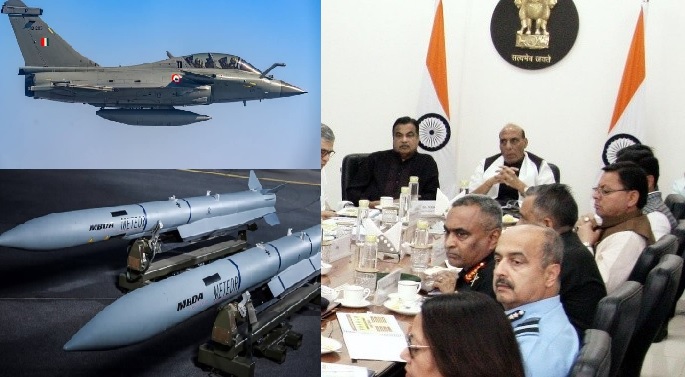
In a significant move aimed at accelerating India’s military modernisation, the Defence Acquisition Council (DAC) on December 26, 2025, extended the emergency procurement powers of the armed forces, clearing the path for a wide range of critical acquisitions and indigenous defence programmes spanning the Air Force, Army and Navy.
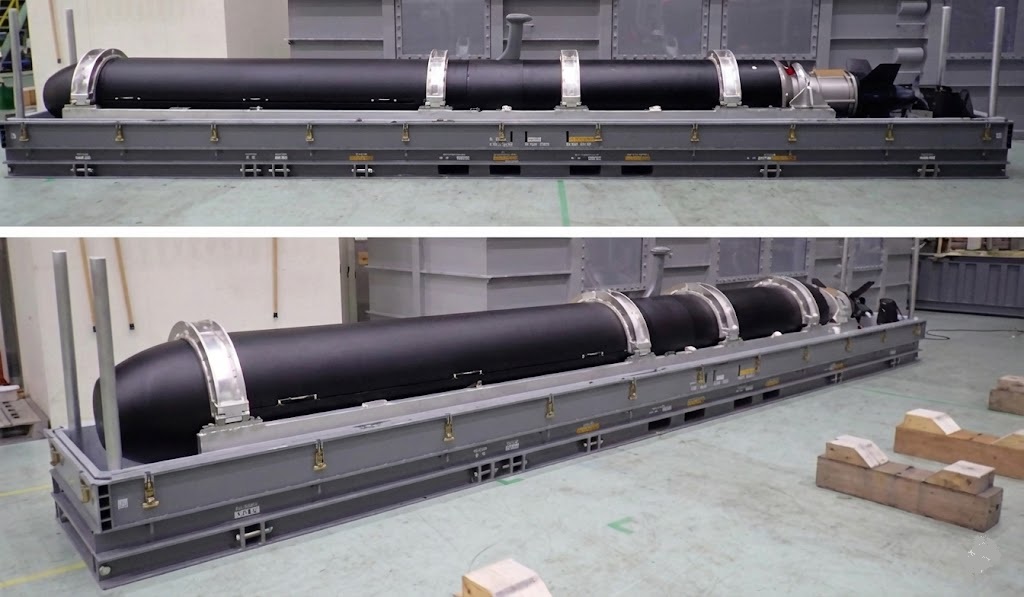
A key outcome of the decision is the proposed clearance for the acquisition of Meteor Beyond Visual Range Air-to-Air Missiles (BVRAAMs) for the Indian Air Force (IAF)’s Rafale fighter fleet. The Meteor, known for its long engagement range and high no-escape zone, is expected to substantially enhance the IAF’s air-dominance capability. The procurement is likely to be aligned with parallel clearances for indigenous air-to-air weapons to ensure both capability and supply resilience.
At the same time, the DAC is set to push forward major indigenous air defence initiatives, including the development of a homegrown integrated air defence weapon system to protect the Delhi National Capital Region (NCR) from aerial threats. The proposed system is designed to counter a spectrum of dangers, ranging from aircraft and cruise missiles to drones and loitering munitions, through a layered network of sensors, interceptors and command-and-control elements.
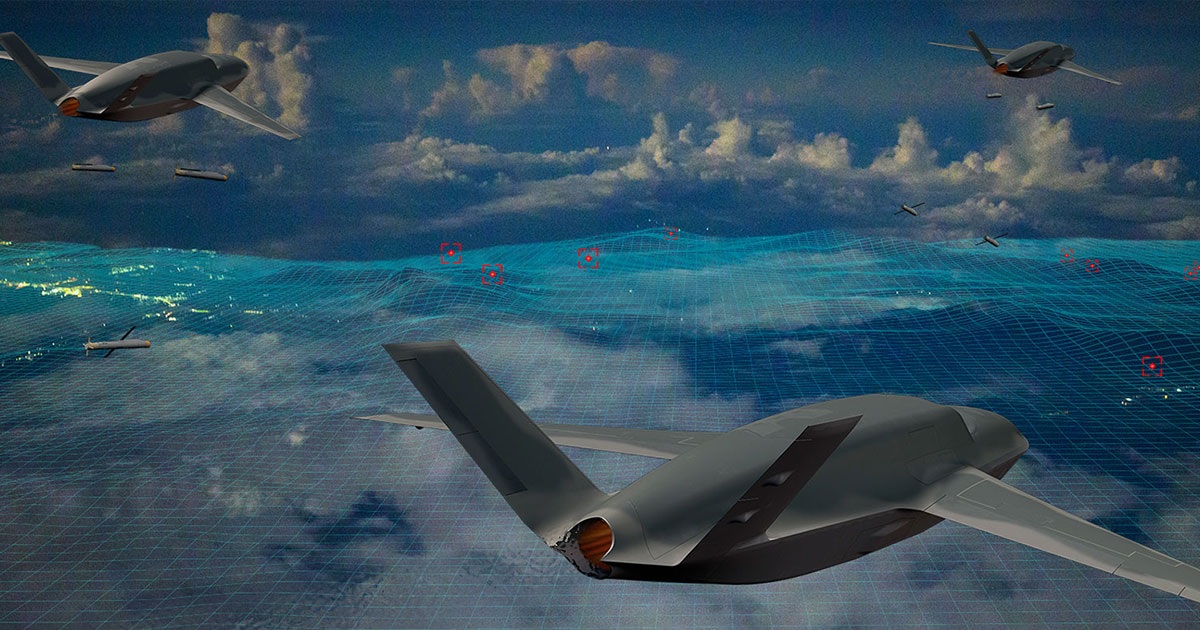
Unmanned warfare capabilities also feature prominently in the proposals. To strengthen tactical strike and battlefield surveillance roles, the Indian Army is expected to move ahead with plans to procure around 850 loitering munitions. These systems, which can hover over target areas before executing precision strikes, are increasingly viewed as essential for modern, high-intensity conflict scenarios, particularly along sensitive borders.
On the maritime front, the Indian Navy is likely to place a proposal before the DAC for the procurement of a large number of Medium-Range Surface-to-Air Missile (MRSAM) systems from indigenous sources. The move is aimed at bolstering the air defence capability of frontline warships against hostile aircraft, missiles and unmanned aerial threats, enhancing fleet survivability in contested environments.
The meeting is also expected to consider a decision on the leasing of two Sea Guardian MQ-9B High-Altitude Long-Endurance (HALE) drones from the United States for a period of around three years. This interim arrangement is intended to quickly augment India’s surveillance and reconnaissance capabilities. India has already signed a contract for 31 MQ-9B drones, which are scheduled to begin arriving from 2028 onwards, marking a major long-term expansion of unmanned aerial operations across all three services.
Missile development remains a core focus of the IAF’s future combat plans. The Defence Ministry is likely to clear the development and procurement of a very large number of Astra Mark-2 air-to-air missiles, an indigenous weapon system with a strike range exceeding 200 kilometres. The clearance is expected to include a defined quantity of Meteor missiles as well, creating a balanced mix of imported and domestically developed long-range air-to-air capabilities.
In the armoured segment, the Indian Army has proposed the indigenous overhaul of 200 T-90 main battle tanks through a defence public sector undertaking. The programme aims to extend the service life of the tanks, upgrade critical components and deepen domestic expertise in heavy armour maintenance and modernisation.
Collectively, the decisions and proposals discussed on December 26 underline the government’s intent to fast-track critical military capabilities, reduce procedural delays through extended emergency powers, and place strong emphasis on indigenous defence production. With multiple high-value projects now moving closer to approval, the coming months are expected to see accelerated contract finalisations and execution across India’s armed forces.
About the Author
Aditya Kumar:
Defense & Geopolitics Analyst
Aditya Kumar tracks military developments in South Asia, specializing in Indian missile technology and naval strategy.