Christians and Hindus Struggle to Survive in Bangladesh After Muhammad Yunus Becomes Prime Minister
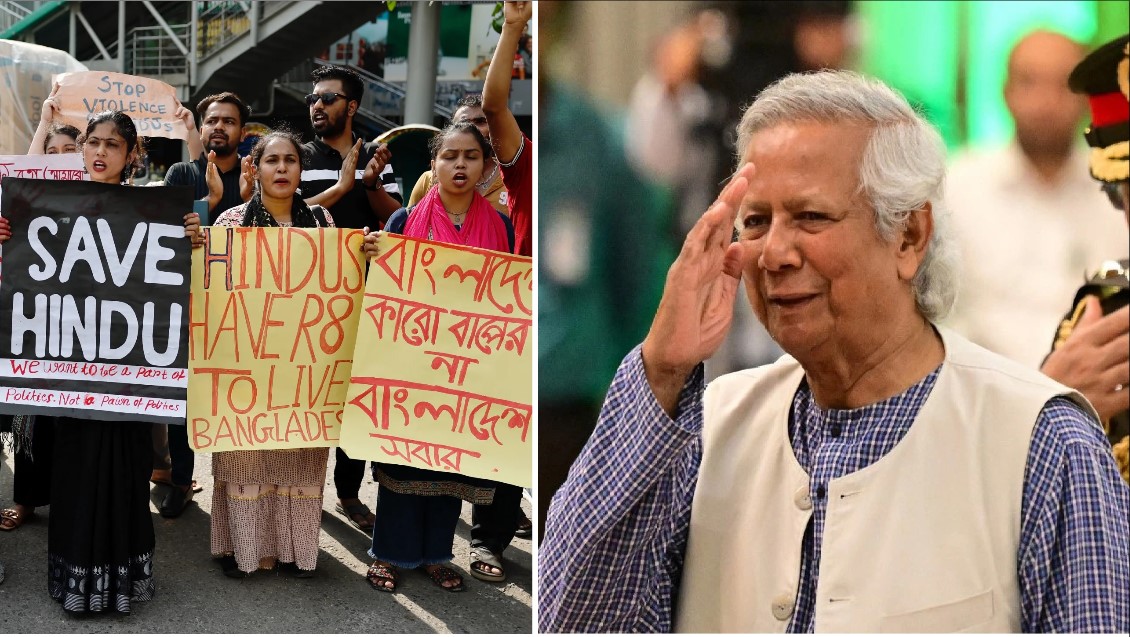
Dhaka, Bangladesh — Fear and uncertainty are tightening their grip on Bangladesh’s minority communities after a disturbing wave of bomb attacks and targeted assaults struck both Christian and Hindu groups across the country. What began with a string of small bombings at Catholic sites in Dhaka has now unfolded into a broader pattern of intimidation, coinciding with the political transition following Muhammad Yunus’s appointment as interim prime minister more than a year ago.
Once celebrated globally as a Nobel Peace Prize laureate and microfinance pioneer, Yunus took charge in what was meant to be a period of national stabilization after the ouster of Sheikh Hasina’s long-ruling government. Yet since his rise to power, reports of religious violence and communal hostility have increased sharply, raising fears that extremist elements are exploiting the country’s fragile political climate to target minorities.
A Community on Edge
The latest series of attacks began in early October when three Catholic institutions — the Holy Rosary Church, St. Mary’s Cathedral, and St. Joseph’s School and College — were hit by small explosive devices. Although no injuries were reported, police confirmed that the bombings were deliberate acts designed to instill terror.
According to Dhaka police spokesman Muhammad Talebur Rahman, investigators are examining whether the incidents were coordinated. “The attacks were symbolic — intended to frighten communities rather than cause mass casualties,” he said.
The incidents have deeply shaken Bangladesh’s Christian population of about 500,000, already accustomed to living on the margins in a Muslim-majority nation of 170 million. “We feel like we’re being watched,” said a young Christian teacher in Dhaka. “Every Sunday feels more dangerous than the last.”
At St. Joseph’s, Principal Brother Chandan Benedict Gomes insisted that classes would continue despite the anxiety. “Our faith teaches courage,” he said. “We won’t let fear dictate our future.”
Violence Extends Beyond the Churches
While Christians were the first visible targets, Bangladesh’s Hindu community — the country’s largest minority group — has also come under attack in recent months. Several temples and Hindu-owned shops in Khulna, Rangpur, and Chittagong have reportedly been vandalized by radical Islamist mobs.
In late September, a Durga Puja pandal in northern Bangladesh was torched, and local witnesses told reporters that attackers chanted slogans linking their actions to “revenge” against so-called “enemies of Islam.” Local Hindu leaders have accused the government of doing too little to contain the violence.
A senior member of the Bangladesh Hindu Buddhist Christian Unity Council (BHBCUC) said, “Since Muhammad Yunus took over, there’s been a vacuum of authority. Extremists sense that. They act without fear of punishment.”
Though police have increased patrols and promised a thorough investigation, arrests remain rare. Human rights groups argue that this climate of impunity emboldens attackers and sends a chilling message to vulnerable communities.
The Political Storm Behind the Fear
Bangladesh is still reeling from the political chaos that followed Sheikh Hasina’s fall from power. The interim administration led by Muhammad Yunus was initially seen as a compromise to restore calm and prepare for elections scheduled in February 2026. But the political vacuum has instead given rise to instability.
Street protests, violent rallies, and factional clashes between supporters of rival political parties have become commonplace. The Bangladesh National Party (BNP) and Islamist-leaning groups are regaining prominence, and many observers believe that radical elements are using the unrest as cover to stoke religious division.
“The attacks are not random,” said one Dhaka-based political analyst. “They reflect how fringe groups exploit instability to assert dominance. When the political center weakens, minorities become the easiest targets.”
History Repeating Itself
Religious minorities in Bangladesh have faced persecution at various points in history, particularly during political transitions. Under the guise of nationalism or religious fervor, extremist factions often resort to violence against Hindus and Christians, accusing them of being disloyal or aligned with foreign interests.
During the 2016 Dhaka café attack, ISIS-inspired militants targeted foreigners and secular Muslims — a grim reminder of how radical ideology can flourish in times of uncertainty. Now, nearly a decade later, similar undercurrents appear to be resurfacing.
Human rights reports indicate a sharp rise in hate crimes since Yunus took power. According to the Times of India, more than 2,400 attacks against minorities were recorded in the past year alone — from assaults on Hindu temples to threats against Christian clergy — with very few resulting in convictions.
The Struggle for Coexistence
Despite the fear, both Christian and Hindu communities continue to demonstrate resilience. Churches are still holding services, schools remain open, and Hindu temples have resumed worship after temporary closures. Yet behind these acts of faith lies a deep unease.
“We are citizens of this country,” said Nirmal Rozario, president of the Bangladesh Christian Association, “but we are made to feel like outsiders every time such violence happens. It’s not just our churches being attacked — it’s the idea of coexistence itself.”
Brother Chandan Gomes echoed this sentiment, noting that the community’s greatest strength is unity. “Fear thrives in silence. The more we come together — Muslims, Hindus, Christians — the less power hate has.”
The Government’s Challenge
Prime Minister Muhammad Yunus has repeatedly assured the nation that the upcoming 2026 elections will proceed peacefully and that “no citizen will be discriminated against on the basis of faith.” However, his government faces growing criticism for what activists describe as a “soft approach” toward Islamist factions and weak enforcement of law and order.
To restore confidence, the police have offered cash rewards for information on over 1,300 illegal firearms believed to be circulating since last year’s civil unrest. Security has been increased in areas with large minority populations, but many say these are temporary measures.
“Protection should not only come after an attack,” said a Hindu temple trustee in Narayanganj. “We need prevention — not condolence.”
A Nation at a Crossroads
Bangladesh stands at a delicate crossroads. On one side is a vision of a pluralistic nation that respects diversity — a legacy of its founding ideals. On the other is the resurgence of religious extremism and political opportunism that threatens to unravel those very foundations.
For the Christian and Hindu minorities, the coming months may determine whether faith and fear can coexist — or whether the country’s fragile tolerance will give way to a darker chapter.
As election season draws closer, and the interim government struggles to maintain control, Bangladesh’s minorities wait — wary, vigilant, and hopeful — for a future where attending church or temple no longer feels like an act of courage.
About the Author
Aditya Kumar:
Defense & Geopolitics Analyst
Aditya Kumar tracks military developments in South Asia, specializing in Indian missile technology and naval strategy.