Chinese Scientists Create and Cage World’s First AI Commander in a PLA Laboratory
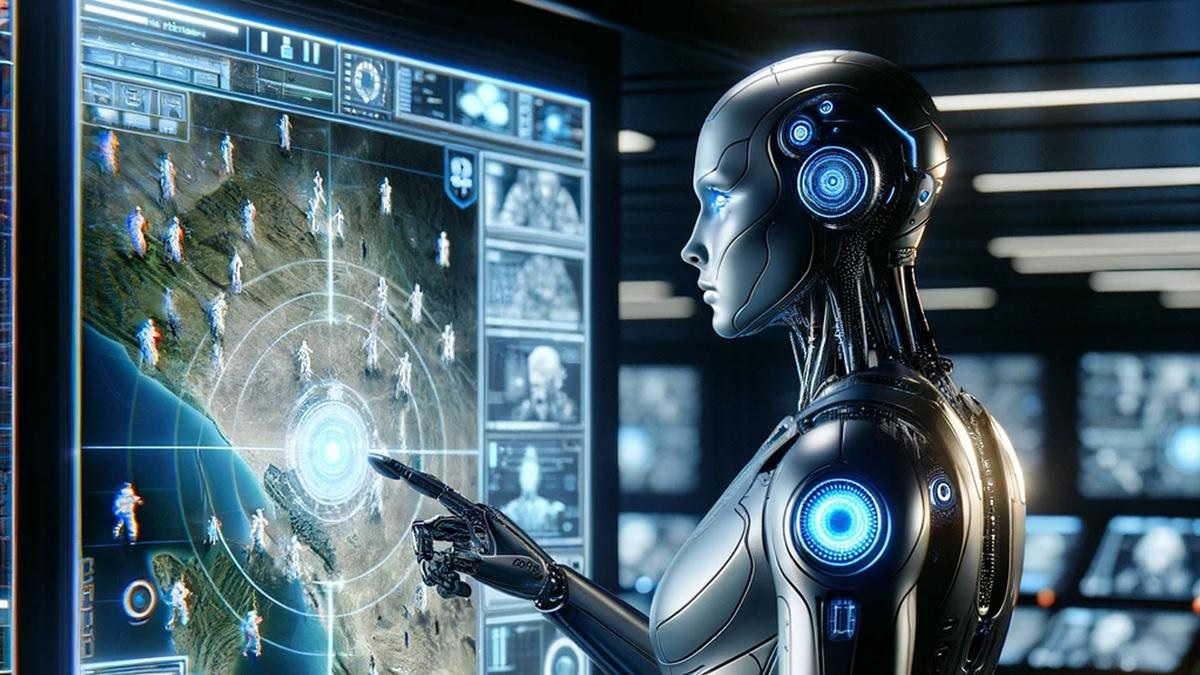
China’s AI commander, confined to a lab, mimics human command in virtual war games, offering insights into AI’s military potential and risks.
China has introduced an advanced AI commander, strictly confined to a laboratory at the Joint Operations College of the National Defence University in Shijiazhuang, Hebei province. This AI mirrors human commanders in experience, thought patterns, personality, and even flaws. Developed to aid in large-scale computer war games involving all branches of the People’s Liberation Army (PLA), this AI commander has been granted supreme command authority in virtual wars.
This innovative project, led by senior engineer Jia Chenxing, was publicly revealed in a May publication in the peer-reviewed Chinese journal *Common Control & Simulation*. The research emphasizes both the potential and risks of AI in military applications, presenting a "viable" solution to the increasing complexities of modern warfare.
In China, military command is strictly under the Central Military Commission of the Communist Party of China, adhering to the principle that "The Party commands the gun." While AI technology is advancing in making independent decisions, ultimate command authority remains human. Forward-deployed units like drones and robotic dogs have more autonomy, but the central command is firmly in human hands.
Testing operational plans for potential conflicts, such as those involving Taiwan and the South China Sea, is a crucial task for scientists. These plans are evaluated through simulations to understand the chaos of battle better. The limited number of senior PLA commanders makes it difficult for them to participate in numerous war simulations, prompting the need for the AI commander.
The AI commander can substitute for human commanders in large-scale virtual battles, making independent decisions within the lab environment. This role is unprecedented in military research, as the highest-level decision-making entity for overall operations, unlike the supportive role of AI in the US military.
Different PLA commanders have varying combat styles. For instance, General Peng Dehuai favored swift, unexpected strikes, while General Lin Biao preferred meticulous, risk-averse strategies. The AI commander is initially designed to reflect a seasoned strategist with sound judgment, calmness, and quick planning abilities. However, its personality can be adjusted as needed.
Under pressure, humans often struggle to make fully rational decisions quickly. The AI commander, relying on empirical knowledge and recalling similar scenarios, formulates viable plans efficiently. To simulate human forgetfulness, the AI's decision-making knowledge base has a size limit, forcing it to discard some information when the limit is reached.
The AI commander allows the PLA to conduct numerous "human-out-of-the-loop" simulations, identifying new threats, crafting plans, and making optimal decisions without human intervention. This approach offers advantages such as high efficiency and support for repeated experimentation.
Globally, countries are racing to develop AI military applications, with China and the United States at the forefront. Despite the advancements, there are shared concerns about the risks posed by unchecked AI development in military contexts. Senior officials from China, the United States, and Russia are negotiating regulations to prevent AI from controlling nuclear weapons, aiming to mitigate the potential threats of AI militarization.
This breakthrough demonstrates China's commitment to integrating advanced AI into military strategies, balancing technological potential with necessary safeguards.
✍️ This article is written by the team of The Defense News.