China’s Secret Stake in Russian VT-40 Drone Company Raises Alarms in India and the West
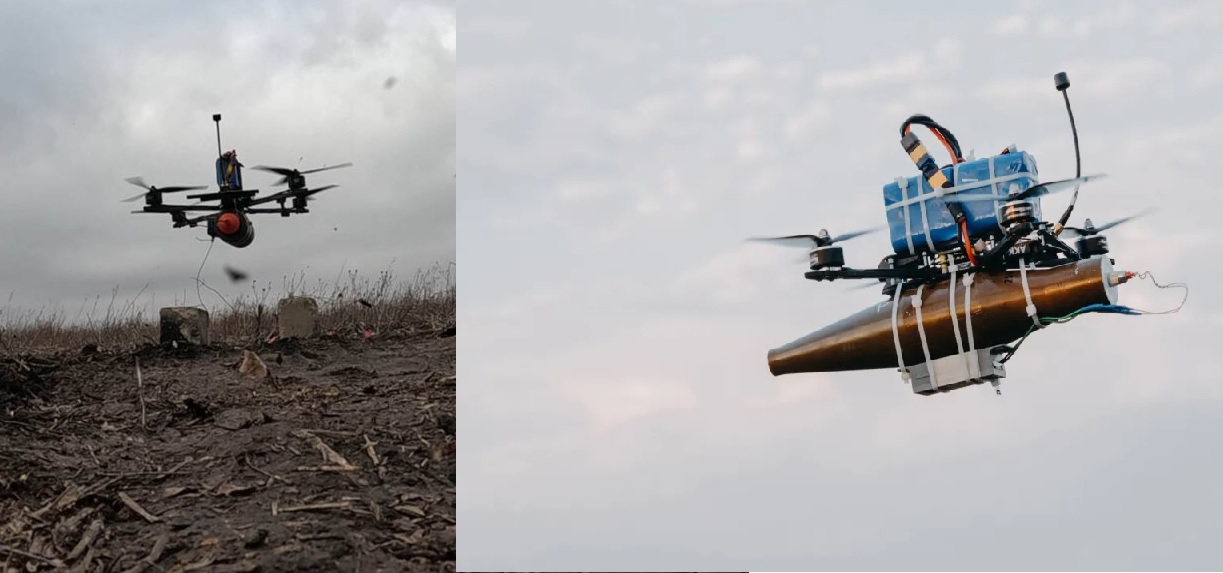
A secretive equity transfer between a major Chinese drone-parts tycoon and Russia’s leading FPV drone manufacturer has revealed a new depth of Sino-Russian military-industrial cooperation, even as Moscow and Beijing publicly deny any joint involvement in the Ukraine war. The development has triggered serious concern among Western governments—and especially in India—about the growing overlap between Chinese investors and Russian defense suppliers.
The episode began in September, when a Russian corporate filing briefly appeared online listing Wang Dinghua, majority shareholder of the Chinese drone-component supplier Shenzhen Minghuaxin, as the new owner of 5% of Rustakt, the company behind the VT-40 FPV drone widely used by Russian forces across the Ukrainian frontline. The filing remained accessible for less than 24 hours before all ownership records were deleted from Russia’s corporate registry, and references to the deal were wiped from private intelligence databases.
Such rapid suppression strongly suggests state-level sensitivity around the transaction.
A Strategic Tie-Up, Not a Commercial Accident
Rustakt has been one of Russia’s most important drone suppliers since 2023, producing and assembling thousands of FPV units per day. It was earlier listed as 95% owned by Pavel Nikitin, whose family also appears connected to Santex, another major Russian drone-component importer.
Chinese firm Minghuaxin has already become Rustakt’s largest foreign supplier, shipping:
-
$110 million in lithium-ion batteries
-
$87 million in brushless motors
-
$64 million in controllers
In total, Minghuaxin and its sister companies supplied over $300 million in parts to Rustakt, and another $107 million to Santex.
These figures reveal a partnership far beyond standard trade. Analysts note that Rustakt could not sustain its industrial-scale drone output without Chinese supply chains. And Minghuaxin is not large enough to acquire Russian military stakes on its own—raising the likelihood that the Chinese state is working through private front companies to gain access to Russian battlefield technology.
China’s Real Interest: Battlefield Data
Western intelligence officials believe Beijing wants more than equity. It wants field-tested drone warfare data, including:
-
electronic-warfare resilience under jamming
-
FPV performance in trench warfare
-
motor and battery efficiency under extreme load
-
radio-frequency behaviour in contested airspace
The Ukraine war—where millions of drones have been deployed—has become the world’s largest live laboratory for future drone combat. China’s military cannot replicate this environment anywhere else.
Buying into Rustakt gives Beijing a direct pipeline into Russia’s wartime drone R&D, allowing China to refine its own drone swarm doctrines for potential use in Taiwan, the South China Sea, or land border conflicts.
Europe Still Asking Xi for Help Despite the Facts
The revelation has also frustrated European policymakers. For nearly four years, European leaders have repeatedly appealed to Xi Jinping to pressure Vladimir Putin to end the war. But the Rustakt deal confirms that Beijing has moved closer, not further, to Moscow, even while claiming neutrality.
This deepening cooperation exposes a widening gap between Western diplomatic expectations and China’s strategic behaviour.
Why Russia Allowed Chinese Influence
Russia’s decision to open the doors to Chinese investors appears driven by a combination of financial stress and technological dependence. The prolonged war in Ukraine has pushed Moscow’s defense spending to unsustainable levels, while its revenue has weakened due to discounted crude oil sales to India and China. At the same time, Western sanctions have blocked access to critical electronics, leaving Russia unable to source many of the components needed for its drone and missile production lines.
Under these pressures, the Kremlin has increasingly relied on Chinese suppliers to keep its military-industrial system functioning. Allowing Chinese firms to purchase stakes in Russian defense companies ensures a stable flow of electronics, brings much-needed capital, and provides advanced production machinery that Russia can no longer import from Western markets. It also strengthens Moscow’s political alignment with Beijing, which has effectively become Russia’s largest technological lifeline.
For China, the arrangement offers something even more significant: unprecedented access to Russia’s battlefield-driven drone development pipeline. This insight into component integration, electronic-warfare adaptation, and frontline performance is something Russia would never have permitted in the past, but sanctions and wartime necessity have forced Moscow into a position of dependence, giving Beijing a window into the heart of Russia’s drone war.
Major Concerns for India and Other Russian Arms Customers
The development has triggered serious alarm in India, Russia’s largest defense customer and a nation that directly faces Chinese military pressure along its northern border. Indian security analysts warn that the Rustakt stake transfer exposes a deeper strategic risk: Russian defense companies may quietly sell ownership shares to Chinese-linked firms, creating pathways for Beijing to gain insight into sensitive technologies that India relies on.
Experts argue that such ownership links could allow China to study the design principles, vulnerabilities, and operational behaviour of Russian-origin systems that form the backbone of India’s arsenal. This includes the possibility of indirect access to Russian avionics, missile-guidance electronics, radar algorithms, and drone-telemetry systems, all of which are integral to India’s combat platforms. Any leakage of this information, they caution, could undermine India’s battlefield advantage in the event of a conflict with China.
The situation has sparked calls within New Delhi for a thorough audit of all Russian defense suppliers to ensure that no Chinese entity is gaining influence or data access through hidden partnerships or covert equity purchases.
Beyond India, the revelation threatens to damage Russia’s global defense reputation, raising concerns among traditional buyers in Southeast Asia, the Middle East, and Africa. Many of these countries are now questioning whether Chinese-linked intermediaries could quietly obtain access to their weapons data as well, adding a new layer of uncertainty to future Russian arms sales.
A Quiet but Significant Shift in Global Power Dynamics
The Rustakt–Minghuaxin connection marks a turning point:
-
China is now embedded inside Russia’s war machine
-
Russian defense companies are increasingly dependent on Chinese electronics
-
Corporate secrecy around military-industrial deals is rising
-
Global buyers must re-evaluate the security of Russian platforms
This partnership—once exposed and rapidly covered up—highlights the reality that China is not merely supporting Russia’s war effort; it is becoming a structural pillar of it.
And for countries like India, which rely heavily on Russian military technology while facing Chinese aggression, this development represents a strategic warning that cannot be ignored.
About the Author
Aditya Kumar:
Defense & Geopolitics Analyst
Aditya Kumar tracks military developments in South Asia, specializing in Indian missile technology and naval strategy.